
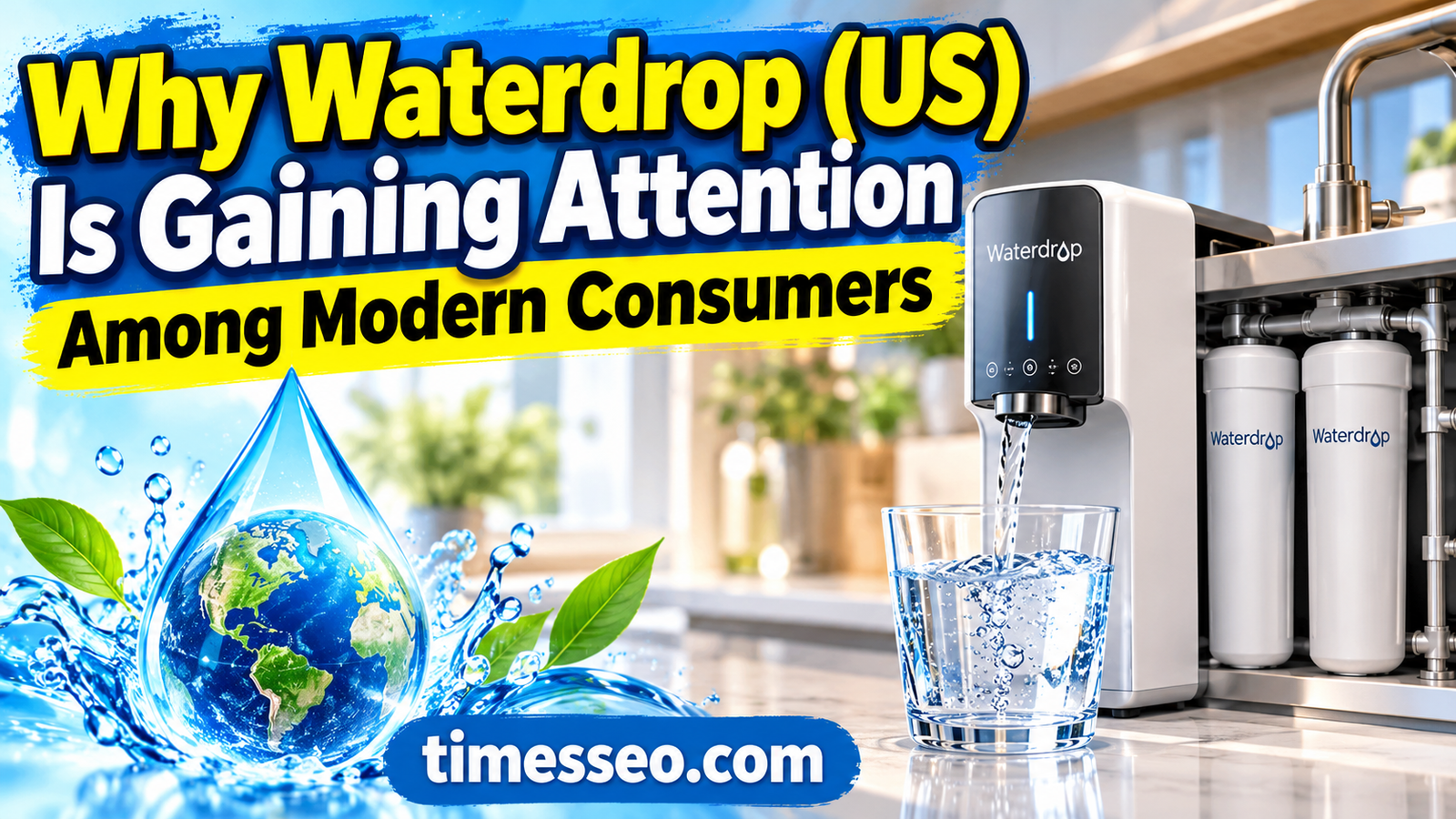
Why Waterdrop (US) Is Gaining Attention Among Modern Consumers
Discover why Waterdrop (US) is gaining attention among modern consumers. Explore its innovative water filtration systems, tankless RO technology, convenient designs, sustainability efforts, and growing popularity in the U.S. market.
Table of Contents
IntroductionWhat Is Waterdrop?
Waterdrop is a water filtration brand that has attracted attention by combining water purification technology, compact designs, and consumer-friendly products. The company says it was founded in 2015 and focuses on filtration solutions for homes and other everyday environments. Its current U.S. product range includes reverse osmosis systems, under-sink filters, countertop systems, pitchers, refrigerator filters, whole-house filtration products, and other water-related solutions.
The brand stands out because it does not focus on just one type of customer. Someone living in an apartment may want a small countertop filter, while a family may prefer an under-sink reverse osmosis system. A homeowner may also be interested in a whole-house filter. This broad selection gives consumers more room to choose a filtration method based on their kitchen space, water concerns, budget, and daily habits.
Waterdrop’s Growth in the U.S. Market
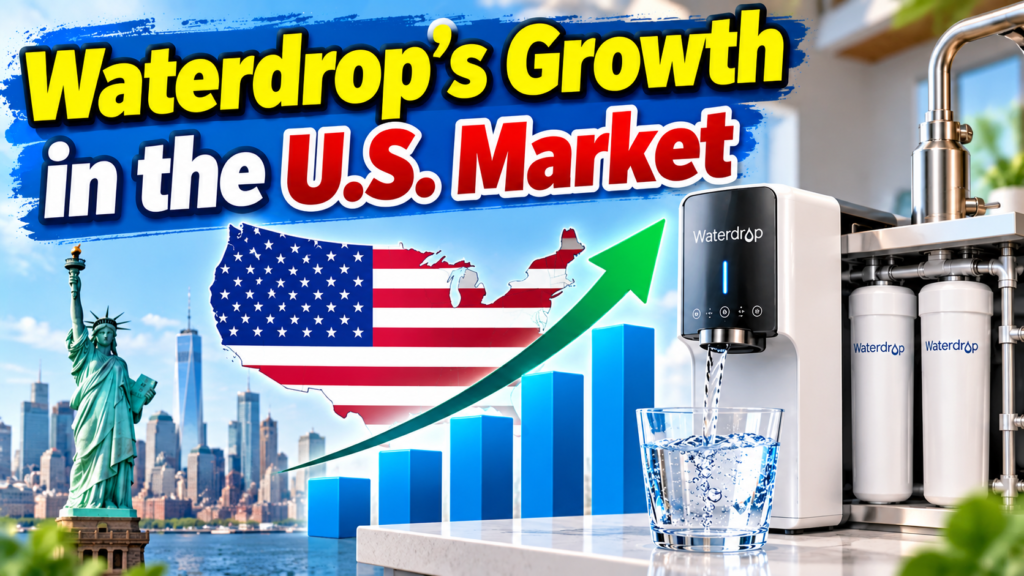
Waterdrop’s U.S. presence has developed around online retail and direct-to-consumer sales. A recent trademark filing also indicates that a large share of U.S. Waterdrop sales historically came through Amazon, helping the brand reach consumers who prefer researching and purchasing household products online.
The company is also expanding its message beyond simply selling filters. Its current marketing emphasizes clean water, product innovation, sustainability, and easier access to filtration. That combination fits the way many modern consumers shop: they want a product to solve a practical problem, but they also want reasonable convenience and a design that fits into their lifestyle.
Why Modern Consumers Are Rethinking Tap Water
Tap water is convenient, but convenience does not always mean consumers feel completely comfortable with its taste, odor, or quality. Water quality can vary between locations, buildings, plumbing systems, and local water supplies. As awareness of contaminants such as lead and PFAS increases, some households are looking for additional filtration rather than relying only on municipal treatment.
This does not mean that every person’s tap water is unsafe. The better approach is to understand the quality of the water available in your area and then choose filtration based on a specific need. Waterdrop itself promotes a ZIP-code-based water-quality tool using licensed Environmental Working Group data, reflecting how consumers are becoming more interested in understanding what may be present in their local supply.
Growing Interest in Home Water Filtration
Home filtration has become appealing because it gives consumers more control over the water they drink and use for cooking. Instead of repeatedly purchasing bottled water, households can install a filtration system and produce filtered water at home.
The appeal is particularly strong for people who want a balance between health awareness, convenience, cost, and environmental considerations. A filter can sit quietly under a kitchen counter or on a countertop and become part of a daily routine. That simplicity is one reason brands such as Waterdrop are receiving more attention.
Waterdrop’s Wide Product Range
One of Waterdrop’s strongest advantages is the size of its product portfolio. The company’s current U.S. store lists hundreds of products across categories including RO systems, under-sink filtration, countertop systems, pitchers, faucet filters, refrigerator filters, whole-house filtration, and replacement cartridges.
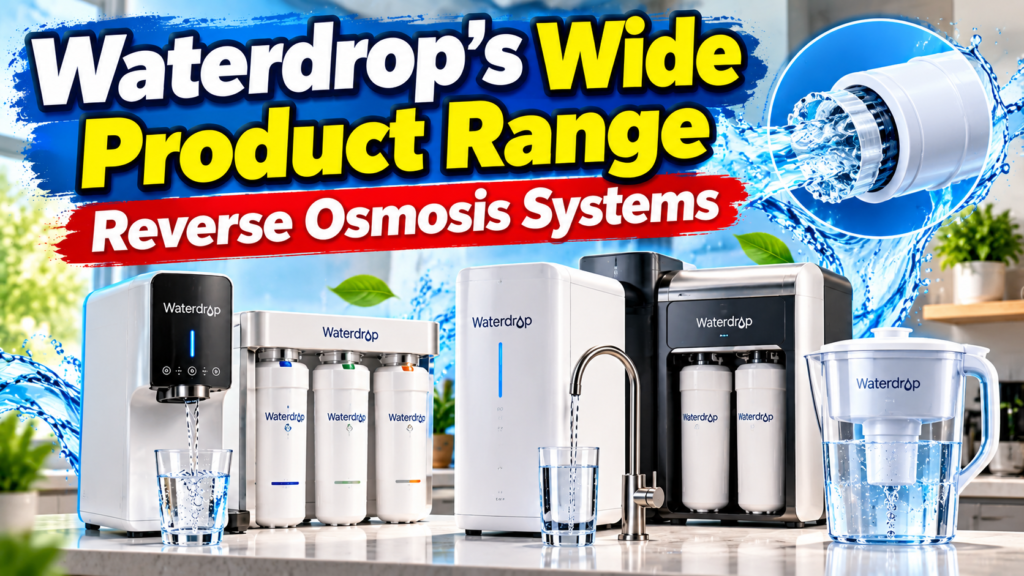
For consumers, this variety can be useful because water filtration is not a one-size-fits-all purchase. A renter may not want permanent plumbing changes. A family of five may need significantly more capacity than one person. Someone mainly concerned about taste and chlorine may not need the same technology as someone specifically looking for reverse osmosis filtration.
Reverse Osmosis Systems
Reverse osmosis, or RO, is one of Waterdrop’s most visible product categories. Current Waterdrop models include systems with rated capacities ranging from several hundred gallons per day to 1,600 gallons per day. For example, the company currently lists the G3P600 at 600 GPD, the G3P800 at 800 GPD, the X12 at 1,200 GPD, and the X16 at 1,600 GPD.
The attraction of RO is its ability to provide a more comprehensive filtration process than basic carbon filtration. However, consumers should always look at the specific certification and contaminant claims for the exact modelrather than assuming every Waterdrop product performs identically. NSF’s listings show that certifications and claims can differ between models and filter types.
Tankless Design as a Major Advantage
One feature strongly associated with Waterdrop is the tankless reverse osmosis design. Traditional under-sink RO systems often use a storage tank, which can occupy a significant portion of the cabinet below the sink. Tankless systems are designed to reduce that footprint and produce filtered water when needed.
For modern kitchens, this can be a major advantage. Storage space is valuable, especially in apartments and smaller homes. A system that takes up less room can make filtration feel less like an industrial installation and more like a normal kitchen appliance.
Waterdrop’s current lineup includes several tankless systems, including the G3P800 and X Series. The company markets these systems around high flow rates and space-saving designs.
Compact Countertop Filtration Options
Not every consumer wants to install a filtration system underneath a sink. That is where countertop products become interesting. Waterdrop currently offers countertop RO systems, electric water filter pitchers, hot-water filtration products, and countertop dispensers.
These products can appeal to renters, students, office users, and people who want a filtration solution without major installation work. For example, the company’s current CT01 countertop dispenser is designed to provide hot and cold filtered water, with adjustable temperatures and no complicated under-sink installation.
The convenience factor matters. Consumers increasingly expect household products to be easy to set up, easy to operate, and easy to maintain. A countertop system can fit naturally into that expectation.
NSF Certifications and Product Testing
Certification is an important part of evaluating any water filtration product. Waterdrop currently publishes certification information for individual products, including models carrying NSF/ANSI 42, 53, 58, 372, and 401 certifications depending on the product.
NSF’s own database also lists specific Waterdrop products and their certified claims. For example, some Waterdrop refrigerator and faucet products appear under NSF/ANSI 42 for chlorine, taste, and odor reduction. Other products have different certifications and claims.
This distinction is important. Consumers should not interpret a general statement such as “NSF certified” as meaning that every Waterdrop filter removes every possible contaminant. The exact model, standard, filter cartridge, and certified claim should be checked before purchasing.
Who Can Benefit From Waterdrop?
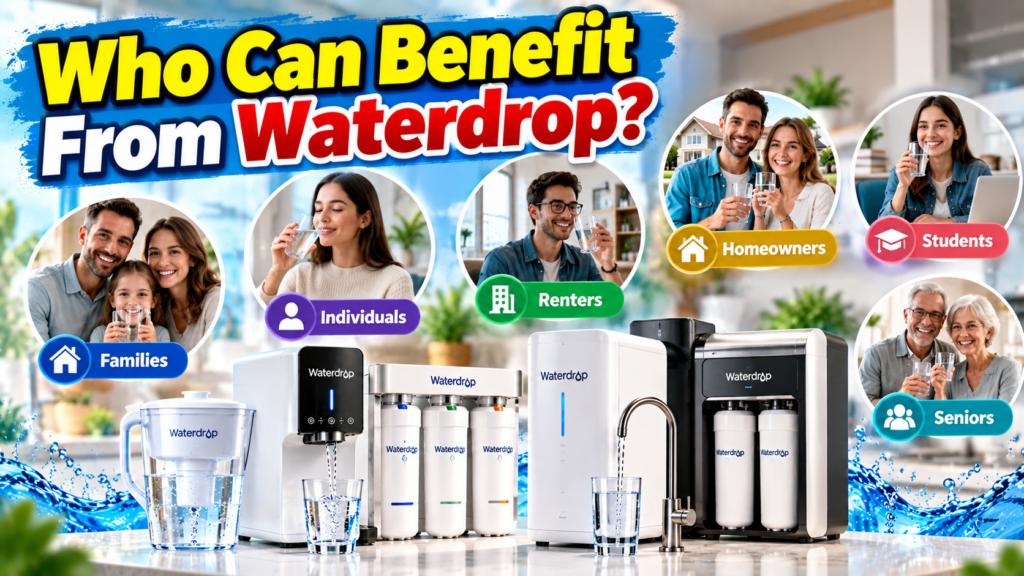
Waterdrop can be particularly appealing to consumers who want more control over their household drinking waterwithout relying entirely on bottled water. It can also make sense for people who dislike the taste or odor of their tap water and want a filtration solution that fits their kitchen.
Different users may choose different products. An apartment resident could choose a countertop system, while a homeowner may install an under-sink or whole-house system. Someone who only wants filtered refrigerator water might choose a compatible replacement cartridge instead.
Focus on Convenience and Easy Installation
Water filtration used to feel like a specialist home-improvement project. Consumers might have needed professional installation, large storage tanks, and complicated replacement schedules. Modern products are moving toward simpler installation and more accessible designs.
Waterdrop’s range reflects that trend. The company offers direct-connect under-sink filters, countertop units, pitchers, refrigerator replacements, and other systems that require different levels of installation. This means consumers can choose how much effort they are willing to invest.
For someone who simply wants better taste and odor, a basic filter may be enough. Someone who wants more advanced purification may prefer RO. The ability to select between these levels makes the brand attractive to different types of households.
Smart Features and Modern Kitchen Design
Water filtration is no longer only about function. Consumers also care about how a product looks and how it interacts with the kitchen. Waterdrop has emphasized compact equipment, modern faucets, digital displays, filter-life indicators, and countertop designs across different models.
That approach matches a wider consumer trend toward smart and visually integrated appliances. People do not necessarily want a device that looks out of place beneath or beside an expensive kitchen setup.
The goal is simple: make clean water easier to access without making the filtration equipment the most noticeable thing in the room. Waterdrop’s tankless systems and countertop products are clearly designed around this idea.
Also Read
Exploring Timeless Clothing Designs and Quality Materials at Gentle Herd
Simple Ways to Get More Value From Savvy Car Insurance Savings
Why Customers Choose TransferGo for Fast International Money Transfers
A Beginner’s Guide to Navigating Products and Deals on Banggood
Exploring Affordable Shopping Options with Kogan Australia
Waterdrop and PFAS Awareness
PFAS, often called “forever chemicals,” have become a major topic in discussions about drinking water. Waterdrop has responded to this interest with a 2026 PFAS-focused initiative. The company has highlighted testing for PFOA and PFOS on selected systems, including the X16 and DLG-P.
This is an important example of how consumer demand can influence product messaging. People increasingly search for specific filtration capabilities rather than simply asking whether a filter is “good.”
Still, buyers should examine the testing information for the specific model they are considering. Water filtration claims should always be evaluated against the contaminant, certification, test conditions, and actual product model.
Waterdrop Pricing and Product Variety
Waterdrop’s current U.S. pricing covers a broad range. Its website currently lists basic under-sink filtration products at prices below $100, while countertop and advanced RO systems can cost several hundred dollars or more. Premium systems such as the X12 and X16 sit at the higher end of the range.
Product Type | Current Example | Listed Price* |
Basic under-sink filter | Direct Connect System | Around $59 |
Countertop electric filter | ED01 | Around $50 |
Countertop RO | C1S | Around $259 |
Tankless RO | G3P800 | Around $999 MSRP |
High-capacity RO | X12 | Around $1,299 MSRP |
Premium RO | X16 | Around $1,999 MSRP |
*Prices can change because Waterdrop frequently runs promotions and discounts. Current listings show both regular prices and promotional prices.
This range is useful because it prevents the brand from being locked into one price category. Consumers can enter the Waterdrop ecosystem with a relatively inexpensive filter or spend substantially more on a high-capacity RO system.
Waterdrop for Small Homes and Apartments
Small living spaces are one area where Waterdrop’s design philosophy can make sense. Traditional filtration equipment can consume valuable cabinet space, while countertop systems can sit directly on a kitchen counter.
For renters, installation is an especially important consideration. A countertop product can be easier to move from one home to another than a permanently installed system. Waterdrop’s current catalog includes several countertop options designed around this type of flexibility.
The same principle applies to students and office workers. When space is limited, convenience often matters more than having the most powerful filtration technology available.
Is Waterdrop Worth Considering in 2026?
Waterdrop is gaining attention because it sits at the intersection of several strong consumer trends: health awareness, home technology, convenience, sustainability, and personalized water filtration. Its current product range is extensive, and its U.S. offerings cover everything from simple filters to high-capacity reverse osmosis systems.
The brand also has a growing focus on specific concerns such as PFAS, while its certification pages provide product-level information that consumers can use when comparing systems. NSF’s own database confirms certification listings for multiple Waterdrop products, although the specific claims differ by model.
That does not mean every Waterdrop product is right for every household. The smartest approach is to identify the water issue first and then compare products based on verified specifications. For consumers who want modern design, multiple filtration choices, and an alternative to continuously buying bottled water, Waterdrop is certainly a brand worth investigating.
Conclusion
Waterdrop is gaining attention among modern U.S. consumers because it makes home water filtration feel more accessible, flexible, and technology-focused. Its tankless RO systems, countertop products, under-sink filters, pitchers, refrigerator filters, and whole-house systems give shoppers a wide range of choices.
The brand’s emphasis on certifications, compact designs, filtration performance, PFAS awareness, and sustainability also matches several current consumer priorities. At the same time, buyers should remember that filtration performance varies from one model to another. Checking the exact certification and contaminant claim is essential.
Frequently Asked Questions
Waterdrop offers a broad selection of filtration products, including models with NSF/ANSI certifications. However, quality and filtration claims vary by product, so consumers should evaluate the exact model rather than judging the entire range as one product.
Some Waterdrop systems are marketed and tested for reduction of specific PFAS compounds such as PFOA and PFOS. The company's 2026 PFAS initiative highlights selected models, but consumers should check the specific testing and certification information for the product they intend to purchase.
For many households, a filtration system can be more convenient than repeatedly purchasing and storing bottled water. It can also reduce dependence on single-use plastic bottles. However, the best option depends on your budget, living situation, water quality, and filtration needs.
Several Waterdrop products have NSF/ANSI certifications, including standards such as 42, 53, 58, 372, and 401 depending on the product. NSF's official database should be checked for the exact model and certified claim.
Tankless RO systems can provide filtered water while taking up less cabinet space than traditional tank-based systems. This makes them particularly attractive to consumers with smaller kitchens or people who prefer a cleaner, more modern installation.
Table of Contents
Popular Posts

-
 Affordable Technical SEO Audit for Small Business: A Complete Guide26 Jun 2025 Blog
-
 How to Get an Affordable Technical SEO Audit for Small Business27 Jun 2025 Blog
-
 Local SEO Audit Checklist for Startups: A Beginner’s Guide28 Jun 2025 Blog
-
 The Ultimate Local SEO Audit Checklist for Startups28 Jun 2025 Blog
-
 Top On-Page SEO Audit Steps for Service Websites Every Business Should Know29 Jun 2025 Blog
-
 The Impact of On-Page SEO Audit Steps for Service Websites on UX01 Jul 2025 Blog
-
 Technical SEO for WordPress: The Ultimate Beginner’s Guide01 Jul 2025 Blog
-
 Technical Mobile SEO Audit Tips for Developers02 Jul 2025 Blog
Related Post