


How a Bonus Can Improve Employee Motivation and Workplace Performance

Employee motivation plays a major role in the success of any organization. When employees feel valued, appreciated, and rewarded for their efforts, they are more likely to perform better and contribute positively to company goals. One of the most effective ways businesses encourage employees is through bonus programs. A bonus is not just extra money; it is a recognition tool that shows employees that their hard work has a real impact.
In today’s competitive workplace, companies are constantly searching for ways to improve productivity, reduce employee turnover, and create a stronger connection between employees and organizational goals. A well-designed bonus system can act as a bridge between employee efforts and business success. It works like a fuel that keeps employees motivated to continue improving their skills and performance.
Table of Contents
Understanding the Role of Bonuses in the Workplace
What Is an Employee Bonus?
An employee bonus is an additional reward given to employees apart from their regular salary. Companies usually provide bonuses based on performance, company profits, individual achievements, or special occasions. Unlike fixed salaries, bonuses are often connected with specific goals or results.
A bonus can come in different forms, such as cash rewards, gift cards, extra paid leave, profit-sharing benefits, or other incentives. The main purpose of a bonus is to recognize employee contributions and encourage continued improvement.
For example, if a sales employee achieves a monthly target, the company may provide a performance bonus. Similarly, if a team successfully completes an important project before the deadline, the organization may reward the entire team.
A bonus creates a direct connection between effort and reward. Employees understand that their dedication can lead to additional benefits, which increases their willingness to perform at a higher level.
Why Companies Use Bonus Programs


Companies use bonus programs because they help align employee actions with business objectives. When employees receive rewards for achieving important goals, they become more interested in contributing to company success.
A strong bonus system can help organizations:
- Improve employee motivation
- Increase productivity
- Recognize outstanding performance
- Encourage teamwork
- Reduce employee turnover
A company without proper recognition may experience lower employee engagement because workers may feel that their efforts are unnoticed. Bonuses provide a simple but powerful way to show appreciation.
How Bonuses Increase Employee Motivation
Creating a Sense of Achievement
Employees naturally want to feel that their work has meaning. A bonus provides a clear message that their contribution matters. When employees receive a reward after completing challenging tasks or reaching goals, they experience a sense of achievement.
This feeling encourages employees to maintain high performance levels. A bonus is not only about financial benefits; it also provides emotional satisfaction. Employees feel respected and valued by their organization.
For many employees, recognition is just as important as money. A bonus represents appreciation from management and creates a stronger relationship between employees and employers.
When workers believe that their efforts are noticed, they are more likely to take ownership of their responsibilities. They become more confident, creative, and willing to accept new challenges.
Encouraging Employees to Reach Goals
Clear goals are important for employee success. Bonus programs help employees understand what they need to achieve and what rewards they can receive after completing those goals.
For example, a company may offer bonuses for:
- Meeting sales targets
- Completing projects successfully
- Improving customer satisfaction
- Reducing workplace errors
These goals create direction and encourage employees to focus their energy on important tasks.
A bonus system works like a roadmap. Employees know where they need to go and what benefits they can gain by reaching their destination.
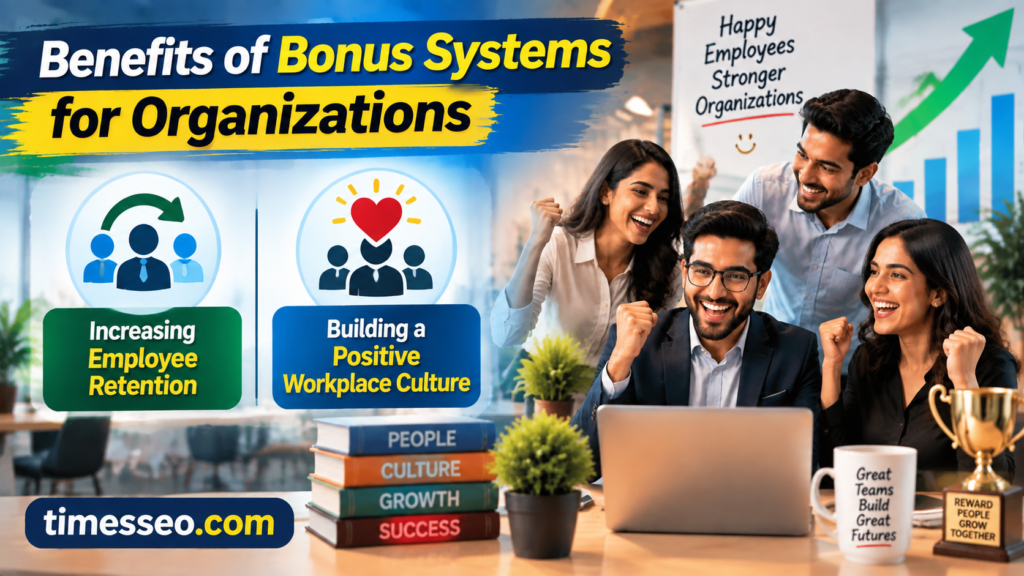
Benefits of Bonus Systems for Organizations
Increasing Employee Retention
Employee turnover is a major challenge for many businesses. Losing skilled employees can increase recruitment costs and affect productivity.
A good bonus system can improve employee loyalty because workers feel appreciated and rewarded. Employees who believe their company values their contribution are more likely to stay longer.
Retention improves when employees see opportunities for growth, recognition, and financial rewards within the organization.
Building a Positive Workplace Culture
A workplace culture based on appreciation and recognition creates happier employees. Bonuses help establish an environment where success is celebrated.
When employees see their colleagues being rewarded for achievements, it encourages everyone to improve.
A positive culture improves teamwork, communication, and overall workplace satisfaction.
The Connection Between Bonuses and Workplace Performance
Improving Productivity Levels
One of the biggest advantages of bonuses is increased productivity. When employees have additional motivation, they often put more effort into their work.
A motivated employee is more likely to:
- Complete tasks faster
- Find better solutions
- Work with greater attention
- Support team objectives
Bonuses encourage employees to move beyond basic responsibilities and aim for higher performance levels.
However, companies should design bonus programs carefully. If employees feel excessive pressure or believe rewards are unfair, motivation can decrease. The best bonus systems balance competition with teamwork.
Enhancing Employee Quality of Work
Bonuses can improve not only the amount of work employees complete but also the quality of their output.
When employees know that their performance affects their rewards, they often pay more attention to details. They become more careful, responsible, and committed to delivering better results.
For example, customer service employees may focus more on solving customer problems effectively when they know excellent performance is rewarded.
Quality improvement benefits both employees and companies because customers receive better services and businesses achieve stronger results.
Different Types of Employee Bonuses
Performance-Based Bonuses
Performance-based bonuses are among the most common reward systems used by organizations. These bonuses are directly connected to employee achievements.
Examples include:
- Meeting sales targets
- Completing projects successfully
- Achieving productivity goals
- Receiving positive customer feedback
Performance bonuses encourage employees to focus on measurable results. They also help companies reward high-performing employees fairly.
Annual and Holiday Bonuses
Many companies provide annual bonuses as a way to thank employees for their contributions throughout the year. These bonuses are often based on company performance, employee experience, or individual contribution.
Holiday bonuses are also popular because they provide employees with extra financial support during special occasions.
These types of bonuses improve employee satisfaction and create a positive relationship between workers and organizations.
How Bonuses Create a Strong Employee-Employer Relationship
A healthy relationship between employees and employers is built on trust, appreciation, and mutual respect. A well-planned bonus system helps strengthen this relationship by showing employees that the company recognizes their dedication and achievements. When employees receive rewards for their hard work, they feel more connected to the organization and develop a stronger sense of loyalty.
Bonuses work as a communication tool between management and employees. They send a clear message that the company values performance and wants to share success with its workforce. This creates a positive workplace environment where employees feel encouraged to contribute their best efforts.
When employees believe their company supports and appreciates them, they are more likely to stay motivated and participate actively in achieving business goals. A simple bonus can create a long-lasting impact by improving trust and teamwork between employees and management.
The Psychological Impact of Employee Bonuses
Money is not the only reason bonuses motivate employees. There is also a strong psychological impact behind workplace rewards. Employees naturally want recognition for their achievements, and bonuses provide a visible sign of appreciation.
Receiving a bonus can increase confidence and job satisfaction. Employees feel proud when their efforts are noticed, which encourages them to maintain high performance standards. This positive feeling can improve creativity, problem-solving skills, and willingness to take additional responsibilities.
How Bonuses Help Improve Employee Engagement
Employee engagement refers to how emotionally connected and committed employees feel toward their work and organization. Highly engaged employees usually show better productivity, stronger teamwork, and greater dedication.
Bonus programs can increase engagement by giving employees clear reasons to focus on their responsibilities. When employees understand that their achievements are recognized, they become more interested in their daily tasks.
Engaged employees are more likely to:
- Take ownership of their work
- Suggest new ideas
- Help team members
- Provide better customer service
- Work toward company objectives
A company that rewards employees regularly creates a workplace where people feel motivated to participate and contribute.
Also Read
From Beginners to Professionals: Choosing the Right Olympus Camera
How Erasmusu Helps Students Discover Better Study Abroad Opportunities
The Ultimate Guide to Der Gepflegte Mann Grooming Products
Everything You Need to Know About ITEAD and Smart Home Solutions
Key Benefits of Using Semantix for Data-Driven Business Decisions
The Role of Bonuses in Employee Retention
Keeping talented employees is one of the biggest challenges for modern organizations. Employees often leave companies when they feel undervalued or when they do not see enough growth opportunities.
A competitive bonus system can help businesses retain skilled employees by providing additional financial benefits and recognition. When employees receive rewards for their contributions, they feel more satisfied with their jobs.
Employee retention benefits companies because it reduces hiring costs, saves training time, and helps maintain experienced teams. A good bonus strategy can become an important reason why employees choose to continue working with an organization.
Bonus Programs and Company Productivity Growth
Productivity is one of the main goals of every organization. Companies want employees who can complete tasks efficiently while maintaining quality standards. Bonus programs can encourage employees to improve their productivity by creating clear performance goals.
When employees know that additional efforts can lead to rewards, they often become more focused and organized. They look for better ways to complete tasks, reduce mistakes, and improve results.
For example, a manufacturing company may provide bonuses for improving production quality, while a software company may reward employees for completing projects successfully.
How to Create an Effective Bonus Strategy
Setting Clear Bonus Criteria
A successful bonus program requires clear rules. Employees should understand:
- What performance is being measured
- How rewards are calculated
- When bonuses are provided
Unclear bonus policies can create confusion and frustration.
Companies should create simple and transparent systems where employees know exactly what they need to achieve.
Maintaining Fairness and Transparency
Fairness is one of the most important parts of any bonus program. Employees should feel that rewards are based on actual performance rather than personal preferences.
Organizations should regularly review their bonus policies to ensure equal opportunities for all employees.
Transparent bonus systems build trust and improve employee confidence.
Common Mistakes Companies Should Avoid
Although bonuses are powerful motivators, poorly designed programs can create problems. Companies should avoid making unrealistic targets, showing favoritism, or focusing only on individual competition.
A bonus system should encourage teamwork rather than create unhealthy competition. Employees should feel motivated, not stressed.
Another common mistake is offering bonuses without proper recognition. Money is valuable, but employees also want appreciation, respect, and career growth opportunities.
The best organizations combine financial rewards with positive feedback, learning opportunities, and a supportive workplace environment.
Conclusion
Bonuses are an effective way to improve employee motivation and workplace performance. They provide employees with recognition, encouragement, and a clear reason to achieve their goals. When designed properly, bonus programs can increase productivity, improve work quality, strengthen employee loyalty, and create a positive company culture.
A successful bonus system is not only about giving extra money. It is about showing employees that their efforts are important and appreciated. Companies that invest in meaningful reward systems often build stronger teams and achieve better long-term results.
By creating fair, transparent, and achievable bonus programs, organizations can motivate employees while creating a workplace where people feel valued and inspired to perform their best.
Frequently Asked Questions
A bonus motivates employees by rewarding their achievements and showing appreciation for their hard work. It encourages employees to set higher goals and improve their performance.
Bonuses and salary increases serve different purposes. A salary increase provides long-term financial security, while bonuses provide short-term motivation and recognition for achievements.
Yes, team-based bonuses can encourage collaboration by rewarding employees for achieving shared goals rather than only individual performance.
A successful bonus program should have clear goals, fair evaluation methods, transparency, and rewards that employees consider valuable.
Not every employee responds the same way to bonuses. Some employees are highly motivated by financial rewards, while others may value recognition, career growth, or workplace flexibility more.
Table of Contents
Popular Posts

-
 Affordable Technical SEO Audit for Small Business: A Complete Guide26 Jun 2025 Blog
 -
 How to Get an Affordable Technical SEO Audit for Small Business27 Jun 2025 Blog
 -
 The Ultimate Local SEO Audit Checklist for Startups28 Jun 2025 Blog
 -
 Local SEO Audit Checklist for Startups: A Beginner’s Guide28 Jun 2025 Blog
 -
 Top On-Page SEO Audit Steps for Service Websites Every Business Should Know29 Jun 2025 Blog
 -
 The Impact of On-Page SEO Audit Steps for Service Websites on UX01 Jul 2025 Blog
 -
 Technical SEO for WordPress: The Ultimate Beginner’s Guide01 Jul 2025 Blog
 -
 Technical Mobile SEO Audit Tips for Developers02 Jul 2025 Blog
Related Post