
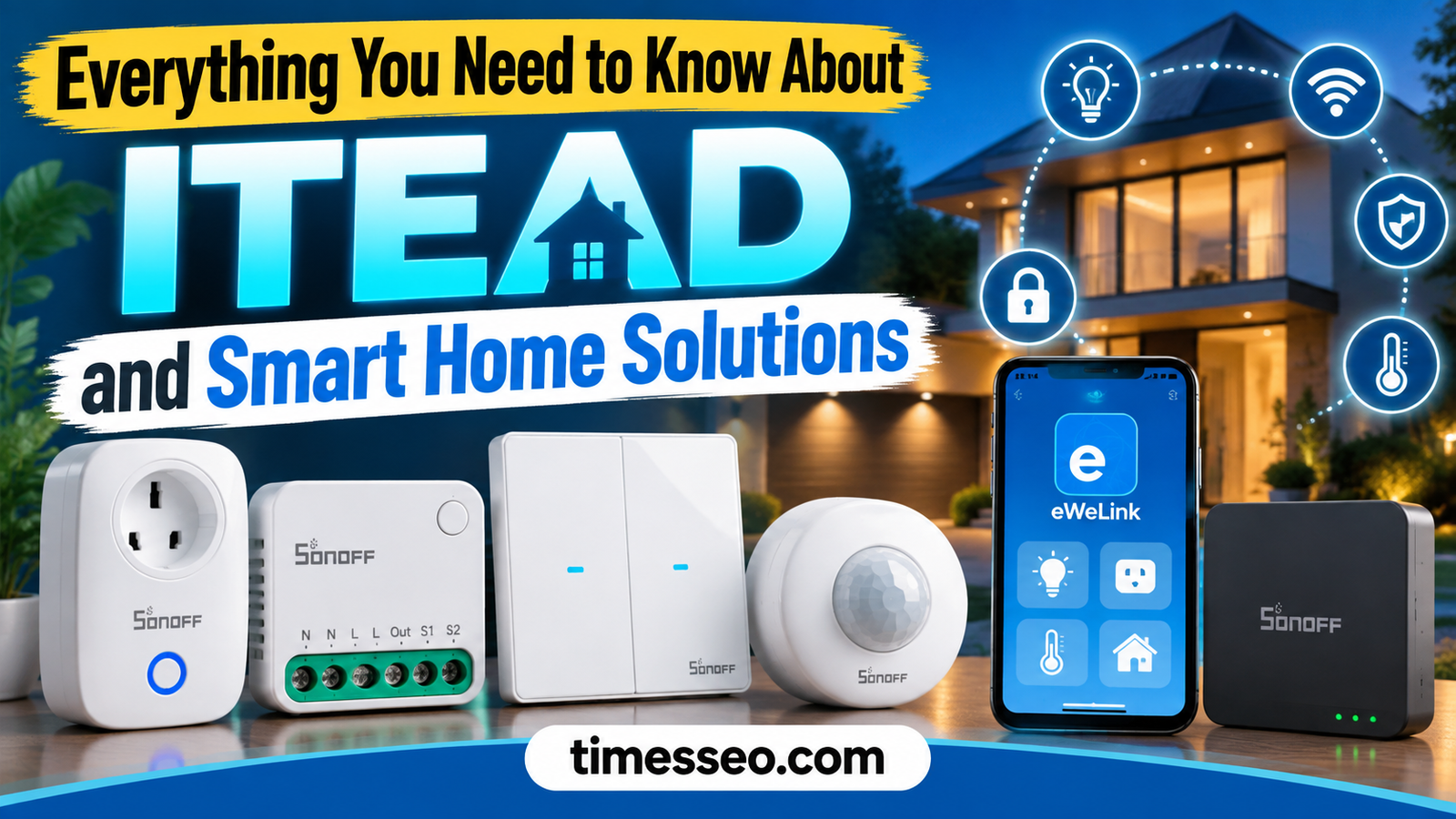
Everything You Need to Know About ITEAD and Smart Home Solutions

Discover ITEAD and its smart home solutions, including SONOFF devices, smart switches, plugs, sensors, Zigbee, Wi-Fi, Matter, and eWeLink. Learn how ITEAD helps create a smarter, more connected, and automated home with flexible and user-friendly technology.
Table of Contents
What Is ITEAD?
ITEAD is a technology company known for developing electronics, DIY hardware and connected-home solutions, with SONOFF being one of its most recognizable smart-home product lines. Its current smart-home catalog covers a broad range of products, including DIY switches, smart plugs, wall switches, lighting products, sensors, hubs and control panels. The interesting thing about ITEAD is that its approach is not simply about selling one expensive smart-home system and asking customers to replace everything they already own. Instead, many SONOFF products are designed to add smart functionality to ordinary electrical equipment, which can make home automation more accessible to beginners as well as useful for people who enjoy building customized setups.
ITEAD’s Role in Smart Home Technology
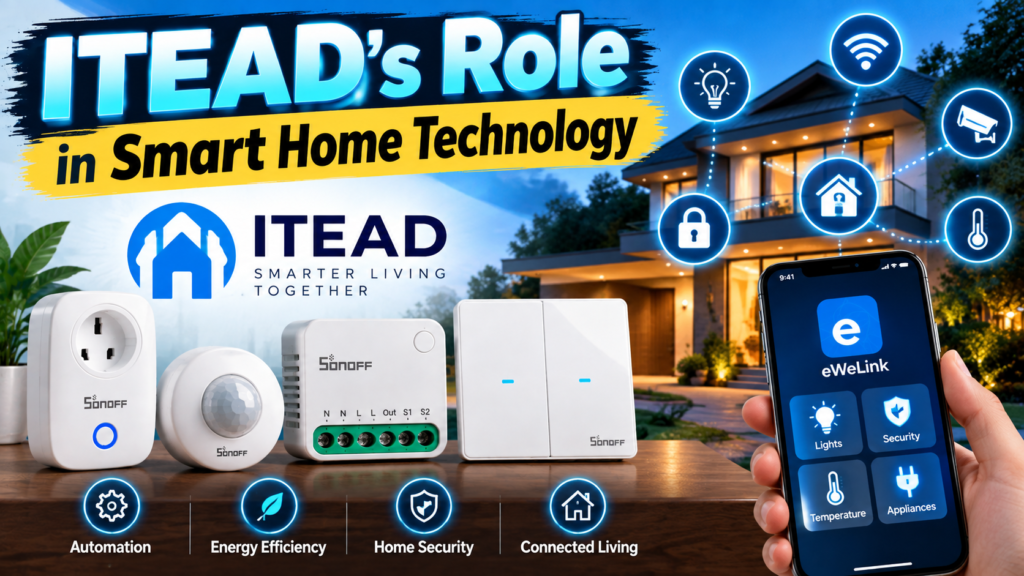

Think of a traditional home as a collection of independent appliances: lights have switches, fans have controls, plugs operate manually, and sensors usually work separately. A smart-home system tries to connect those pieces so they can communicate and respond automatically. ITEAD participates in this space by providing relatively compact hardware that can sit between electrical devices and the user’s preferred control system. Its product range includes Wi-Fi and Zigbee equipment, smart switches, plugs, sensors and hubs, giving users different ways to build an automation setup.
The company has also built its ecosystem around eWeLink, an application and platform used with SONOFF products. ITEAD’s documentation describes functions such as remote control, status monitoring, scheduling, countdown timers, device sharing, grouping and smart scenes. This matters because smart-home hardware is only half of the experience. A smart switch that cannot be controlled conveniently is not very useful. The combination of hardware, software and automation is what turns a normal electrical device into part of a connected home.
Understanding the SONOFF Brand
When people search for ITEAD smart-home products, they will often encounter the name SONOFF first. SONOFF is the smart-home brand associated with ITEAD and offers products ranging from simple smart switches to more advanced hubs and sensors. The current ITEAD catalog includes products such as the SONOFF MINI Extreme Wi-Fi Smart Switch, DUALR3, TH Elite, SNZB temperature and humidity sensors, Zigbee bridges, smart plugs and Matter-enabled wall switches.
How SONOFF Fits Into the ITEAD Ecosystem
The easiest way to understand the relationship is to think of ITEAD as the broader company and SONOFF as the smart-home product ecosystem. Rather than buying isolated gadgets with completely unrelated apps, users can combine different SONOFF products through eWeLink and compatible technologies. For example, a smart switch can be combined with a sensor or scene controller so that an action in one part of the home triggers another device. ITEAD also supports different communication technologies, so the ecosystem is not limited to one type of wireless connection.
This flexibility is particularly attractive to DIY users. Someone might begin with one smart plug, then add a switch, motion sensor, temperature sensor and hub later. Instead of rebuilding the entire system, the user can gradually expand it according to their needs. That makes ITEAD interesting for people who want to experiment with automation without committing to a complete smart-home installation on day one.
What Makes ITEAD Smart Home Solutions Different?
One of the biggest attractions of ITEAD and SONOFF is the combination of functionality, affordability and DIY flexibility. The company’s current catalog contains relatively inexpensive devices alongside more advanced control hardware. For example, the official product listings currently show the MINI Extreme Wi-Fi Smart Switch at $9.90, a Zigbee USB Dongle Plus at $19.90, and several smart plugs and sensors at prices around the low double-digit dollar range. Prices can vary by region, model and promotion, so these figures should be treated as current catalog examples rather than universal retail prices.
DIY-Friendly Approach
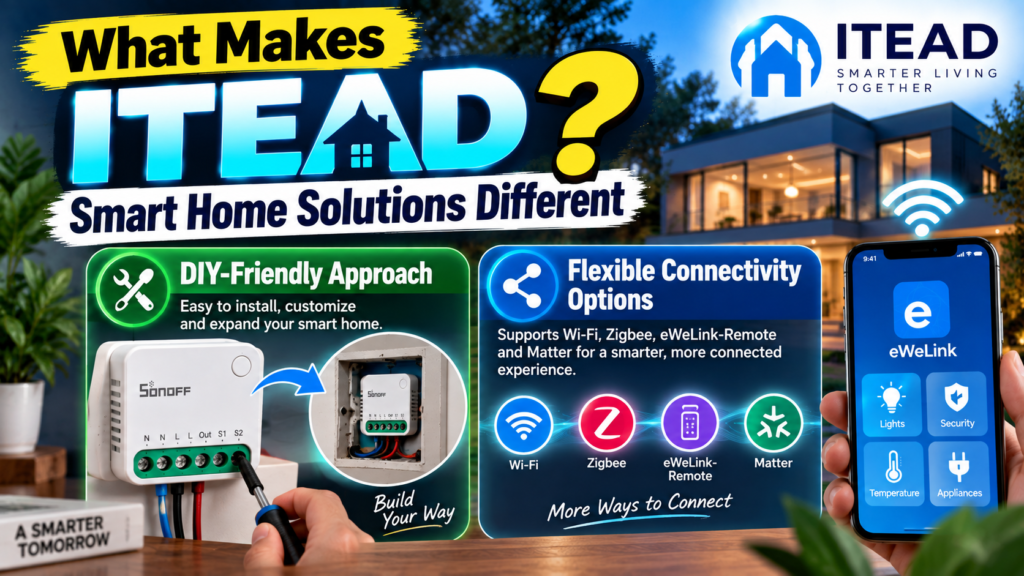
A major reason SONOFF became popular among smart-home enthusiasts is its DIY orientation. Many products are designed to control existing electrical equipment rather than forcing users to replace the appliance itself. A smart relay, for instance, can potentially transform a conventional light or appliance into something that can participate in schedules and automations, depending on the specific model and electrical installation.
This approach is similar to giving an ordinary machine a small digital brain. The lamp itself may remain exactly the same, but the smart hardware adds another layer of control. You can then operate it manually, through an app, according to a schedule or through an automation. However, electrical installation should be taken seriously. Devices connected directly to mains electricity should be installed according to the manufacturer’s instructions and, where appropriate, by a qualified electrician.
Flexible Connectivity Options
ITEAD does not rely exclusively on Wi-Fi. Its product range includes Wi-Fi, Zigbee, eWeLink-Remote and Matter-related solutions, allowing users to choose technology according to their home’s requirements.
Wi-Fi can be convenient because many homes already have a wireless network, while Zigbee can be useful for building a larger network of low-power sensors and devices. eWeLink-Remote provides another control layer for compatible SONOFF devices, while Matter is aimed at improving interoperability between smart-home ecosystems. The result is an ecosystem with multiple roads to the same destination: connected and automated devices.
Major Types of ITEAD Smart Home Products
ITEAD’s current smart-home catalog contains more than just switches. Its product categories include DIY smart switches, smart plugs and wall switches, smart lighting, smart-home security, sensors, bridges and control panels. That means a user can create a small setup or gradually develop something much more sophisticated.
Smart Switches and Relays
Smart switches are among the most recognizable SONOFF products. These devices allow users to control lights and appliances electronically, often through an app or compatible smart-home platform. The product family includes compact switches such as the MINIR4 and Matter-enabled models, as well as multi-channel products designed to control multiple circuits.
A particularly useful example is the SONOFF DUALR3, which combines dual-channel control with power-monitoring functionality. ITEAD currently lists it as a two-way power-metering smart switch. This illustrates an important direction in smart-home technology: devices are becoming more than simple remote switches. They can also provide information about what is happening inside the home.
Smart Plugs and Power Management
Smart plugs are probably one of the easiest ways for a beginner to enter the smart-home world. Instead of modifying an electrical installation, the user plugs the smart device into an existing outlet and then connects an appliance to it. Depending on the model, users can control the appliance remotely, create schedules or use automation features.
ITEAD currently lists several SONOFF smart-plug models, including Wi-Fi and Zigbee versions of the iPlug family, S31 models with energy monitoring, and waterproof options such as the S55. A smart plug can therefore be useful for lamps, fans, chargers and other suitable appliances, provided the plug’s electrical rating matches the connected load.
Smart Sensors and Security Devices
Automation becomes much more powerful when the system can sense what is happening. ITEAD offers devices such as motion sensors, temperature and humidity sensors, door/window sensors and other smart-home accessories. The current catalog, for example, includes the SONOFF SNZB-02D temperature and humidity sensor and SNZB-03P motion sensor.
Imagine a hallway light that does not simply follow a fixed timetable. Instead, it responds to movement. Or imagine a ventilation system that reacts to temperature or humidity instead of running continuously. Sensors provide the information required for these kinds of automations. In other words, switches perform actions, while sensors provide the information that tells the system when an action should happen.
eWeLink and Smart Home Control
The eWeLink app is an important part of the ITEAD/SONOFF experience. ITEAD documentation identifies features such as remote on/off control, status tracking, schedules, timers, device sharing, grouping and smart scenes. This gives users a central interface for managing compatible devices instead of having to operate every device manually.
Automation, Scheduling and Remote Control
Automation is where a smart-home setup starts to feel genuinely intelligent. A schedule might turn lights on at a particular time, while a countdown timer could switch a device off after a defined period. A smart scene can connect several devices so that one trigger causes multiple actions.
For example, you could create a “Leaving Home” scene that switches off selected lights and appliances. A “Night” scene could turn off living-room lighting while leaving a particular security-related device active. The exact capabilities depend on the devices and ecosystem involved, but the general principle is simple: you define the condition and desired response, and the system handles the routine work.
ITEAD, SONOFF and Matter Compatibility
One of the most important developments in modern smart homes is Matter, a smart-home connectivity standard intended to improve interoperability between devices and platforms. ITEAD’s SONOFF Matter documentation states that compatible SONOFF devices can work with ecosystems such as Apple Home, Google Home, Amazon Alexa and SmartThings.
The SONOFF SwitchMan M5 Matter is one example. ITEAD describes it as compatible with Matter-enabled platforms and specifically lists Apple Home, Google Home and Alexa among supported ecosystems. This is useful because consumers increasingly own products from different manufacturers. Without interoperability standards, a smart home can become a collection of separate islands.
Matter aims to make those islands easier to connect. Still, compatibility should always be checked at the individual product level. A product being from SONOFF does not automatically mean every feature works identically across every smart-home platform.
Benefits and Limitations of ITEAD Solutions
ITEAD’s biggest strength is its range of choices. A beginner can start with a smart plug or small switch, while an enthusiast can build a more advanced network involving Zigbee devices, hubs, sensors, scene controllers and Matter-compatible products. The official catalog currently includes everything from simple switches and plugs to control panels and hubs, showing how broad the ecosystem has become.
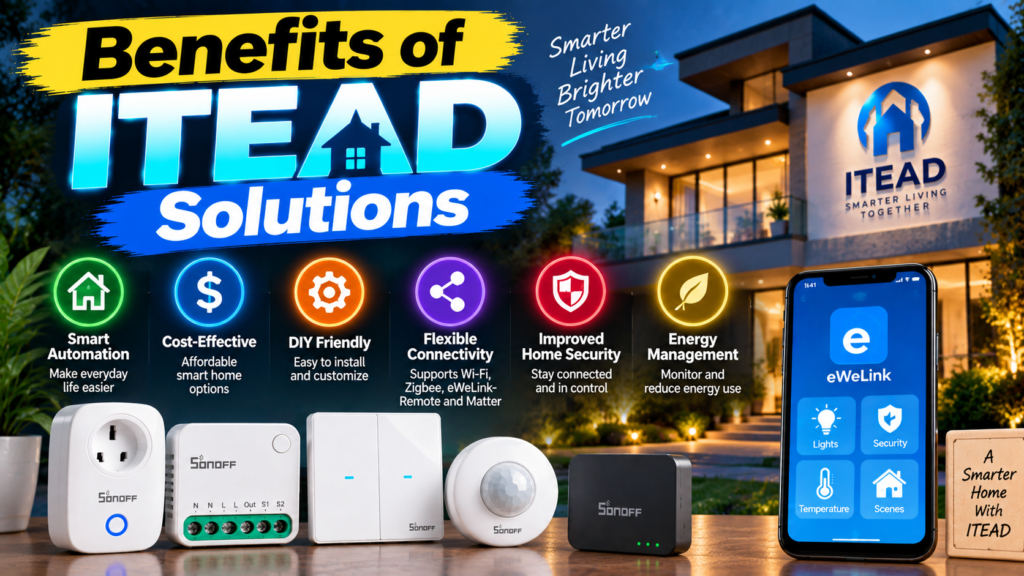
Another benefit is the emphasis on automation. Remote control is useful, but automation is where smart devices save the most effort. Once a system has appropriate sensors and triggers, repetitive tasks can happen automatically rather than requiring constant attention.
There are also limitations. Compatibility varies between individual models, protocols and third-party platforms. Some advanced features may require specific hubs or ecosystems. Electrical products also require careful installation, and users should not treat mains-powered hardware as a casual DIY project if they do not understand electrical safety.
For buyers, the smartest approach is therefore not simply to ask, “Is ITEAD good?” A better question is, “Does this particular ITEAD/SONOFF device fit my home, wiring, protocol and preferred smart-home platform?” That small change in thinking can make the purchasing decision much easier.
How to Start Building an ITEAD Smart Home
If you are completely new to smart homes, there is no need to automate your entire house immediately. Start with one simple use case. A smart plug controlling a lamp is easy to understand, while a smart switch can be considered later if you want permanent installation.
Once you understand the basic controls, add a sensor. This is where the system becomes more interesting because you can start creating relationships between devices. For example, a motion sensor can become a trigger, while a smart light becomes the action.
After that, consider whether you need Zigbee, Matter, a hub or additional control hardware. ITEAD’s current ecosystem includes products such as the Zigbee Bridge Ultra, Zigbee Bridge Pro, iHost Smart Home Hub and NSPanel Pro, providing different approaches to centralized control.
A practical starter strategy looks like this:
- Start with one smart plug or switch.
- Learn the eWeLink controls and automation features.
- Add a sensor for event-based automation.
- Choose Zigbee or Matter when your setup becomes larger or requires broader interoperability.
- Check compatibility before buying additional devices.
This gradual approach is better than purchasing twenty devices at once and then trying to understand how they all communicate.
ITEAD Smart Home Solutions for Everyday Life
The real value of ITEAD smart home solutions becomes clear when they are used to solve everyday problems. Instead of manually switching lights, checking appliances, or adjusting devices throughout the day, smart products can handle many of these tasks automatically. For example, a smart switch can control lighting from a smartphone, while a smart plug can turn a connected appliance on or off according to a schedule. Sensors can also detect movement, temperature, humidity, or changes around doors and windows and use that information to trigger other devices.
Also Read
Why Security-Conscious Users Choose Ledger US for Crypto Storage
Why Canadian Shoppers Choose WalMart Canada for Everyday Essentials
How VCM_Ladbrokes Fits Into Today’s Digital Entertainment Landscape
Family Travel Made Simpler With SlumberPod: Tips for Better Sleep on the Go
Why Pro World Is Worth Exploring for Deals and Everyday Products
ITEAD for Energy Monitoring and Management
Energy management is another area where smart-home devices can be useful. Some SONOFF products are designed with power monitoring features that allow users to understand how much electricity connected equipment is consuming. Instead of guessing which appliance is using the most power, users can obtain useful information and make better decisions about their daily energy usage.
For example, a smart device with energy monitoring can help track the electricity consumption of selected appliances. This information can encourage users to reduce unnecessary usage, create schedules, or switch off equipment when it is not required. While a smart device cannot automatically guarantee lower electricity bills, better visibility and automation can help users manage their consumption more efficiently.
Creating Smart Lighting With ITEAD
Lighting is one of the easiest areas to improve with ITEAD smart home technology. Traditional lights normally depend on a physical switch, but smart switches and compatible devices can introduce additional control methods. Depending on the product and setup, users may be able to control lighting through an app, schedule when lights operate, or connect lighting actions with sensors and scenes.
Imagine entering a room at night and having the lights respond automatically to movement. You could also create a schedule that turns selected lights on in the evening and switches them off later. These small automations may seem simple, but when several routines work together, they can make a home feel considerably more convenient.
ITEAD and Smart Home Security
Smart-home technology can also contribute to a more connected security setup. Sensors such as door/window sensors and motion sensors can provide information about activity around the home. When combined with compatible automation features, these sensors can become triggers for lights, notifications, or other connected devices.
For example, a door sensor could detect when a door opens while you are away, while a motion sensor could identify activity in a particular area. The exact security features available depend on the individual product and smart-home platform, so users should check compatibility before creating a security setup. ITEAD products should be viewed as part of a broader smart-home strategy rather than as a replacement for professional security systems where those are required.
Why ITEAD Matters for the Future of Smart Homes
The smart-home industry is moving away from the idea that every product must belong to one closed ecosystem. Consumers increasingly want their lights, switches, sensors and appliances to work together even when they come from different manufacturers. Matter is an important part of that movement, while technologies such as Zigbee continue to provide useful options for connected devices.
ITEAD’s product direction reflects this broader change. Its catalog includes traditional SONOFF Wi-Fi devices alongside Zigbee products, eWeLink-Remote equipment and Matter-compatible devices. That gives consumers more flexibility than a system built around one communication method.
The bigger idea is simple: smart homes are becoming ecosystems rather than collections of gadgets. A successful setup is not necessarily the one with the most devices. It is the one where the devices communicate effectively, solve real problems and make everyday life easier.
Conclusion
ITEAD and SONOFF have become notable names in the smart-home market by combining affordable hardware, DIY-friendly products, automation and multiple connectivity options. The ecosystem covers everything from smart switches and plugs to sensors, lighting, Zigbee devices, hubs and Matter-compatible products. The eWeLink platform adds another important layer by providing remote control, scheduling, scenes and device-management capabilities.
For someone starting a smart home, the biggest advantage is flexibility. You can begin with a single device and expand gradually rather than replacing everything at once. At the same time, compatibility, electrical requirements and protocol support should be checked carefully before purchasing.
Frequently Asked Questions
ITEAD is a technology company involved in electronics, DIY hardware and smart-home solutions. Its SONOFF brand is widely associated with its connected-home products, including switches, plugs, sensors, lighting and hubs.
SONOFF is the smart-home brand associated with ITEAD and forms a major part of ITEAD's smart-home product ecosystem.
eWeLink is used to manage compatible smart-home devices. Features include remote control, scheduling, timers, device sharing, grouping and smart scenes.
Some SONOFF products support Matter, but not every SONOFF device is Matter-compatible. ITEAD currently lists Matter-enabled products such as the MINI Extreme Wi-Fi Smart Switch and SwitchMan M5 Matter.
For a small setup, Wi-Fi can be a straightforward starting point. If you plan to use many sensors and connected devices, Zigbee may be worth considering. Your choice should depend on the size of your system, available hubs and the devices you plan to use.
Table of Contents
Popular Posts

-
 Affordable Technical SEO Audit for Small Business: A Complete Guide26 Jun 2025 Blog
 -
 How to Get an Affordable Technical SEO Audit for Small Business27 Jun 2025 Blog
 -
 The Ultimate Local SEO Audit Checklist for Startups28 Jun 2025 Blog
 -
 Top On-Page SEO Audit Steps for Service Websites Every Business Should Know29 Jun 2025 Blog
 -
 Local SEO Audit Checklist for Startups: A Beginner’s Guide28 Jun 2025 Blog
 -
 The Impact of On-Page SEO Audit Steps for Service Websites on UX01 Jul 2025 Blog
 -
 Technical SEO for WordPress: The Ultimate Beginner’s Guide01 Jul 2025 Blog
 -
 Technical Mobile SEO Audit Tips for Developers02 Jul 2025 Blog
Related Post