
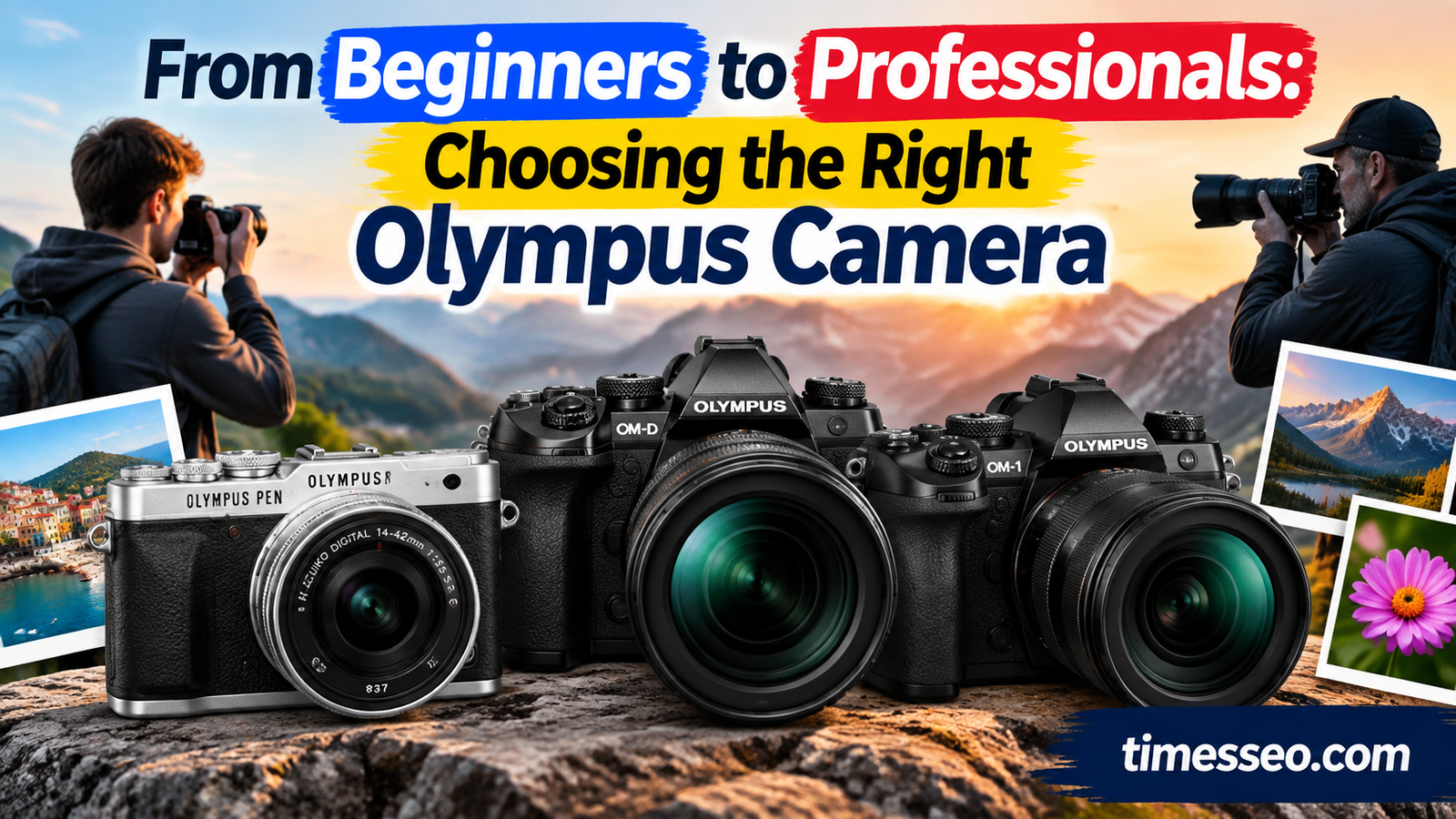
From Beginners to Professionals: Choosing the Right Olympus Camera

Photography is not only about clicking pictures; it is about capturing emotions, memories, and stories. Choosing the right camera can feel confusing, especially when there are so many brands and models available today. Olympus cameras have created a special place in the photography world because they combine compact design, excellent image stabilization, reliable performance, and creative features in a small package.
Although the Olympus name has changed in the camera market, the technology continues under OM System, the company that took over Olympus imaging products. The modern OM System cameras continue the Micro Four Thirds tradition with lightweight bodies, powerful features, and professional-level performance.
Table of Contents
Understanding Olympus Cameras and the OM System Evolution
Olympus has a long history in photography, especially known for creating cameras that are smaller, innovative, and easy to carry. The company introduced many popular camera lines, including the PEN series and OM-D series, which became favorites among travel photographers and enthusiasts.
Today, the camera division operates under OM System, continuing the Micro Four Thirds camera system. The brand focuses on producing compact cameras with advanced technology, especially for outdoor photography, wildlife, travel, and professional use.
The Micro Four Thirds system uses a smaller sensor compared with APS-C and full-frame cameras. However, this smaller size creates some important advantages. Cameras become lighter, lenses become smaller, and photographers can carry a complete setup without heavy bags.
Think of it like choosing between a large luxury vehicle and a powerful compact car. A bigger vehicle may have more space, but a compact car can be easier to handle, cheaper to maintain, and perfect for daily travel. Olympus cameras follow a similar idea: maximum performance in a portable body.
Modern OM System cameras include features like:
- 5-axis in-body image stabilization
- Fast autofocus systems
- Weather-resistant designs
- High-resolution shooting modes
- Computational photography features
- 4K video recording
These features make Olympus cameras suitable for many photography styles, from casual family pictures to professional outdoor assignments.
Why Olympus Cameras Remain Popular Among Photographers
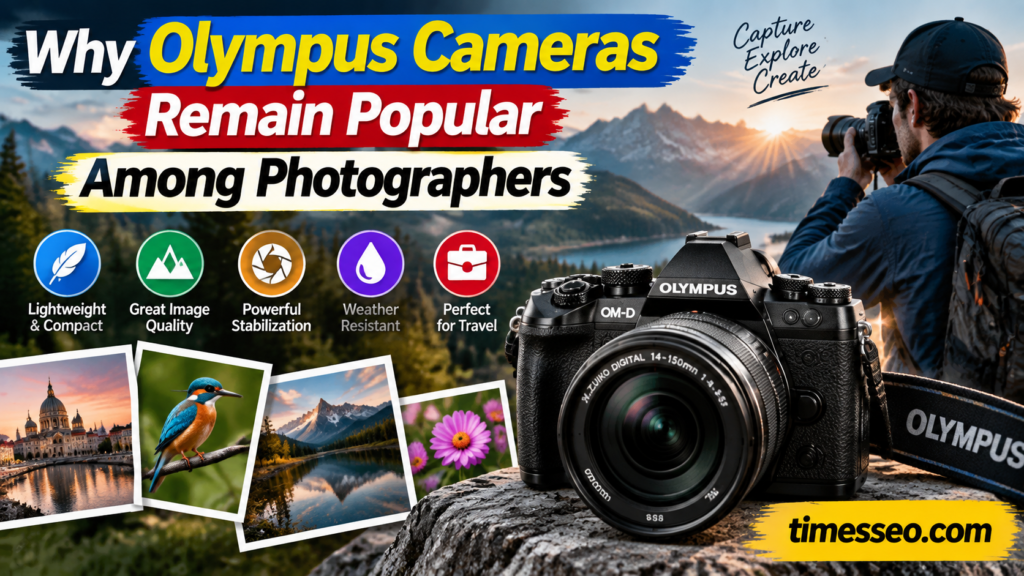
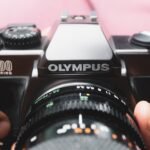
One reason photographers continue choosing Olympus cameras is their practical design. Many photographers do not want to carry a heavy camera bag everywhere. A lightweight camera allows them to capture more moments because they are more likely to take it with them.
The second major advantage is stabilization. Olympus became famous for excellent in-body image stabilization technology.
This allows photographers to capture sharper images in low light situations without always depending on a tripod.
For travel photographers, this feature is extremely valuable. Imagine walking through a beautiful city at night. Instead of carrying extra equipment, you can simply raise your camera and capture sharp images.
Another reason is durability. Many Olympus and OM System cameras are designed for outdoor environments. Weather-resistant bodies help photographers continue shooting during challenging conditions like rain, dust, and cold temperatures.
The new OM System PEN, for example, combines a compact design with features like a 20.4MP Micro Four Thirds sensor, 5-axis stabilization, and weather-resistant construction, making it attractive for beginners and everyday photographers.
Best Olympus Cameras for Beginners
Beginners need a camera that is simple to understand but powerful enough to grow with their skills.
A beginner camera should offer:
- Easy controls
- Automatic shooting modes
- Good image quality
- Affordable lenses
- Comfortable handling
Olympus OM-D E-M10 Series
The Olympus OM-D E-M10 Mark IV is one of the most beginner-friendly Olympus cameras. It offers a compact body, 20MP sensor, built-in electronic viewfinder, and useful creative features.
It is a great choice for:
- Students learning photography
- Family photographers
- Travelers
- Social media creators
The camera provides enough manual controls for learning while still offering automatic modes for beginners.
Feature | Olympus OM-D E-M10 Mark IV |
Sensor | 20MP Micro Four Thirds |
Stabilization | 5-axis image stabilization |
Video | 4K recording |
Best For | Beginners and travel |
Weight | Lightweight design |
For someone buying their first interchangeable lens camera, this model provides a comfortable learning experience without overwhelming complexity.
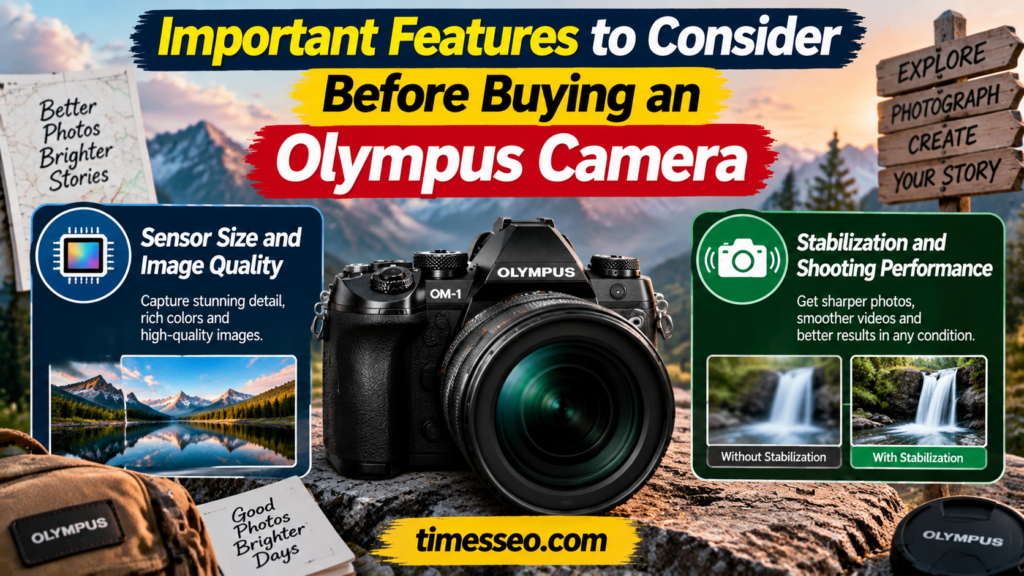
Important Features to Consider Before Buying an Olympus Camera
Choosing a camera should not only depend on price or appearance. The right camera depends on what type of photography you enjoy.
Sensor Size and Image Quality
The sensor is one of the most important parts of a camera because it captures light and creates the image.
Olympus cameras use Micro Four Thirds sensors, which are smaller than full-frame sensors but offer excellent image quality when combined with good lenses and modern processing technology.
Advantages of Micro Four Thirds sensors include:
- Smaller camera bodies
- Lightweight lenses
- Better portability
- Longer effective zoom range
For wildlife and sports photographers, the smaller sensor can actually be helpful because lenses provide more reach without becoming extremely large.
Stabilization and Shooting Performance
A camera with strong stabilization can completely change your photography experience.
Olympus cameras are known for their powerful stabilization systems that reduce camera shake. This helps when shooting:
- Night photography
- Street photography
- Handheld videos
- Indoor events
- Landscape images
The stabilization technology is like having a small assistant inside your camera that keeps your image steady when your hands cannot.
Choosing the Right Lens for Your Olympus Camera
A camera body is only part of photography. The lens often has a bigger impact on your final image.
Olympus and OM System offer many compact lenses for different purposes.
For beginners:
- 14-42mm kit lens for everyday photography
- 25mm prime lens for portraits and low-light shots
For travel:
- 12-45mm lens for general use
- 14-150mm lens for flexibility
For wildlife:
- 40-150mm telephoto lenses
- 300mm professional lenses
The advantage of Micro Four Thirds lenses is that they remain smaller and lighter compared with many full-frame alternatives.
Olympus Cameras for Video Creators and Content Producers
Many modern photographers also create videos for YouTube, Instagram, and online platforms.
Olympus cameras provide useful video features including:
- 4K recording
- Stabilized handheld video
- Flip screens on selected models
- Creative picture modes
For vloggers who travel frequently, a compact Olympus camera can be easier to manage than a larger professional setup.
The new OM System PEN also includes video features and creative controls aimed at everyday creators.
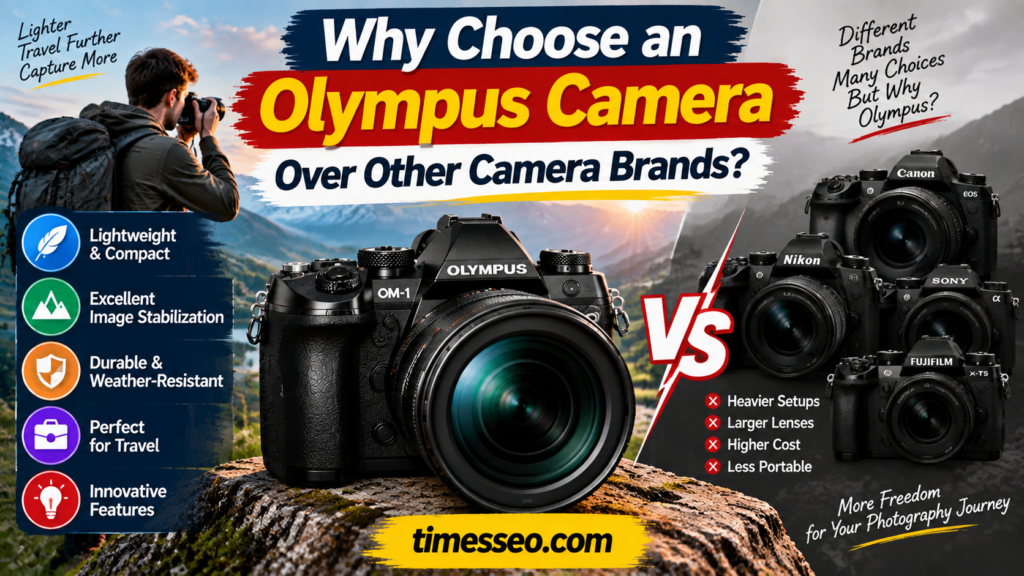
Why Choose an Olympus Camera Over Other Camera Brands?
When choosing a camera, many photographers compare Olympus with brands like Canon, Sony, Nikon, and Fujifilm. Each brand has its own strengths, but Olympus cameras stand out because they focus on portability, innovation, and practical photography features.
Many photographers today prefer a camera that they can easily carry everywhere. A heavy camera setup can become uncomfortable during long trips, outdoor adventures, or daily photography. Olympus solves this problem by offering lightweight camera bodies and compact lenses without removing important professional features.
One of the biggest advantages of Olympus cameras is the Micro Four Thirds system. This system allows photographers to use smaller lenses while still achieving excellent image quality. A photographer can carry multiple lenses in a small camera bag instead of carrying heavy professional equipment.
Olympus cameras are also famous for their advanced stabilization technology. The built-in image stabilization helps photographers capture sharp photos even when shooting handheld in difficult lighting conditions. This feature is especially useful for travel photographers, street photographers, and video creators.
Olympus Camera Features That Make Photography Easier
Modern Olympus cameras include many smart features that help photographers capture better images. These features are useful for beginners but also valuable for professionals who want faster results.
High-Resolution Shot Mode
Some Olympus cameras include a High-Resolution Shot Mode that combines multiple images into one highly detailed photograph. This feature is useful for:
- Landscape photography
- Architecture photography
- Product photography
- Studio photography
It helps photographers create images with more detail than a normal single shot.
Tips for Getting Better Results With an Olympus Camera
Buying a good camera is only the beginning. Learning how to use it properly will improve your photography skills.
Learn Manual Settings
Automatic modes are useful, but understanding manual settings gives you more creative control.
Learn about:
- Aperture
- Shutter speed
- ISO
- Focus modes
Also Read
How Erasmusu Helps Students Discover Better Study Abroad Opportunities
The Ultimate Guide to Der Gepflegte Mann Grooming Products
A Closer Look at Credy ES: Services, Reputation, and Market Position
The Ultimate Guide to Finding Relaxation and Adventure at the Shore
A Complete Guide to Rexing Dash Cams and Smart Driving Technology
Experiment With Different Shooting Modes
Olympus cameras include many creative modes. Try different options and understand how they affect your images.
Experiment with:
- Portrait mode
- Night mode
- Monochrome settings
- Art filters
- HDR photography
Practice Composition
A great photo is not only about camera quality. Composition plays a major role.
Learn techniques like:
- Rule of thirds
- Leading lines
- Framing
- Symmetry
A simple camera with strong photography skills can create better images than an expensive camera used incorrectly.
Is an Olympus Camera Worth Buying in 2026?
Yes, Olympus and OM System cameras remain a strong choice for many photographers in 2026. While the market has many full-frame cameras, Olympus continues to attract users who value portability, durability, and advanced features.
For travelers, outdoor photographers, and creators who want a lightweight setup, Olympus provides excellent value.
The camera industry is changing. Many photographers no longer want the biggest equipment; they want equipment that fits their lifestyle. Olympus follows this idea by creating cameras that are powerful but easy to carry.
Common Mistakes to Avoid When Buying an Olympus Camera
Many beginners focus only on megapixels, but photography is about the complete system.
Avoid these mistakes:
Buying the most expensive camera immediately:
A professional camera does not automatically make better photos. Skills, composition, and practice matter more.
Ignoring lenses:
A good lens can improve image quality more than upgrading the camera body.
Choosing based only on appearance:
A beautiful camera is nice, but comfort and usability are more important.
Not considering your photography style:
A wildlife photographer and a street photographer need different equipment.
Conclusion
Olympus cameras continue to attract photographers because they offer something many modern photographers value: performance without unnecessary size. From beginners learning their first photography skills to professionals capturing wildlife and outdoor adventures, the OM System lineup provides options for different needs.
The Micro Four Thirds system proves that great photography does not always require a huge camera. A lightweight camera with smart technology, good lenses, and strong stabilization can help photographers capture amazing images anywhere.
Before buying, think about your photography style, your budget, and how you plan to use the camera. When you choose the right Olympus camera, you are not just buying equipment; you are choosing a creative partner that helps you tell your visual stories.
Frequently Asked Questions
Yes. Olympus camera technology continues under the OM System brand after OM Digital Solutions took over the imaging business.
Yes. Models like the OM-D E-M10 series and OM System PEN are excellent choices for beginners because they are easy to use and offer room for learning.
Yes. Professional models like the OM System OM-1 Mark II are designed for demanding photography fields such as wildlife and outdoor work.
Olympus cameras can record high-quality video and provide strong stabilization, making them useful for content creators and vloggers.
It depends on your needs. Olympus is better for portability, travel, and lightweight setups, while full-frame cameras may offer advantages in extreme low-light performance and maximum image quality.
Table of Contents
Popular Posts

-
 Affordable Technical SEO Audit for Small Business: A Complete Guide26 Jun 2025 Blog
 -
 How to Get an Affordable Technical SEO Audit for Small Business27 Jun 2025 Blog
 -
 The Ultimate Local SEO Audit Checklist for Startups28 Jun 2025 Blog
 -
 Local SEO Audit Checklist for Startups: A Beginner’s Guide28 Jun 2025 Blog
 -
 Top On-Page SEO Audit Steps for Service Websites Every Business Should Know29 Jun 2025 Blog
 -
 The Impact of On-Page SEO Audit Steps for Service Websites on UX01 Jul 2025 Blog
 -
 Technical SEO for WordPress: The Ultimate Beginner’s Guide01 Jul 2025 Blog
 -
 Technical Mobile SEO Audit Tips for Developers02 Jul 2025 Blog
Related Post