

A Complete Guide to Pets Best Pet Insurance for Pet Owners

Discover everything pet owners need to know about Pets Best Pet Insurance, including coverage options, costs, deductibles, waiting periods, exclusions, claims, and wellness benefits. This complete guide helps you understand how Pets Best works and what to consider when choosing pet insurance for your dog or cat.
Table of Contents
What Is Pets Best Pet Insurance?
Pets Best is a pet insurance provider offering coverage for dogs and cats in the United States. The company provides several choices, including accident and illness insurance, accident-only coverage, and optional wellness plans. Instead of paying every veterinary bill directly, pet insurance generally works through reimbursement: you take your pet to an eligible veterinarian, pay for covered treatment according to the applicable process, submit a claim, and receive reimbursement based on your policy. Pets Best says its plans can be customized using the deductible, reimbursement percentage, and annual coverage limit, giving pet owners some control over monthly premiums and potential out-of-pocket costs.
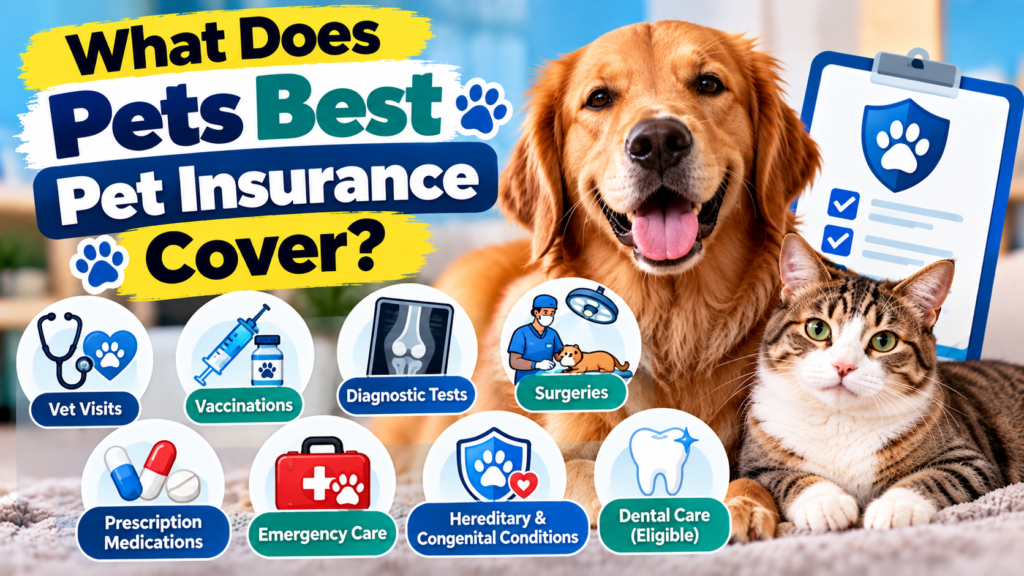
The idea is fairly simple. Imagine having a financial safety net that sits quietly in the background until your dog swallows something dangerous, your cat develops an unexpected illness, or your pet needs surgery after an accident. That is where accident and illness insurance can become useful. Current Pets Best information says eligible coverage can include unexpected injuries and illnesses, hereditary and congenital conditions, emergency care, surgeries, and prescription medications, subject to the policy terms. It also offers an accident-only option for owners primarily concerned about unexpected injuries.
How Pets Best Pet Insurance Works


Pets Best generally allows you to choose your coverage before an unexpected medical event occurs. You select options such as your reimbursement level, deductible, and annual coverage limit, and your premium is based partly on those choices along with factors such as your pet’s age, breed, and location. After an eligible veterinary visit, you submit the required claim information and receive reimbursement according to the policy. Pets Best currently says claims can be submitted online, through its mobile app, or through the customer portal.
The important point is that insurance does not mean every veterinary bill becomes free. Your deductible, reimbursement percentage, annual limit, exclusions, waiting periods, and policy terms all matter. For example, a policy with 90% reimbursement does not necessarily mean the insurer pays 90% of every dollar on every veterinary invoice. You first need to consider whether the treatment is eligible, how the deductible applies, and whether you have reached the annual limit. Understanding those details before buying a policy can prevent unpleasant surprises later.
Pets Best Coverage Options
Pets Best offers several ways to structure pet insurance, which can make the service useful for owners with different budgets and risk preferences. The main categories are Accident & Illness, Accident Only, and optional Wellnesscoverage. The accident and illness option is designed for broader unexpected veterinary expenses, while accident-only coverage focuses on injuries. Wellness coverage works differently because it is intended to help with eligible routine and preventive care rather than unexpected illnesses or accidents.
This variety is one reason pet owners should look beyond the headline premium. A very inexpensive policy may have lower coverage limits or focus only on accidents, while a more comprehensive policy may cost more but provide protection for illnesses as well. Pets Best currently lists reimbursement choices from 70% to 90%, annual deductibles from $100 to $1,000, and annual coverage limits from $5,000 to unlimited for its customizable accident and illness plans.
Accident and Illness Coverage
Accident and illness insurance is the broader option. It is designed to help with eligible veterinary expenses resulting from unexpected illnesses and injuries, depending on the policy. Pets Best lists examples such as allergies, cancer, diabetes, arthritis, emergency care, hereditary conditions, prescription medications, and surgeries among potentially covered areas. Actual coverage depends on the policy, exclusions, waiting periods, and other conditions, so the list should not be treated as a guarantee that every related expense will be reimbursed.
For many owners, this type of coverage is the main reason to purchase pet insurance. A sudden diagnosis can create a much larger expense than an ordinary checkup. Having insurance may allow a pet owner to focus more on the available medical options and less on finding a way to handle one large veterinary bill. At the same time, owners should remember that premiums continue even during years when a pet does not need expensive treatment, so the decision involves balancing ongoing costs with protection against potentially large expenses.
Accident-Only Coverage
Accident-only coverage is a simpler alternative. Pets Best describes it as protection for unexpected injuries such as broken bones, swallowed objects, poisoning, and other accidental injuries. It can therefore be relevant to an owner who wants protection from accident-related veterinary costs without paying for broader illness coverage.
Wellness and Preventive Care
Wellness coverage is designed around routine care. Pets Best currently describes optional wellness benefits that can help with eligible expenses such as regular veterinary visits, vaccinations, dental cleanings, and spay or neutering procedures. These benefits are different from accident and illness coverage because they are intended to help budget for preventive care rather than protect primarily against major unexpected medical events.
What Does Pets Best Pet Insurance Cover?
Pets Best’s current coverage information describes eligible veterinary expenses associated with unexpected accidents and illnesses, subject to the specific policy. Depending on the selected plan, this can include emergency care, surgery, diagnostic treatment, certain prescription medications, and treatment for conditions such as allergies, diabetes, arthritis, and cancer. Hereditary and congenital conditions may also be covered under eligible plans, but coverage can depend on policy language and whether the condition is considered pre-existing.
One useful feature is veterinary flexibility. Pets Best says policyholders can visit licensed veterinarians in the United States, Canada, or Puerto Rico for covered care. This can matter when a pet needs emergency treatment while traveling or when a specialist is required. The company also says its Direct Vet Pay feature is available with its plans, allowing eligible claim reimbursements to be sent directly to the veterinarian when the feature is used and applicable.
Covered Veterinary Expenses
The exact covered expenses depend on the policy you purchase, so reading the sample policy is essential. Medical treatment can include many different cost categories, and the fact that a condition is covered does not automatically mean every related expense is covered. Deductibles, reimbursement percentages, annual limits, waiting periods, and exclusions can all affect the final reimbursement amount. Pets Best itself advises reviewing policy terms for complete details.
This is particularly important when comparing insurers. Two policies can both advertise accident and illness protection while treating examination fees, alternative treatments, dental care, prescription diets, behavioral services, or other expenses differently. A good comparison should therefore examine actual policy language rather than simply comparing monthly premiums. The cheapest policy is not necessarily the policy that produces the lowest total financial burden when a significant claim occurs.
What Does Pets Best Not Cover?
Understanding exclusions is just as important as understanding benefits. Pets Best currently identifies pre-existing conditions as excluded and lists several other areas that may not be covered under its standard dog coverage, including routine and preventive care unless a wellness plan is added, elective and cosmetic procedures, behavioral condition training, alternative and holistic treatments, prescription pet food, supplements, grooming, and breeding or pregnancy-related conditions.
The precise exclusions can vary according to policy and jurisdiction, so pet owners should read the applicable policy documents rather than relying on a general list. This is particularly important for owners of older pets or animals with an existing medical history. Insurance is generally designed to protect against future eligible events, not to retroactively pay for conditions that already existed before coverage began. Pets Best also states that it does not require an exam to enroll, but waiting periods and pre-existing condition rules still apply.
Pre-Existing Conditions and Exclusions
Pre-existing conditions are one of the biggest issues to understand before purchasing any pet insurance. Pets Best defines a pre-existing condition as an illness or injury that occurred or showed signs before coverage began. The company says some conditions may become eligible in certain circumstances if they are considered cured and the pet remains free of treatment and symptoms for the required period stated in the policy.
This is one reason timing matters. Buying insurance after your pet has already developed a significant condition may mean that condition is excluded from future coverage. Purchasing a policy while your pet is healthy can give you more opportunity to obtain coverage for future eligible problems, although it does not guarantee that every future medical issue will be covered.
Pets Best Deductibles, Reimbursement, and Annual Limits
Three numbers deserve special attention when reviewing a Pets Best policy: deductible, reimbursement percentage, and annual coverage limit. Pets Best currently lists annual deductibles ranging from $100 to $1,000, reimbursement options of 70%, 80%, and 90%, and annual limits ranging from $5,000 to unlimited on its customizable accident and illness plans.
Think of these three settings as the controls on a financial dashboard. A higher deductible can reduce the premium but means you take on more of the initial cost. A higher reimbursement percentage can increase the premium but potentially reduces your share of eligible expenses after the deductible. A higher annual limit provides more protection against substantial veterinary expenses but can also affect the premium. The right combination depends on how much you can comfortably pay from savings and how much financial risk you want the policy to transfer to the insurer.
Understanding Policy Customization
Customization can be useful because pet owners do not all have the same budget. Someone with a strong emergency fund may prefer a higher deductible to reduce the regular premium, while another owner may prioritize a higher reimbursement rate or unlimited annual coverage. There is no single combination that works for every household. The better approach is to look at several quote combinations and consider both the monthly cost and the possible out-of-pocket cost during a major claim.
NerdWallet’s 2026 review also reports that Pets Best offers deductibles from $100 to $1,000, reimbursement rates of 70%, 80%, and 90%, and an unlimited annual coverage option. Its sample pricing shows how strongly age and breed can affect premiums, which is why online sample prices should not be treated as a personalized quote.
Is Pets Best Pet Insurance Right for Your Pet?
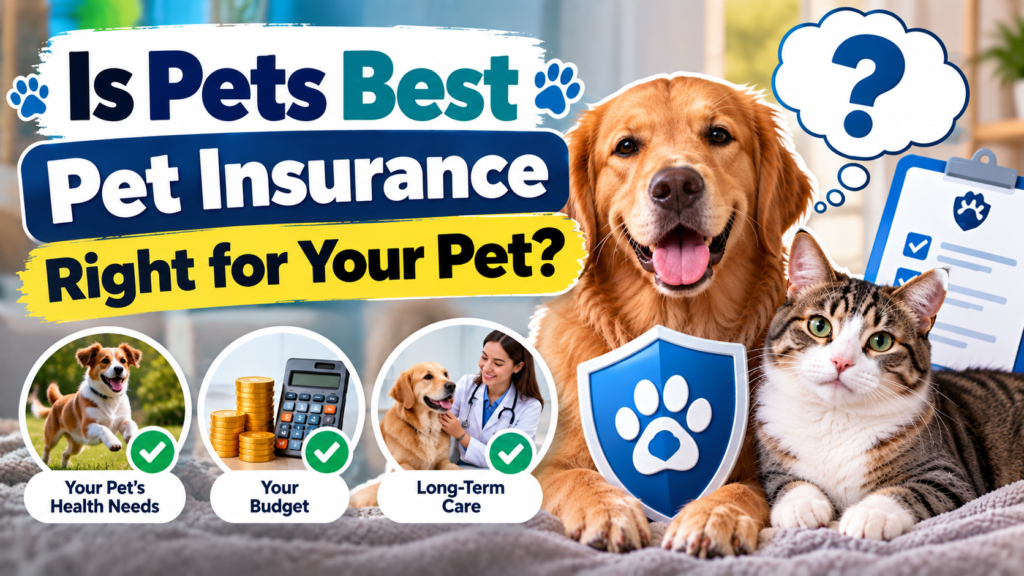
The answer depends on what you want your pet insurance policy to accomplish. If your main concern is protection from expensive accidents and illnesses, an accident and illness policy provides broader protection than accident-only insurance. If you mainly want help with routine expenses, a wellness option may be more relevant. If your priority is keeping the monthly premium lower, you could compare different deductibles, reimbursement levels, and annual limits to see how the price changes.
How Much Does Pets Best Pet Insurance Cost?
There is no single Pets Best price because premiums depend on several factors. Pets Best says pricing can be affected by the pet’s age, breed, location, and selected coverage, including the deductible, reimbursement percentage, and annual limit. The company reported in September 2026 that average pet insurance costs across the market were approximately $62 per month for dogs and $32 per month for cats, while its accident-only plans start at $9 per month for dogs and $6 per month for cats. These are broad figures and starting prices, not guaranteed quotes for a particular pet.
Independent sample pricing also shows substantial variation. NerdWallet’s 2026 review gave sample monthly rates for selected dogs and cats in Katy, Texas using the same $250 deductible, $5,000 annual limit, and 80% reimbursement setup. For example, the sample dog rates ranged from $32 per month for a medium mixed-breed dog at age 2 to $88 for a French bulldog at age 2, while sample cat rates ranged from $20 for a domestic shorthair at age 2 to $30 for a Devon rex. These figures illustrate pricing differences, not what every owner will pay.
Factors That Affect Your Premium
Your pet’s age is an important factor because older animals can have higher expected healthcare costs. Breed can also influence pricing because some breeds are more prone to particular hereditary or medical conditions. Location matters because veterinary costs vary between regions. Your selected deductible, reimbursement rate, annual limit, and optional wellness coverage can also change the final premium.
The best way to compare price is to keep the coverage settings consistent. If one quote uses a $500 deductible and another uses a $100 deductible, comparing only the monthly premiums can create a misleading picture. Instead, compare the same reimbursement level, deductible, annual limit, and major coverage features. Pets Best also says that premiums are not increased based on claims submitted for an individual pet, although premiums can change for other reasons.
Pets Best Waiting Periods
Waiting periods determine how long you must wait after purchasing a policy before certain types of coverage become effective. NerdWallet’s May 2026 review reports that Pets Best’s waiting periods in most states were three days for accidents, 14 days for illnesses, and six months for cruciate ligament issues, while wellness plans have no waiting period. However, waiting periods can vary by state and policy, so the terms attached to your actual policy should be checked before relying on these figures.
Waiting periods are easy to overlook because they appear after the purchase decision rather than at the moment when you are comparing monthly prices. Yet they can matter greatly if a pet becomes sick shortly after enrollment. Pets Best explains that treatment occurring during an applicable waiting period may not be covered and that a condition that develops or shows signs during that period can be treated as pre-existing going forward.
When Does Coverage Begin?
Coverage begins according to the effective date and applicable waiting periods in the policy. This means purchasing a policy today does not necessarily mean every eligible veterinary expense from tomorrow will be reimbursed. Accident, illness, and other coverage categories can have different waiting periods. The safest approach is to review the policy documents and note the exact effective dates before assuming coverage is active.
Also Read
The Benefits of Using MYOB for Small Business Financial Management
A Beginner’s Guide to Navigating Products and Deals on Banggood
The Ultimate Guide to Choosing Ships in World Of Warships
How NordVPN Can Support a Safer and More Private Online Experience
The Ultimate Guide to Getting Started With Instacart – Shoppers
How to File a Pets Best Insurance Claim
The claims process is designed to be digital and relatively straightforward. After your pet receives veterinary treatment, you generally submit the required invoice and claim information through the Pets Best online system or mobile app. The insurer then reviews the claim against your policy, including eligibility, deductible, reimbursement rate, annual limit, and exclusions. If the expense qualifies, reimbursement is issued according to the policy terms.
Direct Vet Pay and Reimbursement
Pets Best offers a Direct Vet Pay feature. According to the company, eligible claim reimbursements can be sent directly to your veterinarian when the feature is used, which may reduce the amount you have to manage personally during a costly treatment episode. The company also provides reimbursement through other methods, including bank account payment and mail, according to its current information.
Pros and Cons of Pets Best
Pets Best has several features that may appeal to pet owners looking for flexible coverage. It offers multiple plan types, customizable deductibles and reimbursement percentages, annual limits up to unlimited on eligible plans, optional wellness coverage, and Direct Vet Pay. NerdWallet’s 2026 review also notes that Pets Best has no upper age limit for enrollment and offers multiple coverage options, although exam fees and certain therapies may require additional coverage and prescription food and supplements are not covered.
Feature | Pets Best Information |
Pets covered | Dogs and cats |
Accident & illness | Available |
Accident-only | Available |
Reimbursement | 70%, 80%, 90% |
Annual deductible | 100–1,000 |
Annual limit | $5,000–Unlimited |
Wellness option | Available as an add-on |
Upper enrollment age | No upper age limit reported |
Direct Vet Pay | Available |
Pre-existing conditions | Not covered |
Why Pet Insurance Matters for Pet Owners
Owning a pet brings happiness, companionship, and many memorable moments, but it also comes with financial responsibilities. Veterinary care can become expensive when a pet needs emergency treatment, surgery, diagnostic tests, or long-term care. Pets Best Pet Insurance can help pet owners manage some of these unexpected veterinary expenses by providing reimbursement for eligible covered treatment under the selected policy.
How to Choose the Right Pets Best Pet Insurance Plan
Choosing a pet insurance plan should begin with your pet’s needs and your household budget. Start by considering your pet’s age, breed, current health history, and the types of veterinary expenses you would find difficult to handle. A young and healthy pet may have different insurance needs from an older pet that requires more regular veterinary attention.
Next, compare the major policy settings. Look at the annual deductible, reimbursement percentage, and annual coverage limit rather than focusing only on the monthly premium. A lower deductible may mean a higher premium, while a higher deductible can reduce the regular cost but leave you responsible for more expenses before reimbursement begins. Similarly, a higher reimbursement percentage can increase the premium but may reduce your share of eligible expenses after the deductible.
Conclusion
Pets Best pet insurance provides several ways for dog and cat owners to prepare for unexpected veterinary costs. Its current offerings include accident and illness coverage, accident-only protection, optional wellness benefits, customizable deductibles, reimbursement levels from 70% to 90%, and annual coverage limits ranging from $5,000 to unlimited on eligible plans. It also offers digital claims and Direct Vet Pay, while its policies exclude pre-existing conditions and contain other limitations that owners should review carefully.
The most important step is not simply finding the lowest monthly premium. Compare the deductible, reimbursement percentage, annual limit, waiting periods, exclusions, wellness benefits, and claim process together. Prices can vary substantially based on your pet’s age, breed, location, and selected coverage, so a personalized quote is more useful than relying on sample prices.
Frequently Asked Questions
No. Pets Best states that pre-existing conditions are not covered. A condition that existed or showed signs before coverage began may therefore be excluded from future claims. Certain conditions may become eligible under specific circumstances if they meet the policy's requirements for being cured and symptom-free.
Pets Best currently states that there are no upper age limits for enrollment. However, age can still affect the premium, so enrolling an older pet may cost more than enrolling a younger animal.
Routine and preventive care is generally not part of standard accident and illness coverage. Pets Best offers optional wellness plans that can help with eligible routine expenses such as vaccinations, regular veterinary visits, dental cleanings, and spay/neuter procedures.
Yes. Pets Best currently offers Direct Vet Pay, which can allow eligible claim reimbursements to be sent directly to your veterinarian. The feature does not remove deductibles, exclusions, reimbursement percentages, or annual limits.
The price depends on factors such as your pet's age, breed, location, deductible, reimbursement percentage, annual limit, and selected coverage. Pets Best reported in September 2026 that its accident-only plans start at $9 per month for dogs and $6 per month for cats, but actual quotes can be substantially different.
Table of Contents
Popular Posts

-
 Affordable Technical SEO Audit for Small Business: A Complete Guide26 Jun 2025 Blog
-
 How to Get an Affordable Technical SEO Audit for Small Business27 Jun 2025 Blog
-
 Local SEO Audit Checklist for Startups: A Beginner’s Guide28 Jun 2025 Blog
-
 The Ultimate Local SEO Audit Checklist for Startups28 Jun 2025 Blog
-
 Top On-Page SEO Audit Steps for Service Websites Every Business Should Know29 Jun 2025 Blog
-
 The Impact of On-Page SEO Audit Steps for Service Websites on UX01 Jul 2025 Blog
-
 Technical SEO for WordPress: The Ultimate Beginner’s Guide01 Jul 2025 Blog
-
 Technical Mobile SEO Audit Tips for Developers02 Jul 2025 Blog
Related Post