
What Makes IQAir Different From Other Air Quality Solutions?

Discover why IQAir stands out from other air quality solutions with real-time monitoring, accurate air quality data, smart technology, and indoor and outdoor pollution tracking. Learn how IQAir helps users understand, monitor, and manage air quality more effectively.
Table of Contents
What Is IQAir?
IQAir is an air quality technology company focused on helping people understand and improve the air they breathe. Unlike a solution that only displays a single pollution number, IQAir combines air quality monitoring, data analysis, forecasting, alerts, and air purification into a broader ecosystem. Its AirVisual platform collects information from government monitoring stations, sensors, and other sources and makes that information available through its website, app, monitors, and enterprise tools. IQAir says its platform covers more than 80,000 sensors, while its 2025 World Air Quality Report used data from 9,446 cities across 143 countries, regions, and territories.
That broader approach is one of the main reasons IQAir stands apart. Many people use an air quality app simply to check whether today’s air is good or bad. IQAir attempts to answer a more useful question: What is happening with the air around me, why does it matter, and what can I do about it? Depending on the product, users can view real-time pollution levels, historical trends, forecasts, health recommendations, and indoor or outdoor measurements. This makes the platform useful not only for checking pollution but also for making everyday decisions about exercise, ventilation, travel, work, and indoor air management.
IQAir’s Focus on Air Quality
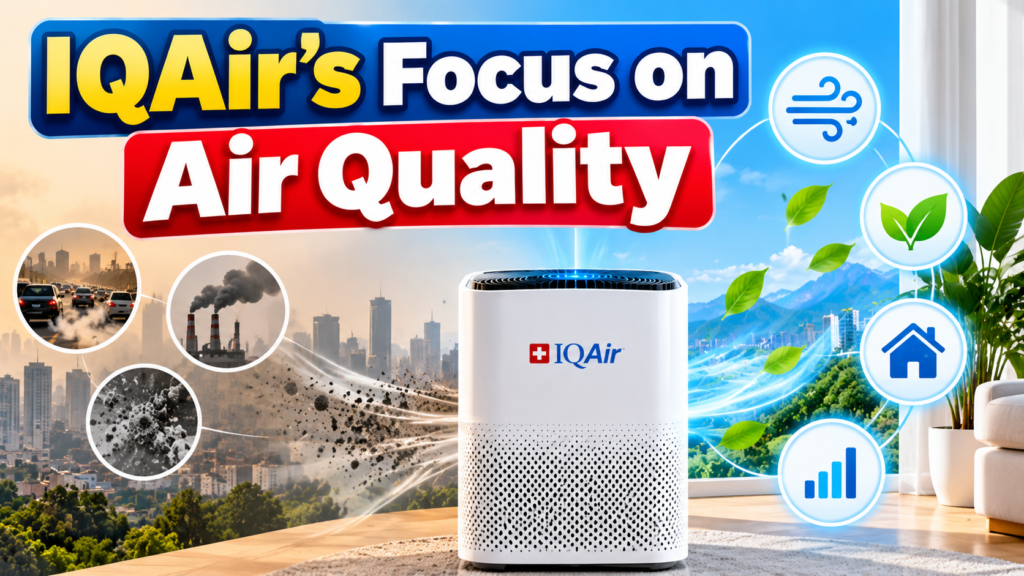

A major difference is that air quality is central to IQAir’s product ecosystem rather than being an extra feature attached to another service. The company provides monitors, an air quality app, an online data platform, outdoor monitoring equipment, and air purification products. This creates a connected system where information from monitoring devices can help users understand conditions and, in compatible setups, control purification equipment. IQAir describes this approach as 360° air quality management, combining monitoring, historical information, purification, and actionable insights.
How IQAir Differs From Basic Air Quality Apps
A basic air quality application may provide an AQI value, weather information, or a pollution forecast for a selected city. That can be useful, but city-level information does not always represent the air outside your actual home, school, workplace, or neighborhood. Pollution can change significantly from one location to another because of traffic, construction, industry, weather, wildfires, agricultural activity, and other local factors. IQAir places strong emphasis on real-time and hyperlocal information, giving users access to data from a large network of monitoring sources.
This is particularly useful when air quality changes quickly. Imagine two neighborhoods in the same city: one may be close to a busy highway while another is surrounded by parks and residential streets. A single city-wide reading could make both locations appear identical even when actual exposure is different. Hyperlocal monitoring tries to reduce that information gap. IQAir’s AirVisual Outdoor monitor, for example, is designed to provide local outdoor measurements around homes, schools, and businesses and can track parameters such as PM1, PM2.5, PM10, temperature, humidity, and atmospheric pressure.
Real-Time and Hyperlocal Monitoring
Hyperlocal air quality monitoring is one of IQAir’s strongest differentiators. Instead of depending entirely on a distant monitoring station, compatible IQAir equipment can measure conditions at a specific location. This can help users identify patterns that would otherwise remain hidden, such as pollution entering a building from outdoors or particulate levels increasing during particular activities.
The value becomes even clearer indoors. Cooking, smoking, cleaning, renovation, heating, poor ventilation, and outdoor pollution can all affect indoor air. An indoor monitor can show changes over time rather than asking users to guess whether the air is healthy. IQAir’s AirVisual Pro, for example, measures PM2.5, CO2, temperature, and relative humidity and can display current and historical information.
IQAir’s Role in Understanding Global Pollution
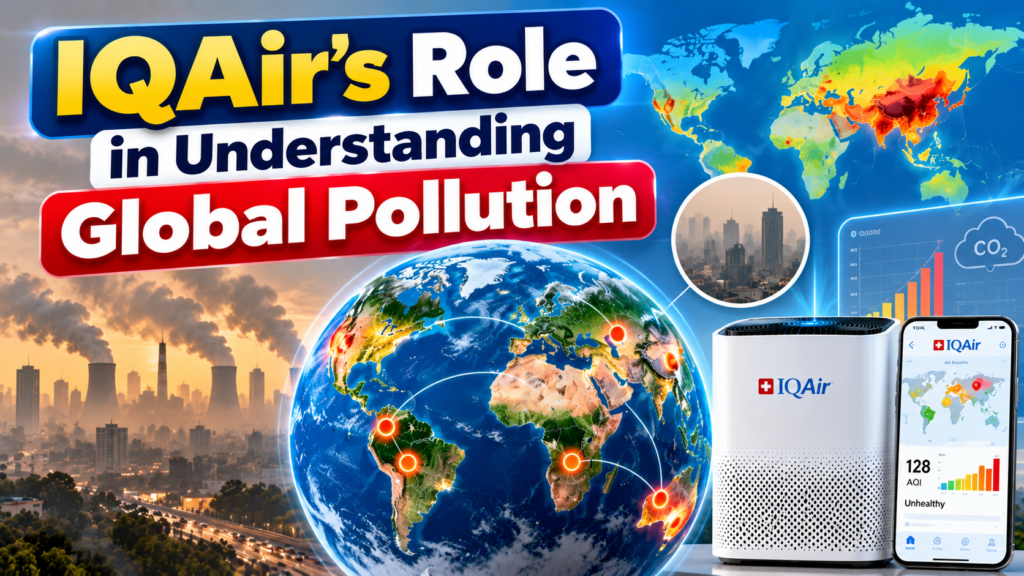
IQAir’s global reporting work also separates it from solutions designed purely for personal monitoring. Its 2025 World Air Quality Report examined PM2.5 conditions across 9,446 cities in 143 countries, regions, and territories. The report found that only 14% of global cities met the WHO annual PM2.5 guideline of 5 µg/m³, while 130 of the 143 countries and territories analyzed exceeded that guideline.
These numbers demonstrate why air quality monitoring remains important worldwide. Pollution is not simply a problem for a few major cities. It is a global environmental issue with significant local differences. Platforms that make air quality data easier to access can help individuals, organizations, researchers, and communities understand those differences and respond more effectively.
A Large Global Air Quality Network
Another important difference is the scale of IQAir’s data ecosystem. The AirVisual platform combines information from different types of monitoring sources rather than relying on one sensor or one government network. IQAir states that its platform includes data from government stations, AirVisual monitors, and other low-cost sensors, with the data processed through its validation system before publication.
The scale also provides useful context for understanding pollution beyond your own location. IQAir’s 2025 World Air Quality Report analyzed PM2.5 data from 9,446 cities in 143 countries, regions, and territories, using more than 40,000 regulatory monitoring stations and low-cost sensors from a wide range of contributors. This creates a much broader picture of global air pollution than a solution designed only for a single building or local monitoring station.
Government, Sensor, and Community Data
Different data sources have different strengths. Government reference stations can provide highly established measurements, while distributed lower-cost sensors can help fill geographical gaps. Community and privately operated sensors can also increase coverage in places where official monitoring infrastructure is limited. IQAir’s platform brings these sources together and applies data validation before publishing measurements.
This matters because air quality data is only useful when people can trust it. A huge collection of measurements is not automatically better if inaccurate or abnormal readings are presented without review. IQAir says its validation process is cloud-based and uses machine learning to evaluate measurements before they appear on the platform.
Machine Learning and Data Validation
Technology is another area where IQAir tries to differentiate itself. The company says its AirVisual data validation system uses machine learning to assess measurements from different monitoring sources. This is important because sensors can sometimes produce unusual readings, and even government reference stations can occasionally report anomalies.
Machine learning does not magically make every sensor perfect, but it can provide an additional layer of quality control. Think of it like having a digital editor checking a large stream of information before publication. When thousands of sensors generate measurements across different environments, automated validation becomes particularly useful because manually reviewing every data point would be difficult. IQAir says the goal is to centralize available air quality information while maintaining a reliable data stream.
Indoor and Outdoor Air Quality Monitoring
Many air quality solutions concentrate mainly on outdoor pollution. IQAir takes a broader approach by connecting indoor and outdoor monitoring. This is important because people spend a large amount of time indoors, and outdoor pollution is only part of the overall exposure picture. Indoor activities and building conditions can create additional pollution or allow outdoor pollution to enter.
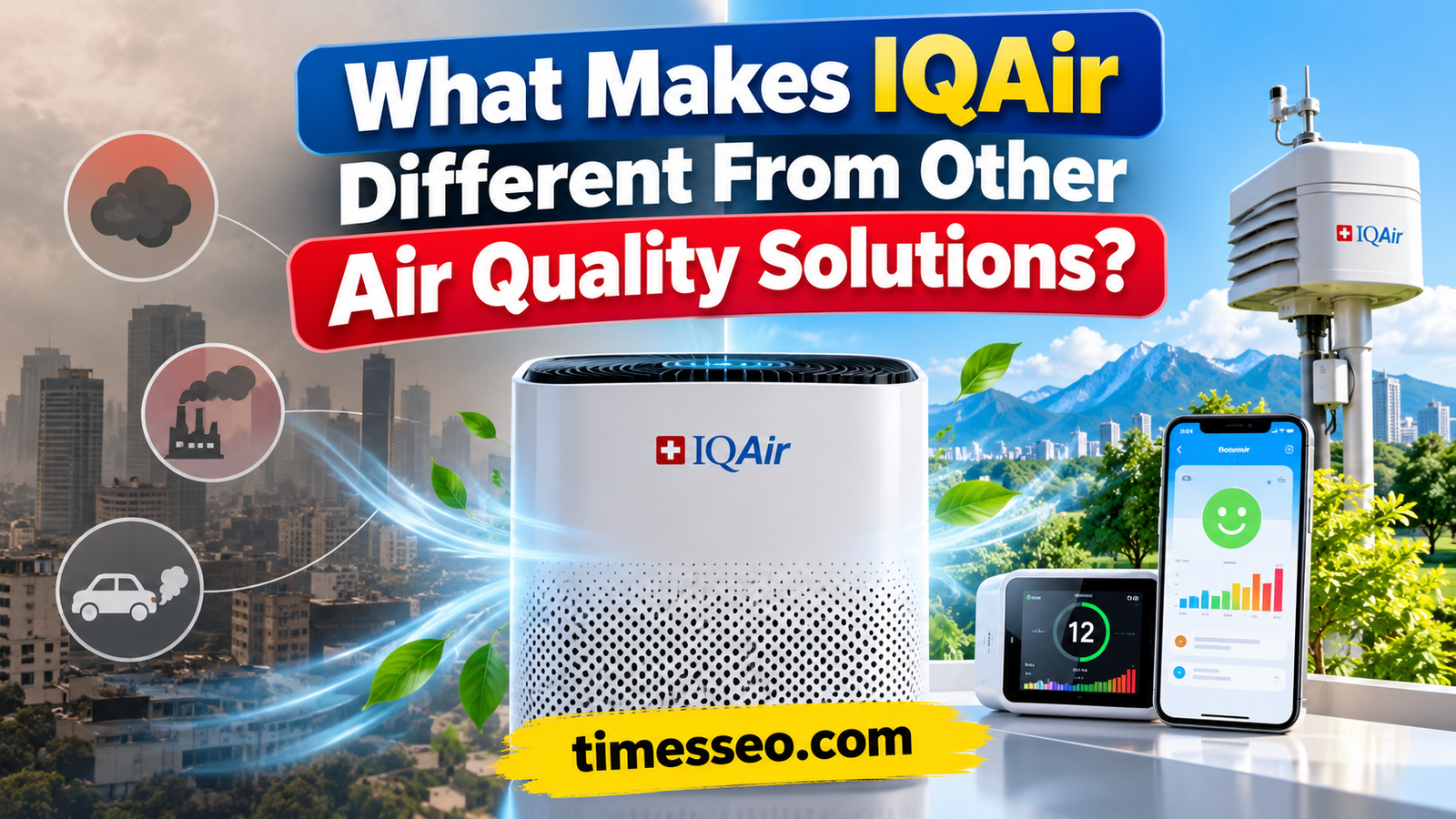
The AirVisual ecosystem can compare indoor and outdoor conditions, helping users understand how effectively a building protects occupants from outside pollution. IQAir’s indoor and outdoor monitor bundle is specifically designed around this comparison and sends information from both monitors to the AirVisual app. This can turn an abstract pollution reading into a practical building-management question: What is happening inside my space compared with the air outside?
AirVisual Pro and AirVisual Outdoor
AirVisual Pro is designed for indoor monitoring, while AirVisual Outdoor is designed for outdoor conditions. AirVisual Pro tracks parameters including PM2.5, CO2, temperature, and humidity. AirVisual Outdoor can monitor up to eight environmental parameters, including AQI, PM1, PM2.5, PM10, temperature, humidity, barometric pressure, and optional CO2.
This combination makes IQAir more flexible than a solution that only reports outdoor AQI. For example, a school could monitor outdoor pollution while also understanding indoor conditions. A business could track air quality across different areas. A homeowner could compare indoor conditions with outdoor pollution and make better decisions about ventilation and purification.
Advantages of IQAir
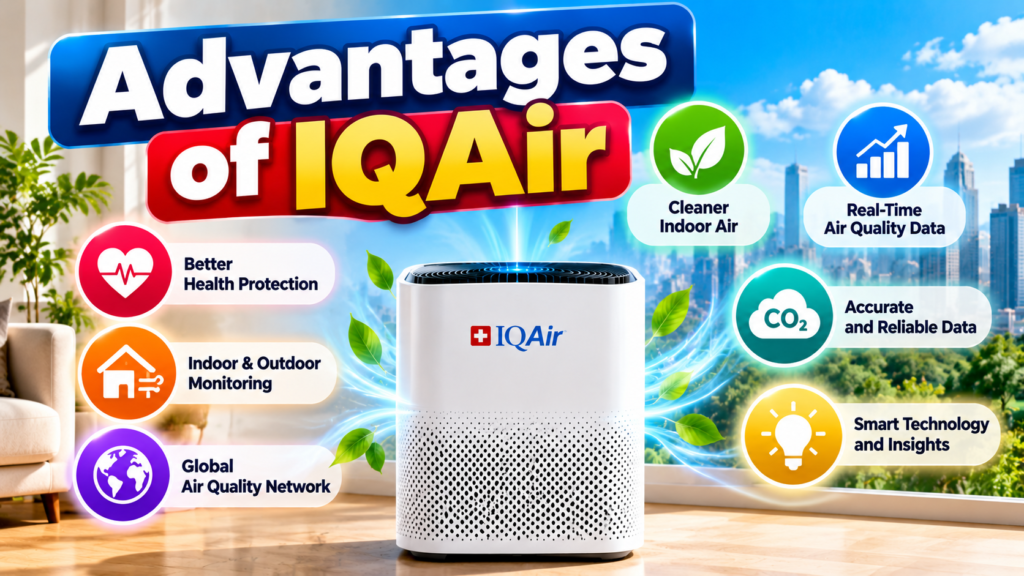
IQAir’s biggest advantage is the amount of information available in one ecosystem. Users can move from global pollution data to local conditions, then from outdoor measurements to indoor readings, and finally to practical actions. Its large monitoring network also gives the platform a broad geographic reach. IQAir says its AirVisual network contains more than 80,000 sensors, while its World Air Quality Report uses a separate broad dataset involving regulatory stations and low-cost sensors.
Another advantage is data validation. Air quality information can be confusing when readings from different sensors disagree. IQAir’s machine-learning-based validation process is designed to identify problematic measurements before they are published. The result is an ecosystem focused not just on collecting data, but also on making that data more useful.
Potential Limitations to Consider
IQAir is not necessarily the best choice for every person or every application. Advanced monitoring hardware and enterprise solutions can cost more than basic air quality apps or inexpensive consumer sensors. For someone who only wants to check a general city-level AQI once a day, the additional features may not be necessary.
There is also an important distinction between air monitoring and air purification. A monitor can tell you that pollution is high, but it does not automatically eliminate every pollutant. Similarly, a purifier can improve indoor air but cannot replace outdoor monitoring or good ventilation decisions. Users should therefore choose equipment based on the specific problem they are trying to solve rather than assuming that one device can handle every air-quality challenge.
Air Quality Forecasting and Alerts
Knowing today’s air quality is helpful, but knowing what may happen next can be even more useful. IQAir’s AirVisual platform provides air quality forecasts and alerts, including a 7-day air pollution and weather forecast on its platform. Forecasting can help users plan activities rather than simply react to pollution after it becomes severe.
For example, someone planning an outdoor run could check the forecast before leaving home. A school could consider outdoor activities when pollution levels are expected to rise. A business could use information about changing outdoor conditions when managing ventilation. The goal is to make air quality information actionable rather than leaving users with a number that does not tell them what to do next.
Also Read
Why Waterdrop (US) Is Gaining Attention Among Modern Consumers
Exploring Timeless Clothing Designs and Quality Materials at Gentle Herd
The Benefits of Using MYOB for Small Business Financial Management
Building a Fast and User-Friendly WordPress Site with MH Themes
Understanding the Features and Benefits of Manfrotto Products
The IQAir AirVisual App
The AirVisual app is another major part of the IQAir ecosystem. It gives users access to real-time outdoor pollution information, forecasts, alerts, historical information, and health-related recommendations. IQAir says the app provides access to data across hundreds of thousands of locations and combines government monitoring stations with validated sensors and other datasets.
The app becomes more useful when paired with compatible IQAir monitors and purifiers. Instead of using one device to measure air and another unrelated application to interpret it, users can manage information through the same ecosystem. Compatible IQAir purifiers can also be monitored and controlled through the app, including functions such as fan-speed adjustment and filter-use information.
IQAir for Homes, Schools, and Businesses
IQAir’s technology is not limited to individual consumers. Its monitoring and dashboard solutions are also designed for organizations that need to manage air quality across multiple locations. This makes the platform relevant to schools, offices, hotels, healthcare environments, public facilities, and other organizations where indoor air quality can affect comfort and operations.
The AirVisual Enterprise Dashboard allows organizations to view real-time air quality information, live maps, and data from multiple monitors. IQAir also says administrators can manage monitors across different rooms and buildings and control account permissions and data access. This is a different level of functionality from a simple consumer air quality app.
Enterprise Air Quality Management
For organizations, the challenge is rarely just finding one pollution reading. The bigger challenge is understanding what is happening across several rooms, floors, buildings, or locations. An enterprise dashboard can bring those readings into one interface and make unusual conditions easier to identify.
This centralized approach can be especially valuable when air quality changes frequently. Instead of physically checking individual devices, managers can access information remotely. That can save time and make air quality management more systematic, especially for organizations with multiple sites.
Air Monitoring and Purification Together
One of IQAir’s more distinctive characteristics is its combination of air monitoring and air purification. Monitoring tells you what is happening, while purification provides a way to respond to indoor air conditions. IQAir connects these two parts through its product ecosystem, allowing compatible devices and applications to work together.
This creates a simple feedback loop: measure the air, understand the condition, take action, and then measure again. Without monitoring, users may run a purifier without knowing whether indoor conditions are improving. Without purification, users may know the air is polluted but have fewer immediate options for reducing indoor particulate exposure. Combining both creates a more complete air-quality strategy.
Who Should Consider IQAir?
IQAir can be especially useful for people who want more than a simple pollution number. Homeowners may use it to compare indoor and outdoor conditions. Schools and businesses can use monitoring systems to understand air quality across buildings. Travelers, runners, people working outdoors, and individuals concerned about pollution can use the AirVisual platform to check conditions and forecasts before making plans.
It is also useful for organizations that need centralized information. The enterprise dashboard is designed to monitor multiple rooms and buildings, which can be difficult to manage with independent consumer devices.
The Importance of Hyperlocal Air Quality
Air pollution is not always evenly distributed. Traffic, construction, industrial activity, weather, geography, and local events can create differences between nearby locations. This is why a city-wide AQI value can sometimes hide important local variations.
Hyperlocal monitoring gives users a closer view of their actual surroundings. IQAir’s outdoor monitor is designed specifically for this purpose, providing real-time local measurements and remote connectivity. When paired with indoor monitoring, users can also see how outdoor pollution relates to conditions inside their building.
IQAir’s Role in Understanding Global Pollution
IQAir’s global reporting work also separates it from solutions designed purely for personal monitoring. Its 2025 World Air Quality Report examined PM2.5 conditions across 9,446 cities in 143 countries, regions, and territories. The report found that only 14% of global cities met the WHO annual PM2.5 guideline of 5 µg/m³, while 130 of the 143 countries and territories analyzed exceeded that guideline.
These numbers demonstrate why air quality monitoring remains important worldwide. Pollution is not simply a problem for a few major cities. It is a global environmental issue with significant local differences. Platforms that make air quality data easier to access can help individuals, organizations, researchers, and communities understand those differences and respond more effectively.
Is IQAir Worth Considering?
For people who want a complete view of air quality, IQAir offers more than a conventional AQI application. Its combination of global data, hyperlocal monitoring, machine-learning-based validation, forecasting, alerts, indoor and outdoor sensors, enterprise tools, and purification integration creates a broad ecosystem. The value is strongest for users who want to monitor air continuously and use that information to make practical decisions.
The main question is not simply whether IQAir has more features. The better question is whether those features match your needs. If you only want a quick city pollution reading, a basic app may be enough. If you want detailed, real-time, indoor-and-outdoor information and the ability to connect monitoring with air purification, IQAir becomes a much more compelling option.
Conclusion
So, what makes IQAir different from other air quality solutions? The answer is its ecosystem approach. Instead of treating air quality as a single number, IQAir connects monitoring devices, global data, hyperlocal measurements, machine learning, forecasts, alerts, mobile software, enterprise dashboards, and air purification into a broader system.
Its large data network and focus on validation help provide a more detailed picture of pollution, while AirVisual monitors can bring that information closer to the user’s actual environment. For homeowners, schools, businesses, and organizations, this can turn air quality from something they occasionally check into something they can continuously understand and manage. That combination of data + monitoring + insights + action is the strongest reason IQAir stands apart.
Frequently Asked Questions
IQAir is used to monitor, understand, and manage air quality. Its ecosystem includes air quality monitors, the AirVisual app, global pollution data, forecasts, alerts, enterprise dashboards, and compatible air purification products.
A normal AQI app may mainly provide pollution information for a city or location. IQAir goes further with hyperlocal monitoring, indoor and outdoor sensors, historical data, forecasting, data validation, and integration with compatible purification products.
Yes. The AirVisual platform provides real-time air quality information from a large network of monitoring sources. IQAir also offers monitors that can measure local indoor and outdoor conditions in real time.
Yes. IQAir's AirVisual Pro is designed for indoor air monitoring and measures parameters including PM2.5, CO2, temperature, and humidity. Compatible indoor and outdoor monitors can also be used together to compare conditions.
Yes. IQAir provides enterprise monitoring tools that can help organizations manage air quality across multiple rooms and buildings. Its Enterprise Dashboard provides centralized access to real-time air quality information and monitoring controls.
Table of Contents
Popular Posts

-
 Affordable Technical SEO Audit for Small Business: A Complete Guide26 Jun 2025 Blog
-
 How to Get an Affordable Technical SEO Audit for Small Business27 Jun 2025 Blog
-
 Local SEO Audit Checklist for Startups: A Beginner’s Guide28 Jun 2025 Blog
-
 The Ultimate Local SEO Audit Checklist for Startups28 Jun 2025 Blog
-
 Top On-Page SEO Audit Steps for Service Websites Every Business Should Know29 Jun 2025 Blog
-
 The Impact of On-Page SEO Audit Steps for Service Websites on UX01 Jul 2025 Blog
-
 Technical SEO for WordPress: The Ultimate Beginner’s Guide01 Jul 2025 Blog
-
 Technical Mobile SEO Audit Tips for Developers02 Jul 2025 Blog
Related Post