

How to Get Started With Hargreaves Lansdown: A Complete Guide

Learn how to get started with Hargreaves Lansdown with this complete beginner-friendly guide. Discover account options, fees, investment choices, ISA and SIPP basics, funding methods, and practical tips to start investing with confidence.
Table of Contents
What Is Hargreaves Lansdown?
Hargreaves Lansdown, commonly known as HL, is a UK investment and savings platform that allows individuals to hold and manage different types of investments through online accounts. HL provides access to products such as shares, funds, exchange-traded funds (ETFs), investment trusts, bonds and pensions. According to its current website, more than 2 million clients use the platform, while it has more than £172 billion under administration. HL The platform also provides investment research, market information, ready-made investment choices and tools designed to help investors manage their portfolios.
Starting with an investment platform can feel complicated because there are many terms to understand. You may see words such as ISA, SIPP, ETF, fund, dealing charge, account charge and tax allowance before you even make your first investment. The good news is that you do not need to understand everything on day one. A better approach is to first decide what you are investing for, choose the appropriate account, understand the costs, and then learn how different investments work. HL itself makes clear that investments can rise and fall in value and that you could receive less than you originally invested.
Why Do Investors Use HL?
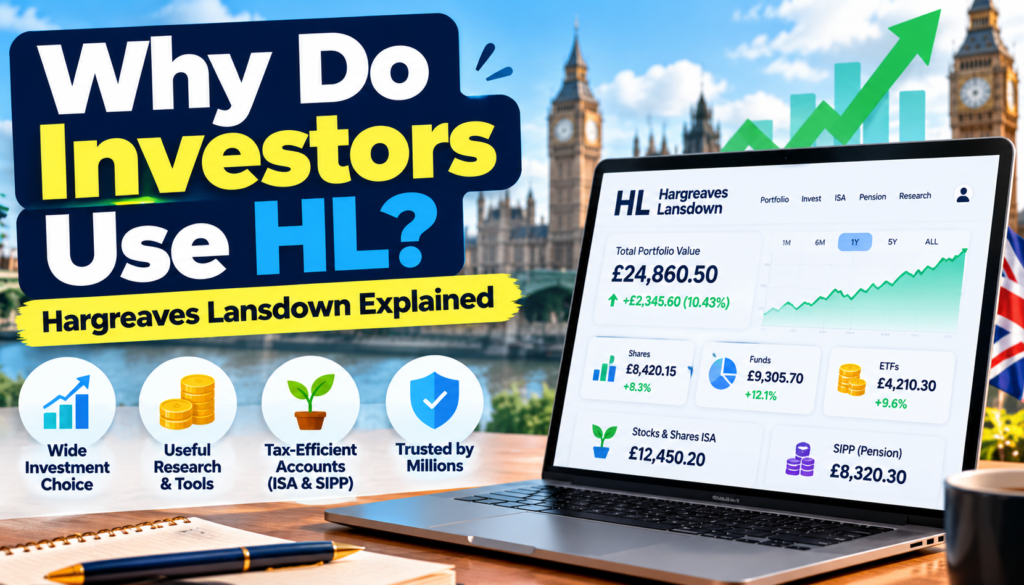

One reason investors consider HL is the combination of investment choice and research available on one platform. You can build your own portfolio or explore ready-made investment options. HL also provides research and investment ideas, allowing users to investigate investments before making decisions. Its platform can be accessed online and through its app, making it possible to monitor investments without relying entirely on paper statements or branch visits.
Another useful feature is that different HL accounts can be managed using the same login. For example, someone could potentially have an ISA and another investment account and view them together. However, having several accounts does not automatically make a portfolio better. Each account has its own purpose, tax treatment and rules, so the important first step is understanding what each account is designed to do.
Understanding the Main HL Account Types
Choosing the right account is one of the most important parts of getting started with Hargreaves Lansdown. Think of an investment account as a container: the investments sit inside it, but the rules around that container determine how you contribute, withdraw money and deal with tax. HL offers several account types, but three common options are the Stocks and Shares ISA, Fund and Share Account, and SIPP. The appropriate option depends on your goals, circumstances and eligibility.
Stocks and Shares ISA
HL currently lists an annual account charge of up to 0.35% for its Stocks and Shares ISA, with different charges applying according to the type and value of investments held. The account can hold investments such as funds, UK and overseas shares, investment trusts, ETFs and bonds. For someone considering long-term investing, understanding the ISA structure is therefore important before simply choosing individual investments.
Fund and Share Account
The Fund and Share Account is a flexible investment account that does not have the annual ISA contribution limit. HL describes it as a flexible account where investors can hold and trade a broad range of investments. This flexibility can be useful, but unlike an ISA, it does not provide the same ISA tax shelter.
Hargreaves Lansdown currently charges up to 0.35% for holding funds in this account up to the first £250,000, with lower percentage tiers at higher values. Its current online fund dealing charge is £1.95 per trade, while other dealing charges can apply to shares and similar investments. Always check the latest HL tariff before investing because charges can change.
SIPP and Pension Investing
A Self-Invested Personal Pension (SIPP) is designed for pension investing rather than ordinary day-to-day investing. HL currently lists an annual account charge of up to 0.35% for holding investments in a SIPP, although the investments themselves can have separate costs. Pension contributions can also receive tax relief under applicable UK rules.
For example, HL explains that a £80 pension contribution can receive £20 of basic-rate tax relief, producing £100 in the pension. Higher- and additional-rate taxpayers may be able to claim further relief depending on their circumstances. Pension rules are different from ISA rules, particularly around access and taxation, so a SIPP should be considered as a long-term retirement account rather than simply another investment wallet.
Who Can Open an HL Account?
Eligibility depends on the specific HL account you want to open. For example, HL says that its Stocks and Shares ISA is available to people aged 18 or over who are UK residents, subject to its eligibility rules. Its account comparison information also lists the Fund and Share Account as available to UK and EEA residents aged 18 and over, subject to the applicable requirements.
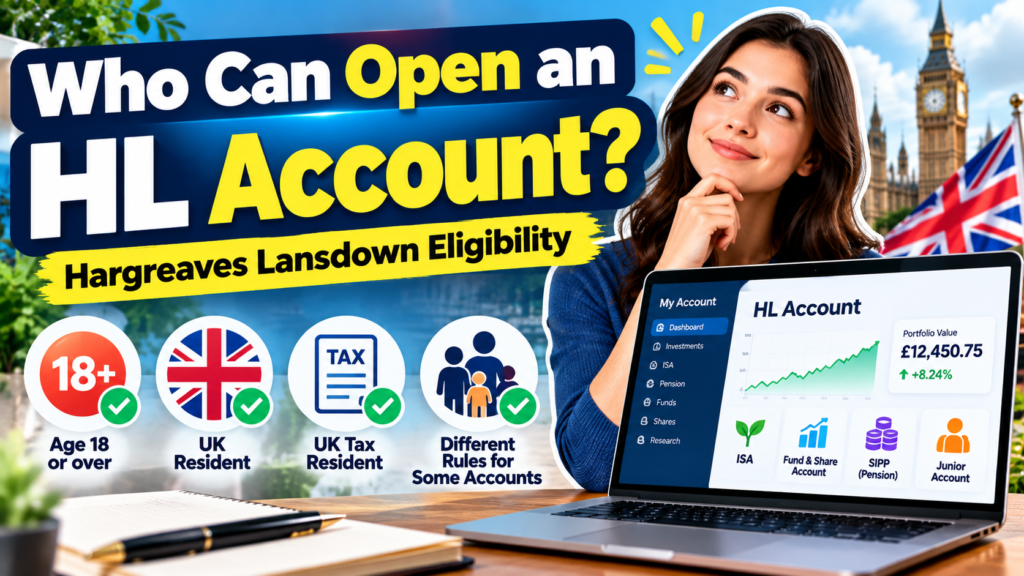
This distinction matters if you live outside the UK. You should not assume that an account available to a UK resident will automatically be available to you in another country. Tax rules can also differ depending on where you are resident. Before transferring money, check Hargreaves Lansdown current eligibility requirements and consider the tax rules in your country of residence.
What You Need Before Opening an Account
Opening an online investment account is generally straightforward, but having the required information ready can make the process smoother. For a Stocks and Shares ISA, HL says you will need personal details such as your name, address, date of birth and email address, as well as your National Insurance number and a UK bank account for funding and withdrawals.
It is also useful to decide what you want the account to achieve before opening it. Are you investing for five years, ten years, retirement or another long-term objective? Are you planning to invest a lump sum or make monthly contributions? These questions are more important than choosing an investment simply because it appears popular. A clear objective gives you a framework for deciding how much risk you can accept and how often you should review your portfolio.
How to Open a Hargreaves Lansdown Account
The basic process is to visit the official HL website, choose the account you are eligible for, provide your personal information, complete the required checks and then fund the account. HL says that opening a Stocks and Shares ISA can normally be completed online in a few minutes.
Complete Your Personal Details
You will generally provide information needed to identify you and verify your eligibility. Depending on the account, this can include your address, date of birth, National Insurance number and bank information. Make sure the details match your official records because incorrect information can delay account verification or payments.
After the account is opened, take time to explore the dashboard before buying anything. Look at the cash balance, account documents, available investments, charges and transaction areas. There is no advantage in rushing straight into your first trade simply because the account is ready.
How to Add Money to Your Account
Once your account is active, you can add money according to the rules of that particular account. Hargreaves Lansdown states that its Stocks and Shares ISA can be opened from £100 as a lump sum or £25 per month through Direct Debit. Its Fund and Share Account can be opened with £0 and investments can start from £100 or £25 per month through Direct Debit.
Monthly investing can be useful for people who prefer a regular approach rather than trying to decide when to invest a large amount. HL also states that regular monthly investing can avoid dealing charges for certain investments, although the exact terms depend on the investment. Before setting up a payment, make sure the amount is affordable and does not interfere with emergency savings or essential expenses.
How HL Regular Investing Works
Regular investing means setting up a recurring contribution and using it to purchase investments according to your chosen instructions. HL says customers can set up a Direct Debit from as little as £25 per month. This approach can turn investing into a routine instead of requiring you to make a fresh decision every month.
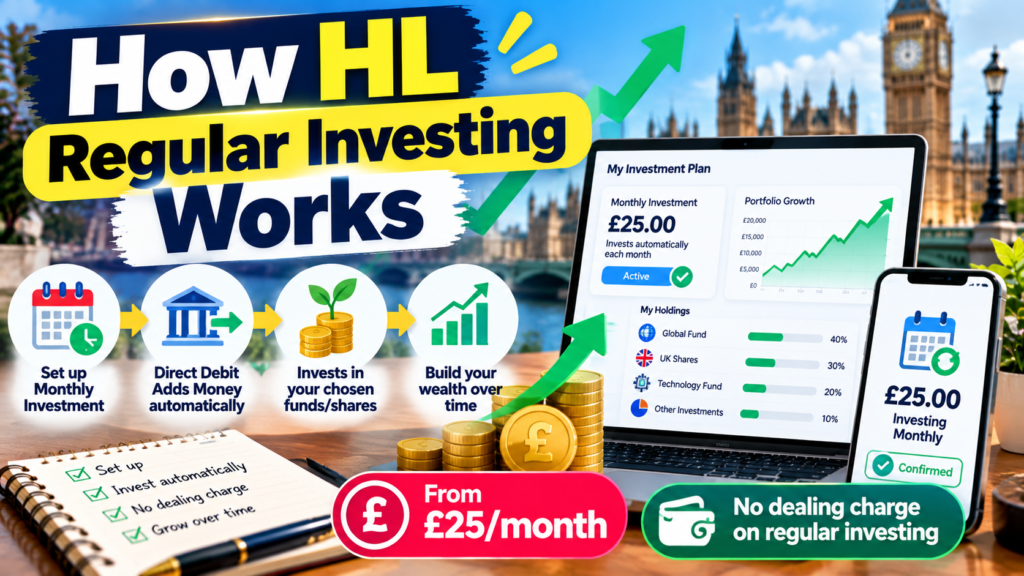
One advantage of regular investing is that you buy investments at different market prices over time. This means you are not relying entirely on one purchase date. However, regular investing does not remove investment risk, and the value of investments can still fall. It is simply a method of contributing money rather than a guarantee of positive returns.
Choosing Your First Investment
Opening an account is only the beginning. The next question is what to put inside it. HL provides access to a wide range of investments, including funds, shares, ETFs, investment trusts and bonds. Each investment behaves differently, carries different risks and may have different charges.
A beginner should avoid choosing an investment simply because its recent performance looks impressive. Past performance does not guarantee future results. Instead, understand what the investment owns, how diversified it is, what fees it charges and how much its value could fluctuate.
Funds, Shares and ETFs
Funds pool money from multiple investors and invest according to a particular strategy. Depending on the fund, the portfolio might contain shares, bonds, property or other assets. Funds can make diversification easier because one investment may provide exposure to many underlying holdings.
Individual shares represent ownership in a particular company. They can offer substantial growth potential but can also experience significant price movements because your money is concentrated in specific businesses.
ETFs are traded on an exchange and typically track an index, sector, commodity or another group of assets. They can provide diversification through a single security, although not every ETF has the same level of diversification or risk.
The right choice depends on your objectives, risk tolerance and circumstances rather than a simple beginner-versus-expert rule.
Understanding Hargreaves Lansdown Fees
Fees are one of the easiest things for new investors to overlook. A small percentage may not sound significant, but charges can affect returns over many years. HL changed several of its charges from 1 March 2026, including reducing the standard account charge for funds in several accounts from 0.45% to 0.35% and reducing the online dealing charge for shares from £11.95 to £6.95 for the applicable standard dealing tier.
Hargreaves Lansdown current tariff also shows a £1.95 online dealing charge for funds, while regular monthly investing can have different dealing arrangements. Investment-specific charges can apply separately. For example, funds can have their own ongoing charges set by the fund manager, and these are separate from HL’s platform or account charges.
Cost | What it means |
Account charge | Fee for holding investments through the HL account |
Dealing charge | Fee that may apply when buying or selling certain investments |
Fund ongoing charge | Cost associated with running the underlying fund |
Overseas dealing costs | Additional costs may apply to some overseas investments |
Other investment costs | Spreads, taxes or provider-specific charges may apply |
Because charges can change, check the current HL tariff before making a transaction rather than relying on an old comparison article.
Also Read
Why More People Are Choosing Breeze for Everyday Convenience
The Benefits of Using MYOB for Small Business Financial Management
Understanding the Features and Benefits of Manfrotto Products
The Ultimate Guide to Choosing Ships in World Of Warships
How a Bonus Can Improve Employee Motivation and Workplace Performance
How HL Regular Investing Works
Regular investing means setting up a recurring contribution and using it to purchase investments according to your chosen instructions. HL says customers can set up a Direct Debit from as little as £25 per month. This approach can turn investing into a routine instead of requiring you to make a fresh decision every month.
One advantage of regular investing is that you buy investments at different market prices over time. This means you are not relying entirely on one purchase date. However, regular investing does not remove investment risk, and the value of investments can still fall. It is simply a method of contributing money rather than a guarantee of positive returns.
Using HL Research and Investment Tools
One of Hargreaves Lansdown useful features is the amount of information available to investors. Its platform provides research, analysis and investment ideas alongside access to different investment products.
Research should be used as a starting point rather than a replacement for understanding your own objectives. Read the fund information, look at the investment strategy, review costs and understand the risks. If an investment is difficult to explain in simple terms, spend more time researching it before committing money. Good investing is often less about finding a magical investment and more about making decisions you can understand and stick with.
Common Mistakes New HL Investors Should Avoid
One common mistake is opening an account without knowing what type of account you actually need. An ISA, SIPP and Fund and Share Account are not interchangeable. Their tax treatment, contribution rules and withdrawal arrangements differ, so choosing the account should come before choosing investments.
Another mistake is ignoring fees. Investors often focus on the headline investment return while forgetting that account charges, dealing costs and fund expenses can reduce the amount they ultimately receive. HL clearly separates its account charges from charges associated with individual funds, so checking both is important.
Other mistakes include investing money needed for short-term expenses, concentrating too heavily in one company, chasing recent winners and making frequent emotional trades. A simple investment plan can help reduce these problems. If you are unsure about the suitability of an investment or account for your personal circumstances, consider obtaining regulated financial advice.
Is Hargreaves Lansdown Suitable for Beginners?
HL offers several features that can make the process easier for someone learning about investing. These include ready-made investment options, research, educational material, online account management and regular investing facilities. At the same time, the platform provides access to many different investments, which means a beginner can face a lot of choices.
That is why being a beginner is not really about finding the platform with the fewest options. It is about having a process for making decisions. Start by understanding your goal, learn the account rules, understand costs, choose investments that match your risk tolerance and review your plan periodically. The platform is the tool; your investment process is what determines how you use it.
How to Keep Your HL Account Secure
Investment accounts should be protected with the same care you would give to online banking. Use a strong, unique password and avoid sharing login details with anyone. Be careful with emails, messages and phone calls that ask for passwords, verification codes or payment information.
It is also sensible to access your account through the official HL website or application rather than clicking unexpected links. Keep your contact information up to date so that you can receive important security notifications. If something looks unusual, contact Hargreaves Lansdown through its official customer-service channels instead of responding to an unexpected message.
Security is not only about protecting money. It is also about protecting personal information and preventing someone else from gaining control of your account.
Conclusion
Getting started with Hargreaves Lansdown does not have to be complicated. The key is to take the process one step at a time: understand your goal, select an appropriate account, check your eligibility, learn the fees, fund the account and research investments before buying them. HL currently offers several account types, including Stocks and Shares ISAs, Fund and Share Accounts and SIPPs, each designed for different purposes.
The biggest lesson for a new investor is that opening an account is not the same as having an investment strategy. Your account is simply the structure that holds your money and investments. What matters next is understanding risk, diversification, costs, taxes and your own time horizon.
Frequently Asked Questions
Hargreaves Lansdown is a UK investment and savings platform offering accounts for investing, pensions and savings. Customers can access investments such as funds, shares, ETFs, investment trusts and bonds, depending on the account they use. HL currently says more than 2 million clients use its platform.
The minimum depends on the account and how you contribute. HL currently lists a Stocks and Shares ISA from £100 as a lump sum or £25 per month, while its Fund and Share Account can be opened with £0 and investments can start from £100 or £25 per month through Direct Debit.
Opening some HL accounts is free, but investing is not necessarily cost-free. HL charges account fees and may charge dealing fees depending on the investment and transaction. The investments themselves can also have separate charges, so you should check the current tariff before investing.
A Stocks and Shares ISA provides tax advantages under UK ISA rules and has an annual allowance. For 2026/27, the overall ISA allowance is £20,000. A Fund and Share Account is more flexible in terms of contributions but does not provide the same ISA tax shelter.
Yes, HL provides features such as ready-made investments, research and regular investing that can help people who are new to investing. However, beginners should still understand investment risk, charges and account rules before putting money into the market. Investments can fall in value, and you may receive less than you originally invested.
Table of Contents
Popular Posts

-
 Affordable Technical SEO Audit for Small Business: A Complete Guide26 Jun 2025 Blog
-
 How to Get an Affordable Technical SEO Audit for Small Business27 Jun 2025 Blog
-
 Local SEO Audit Checklist for Startups: A Beginner’s Guide28 Jun 2025 Blog
-
 The Ultimate Local SEO Audit Checklist for Startups28 Jun 2025 Blog
-
 Top On-Page SEO Audit Steps for Service Websites Every Business Should Know29 Jun 2025 Blog
-
 The Impact of On-Page SEO Audit Steps for Service Websites on UX01 Jul 2025 Blog
-
 Technical SEO for WordPress: The Ultimate Beginner’s Guide01 Jul 2025 Blog
-
 Technical Mobile SEO Audit Tips for Developers02 Jul 2025 Blog
Related Post