

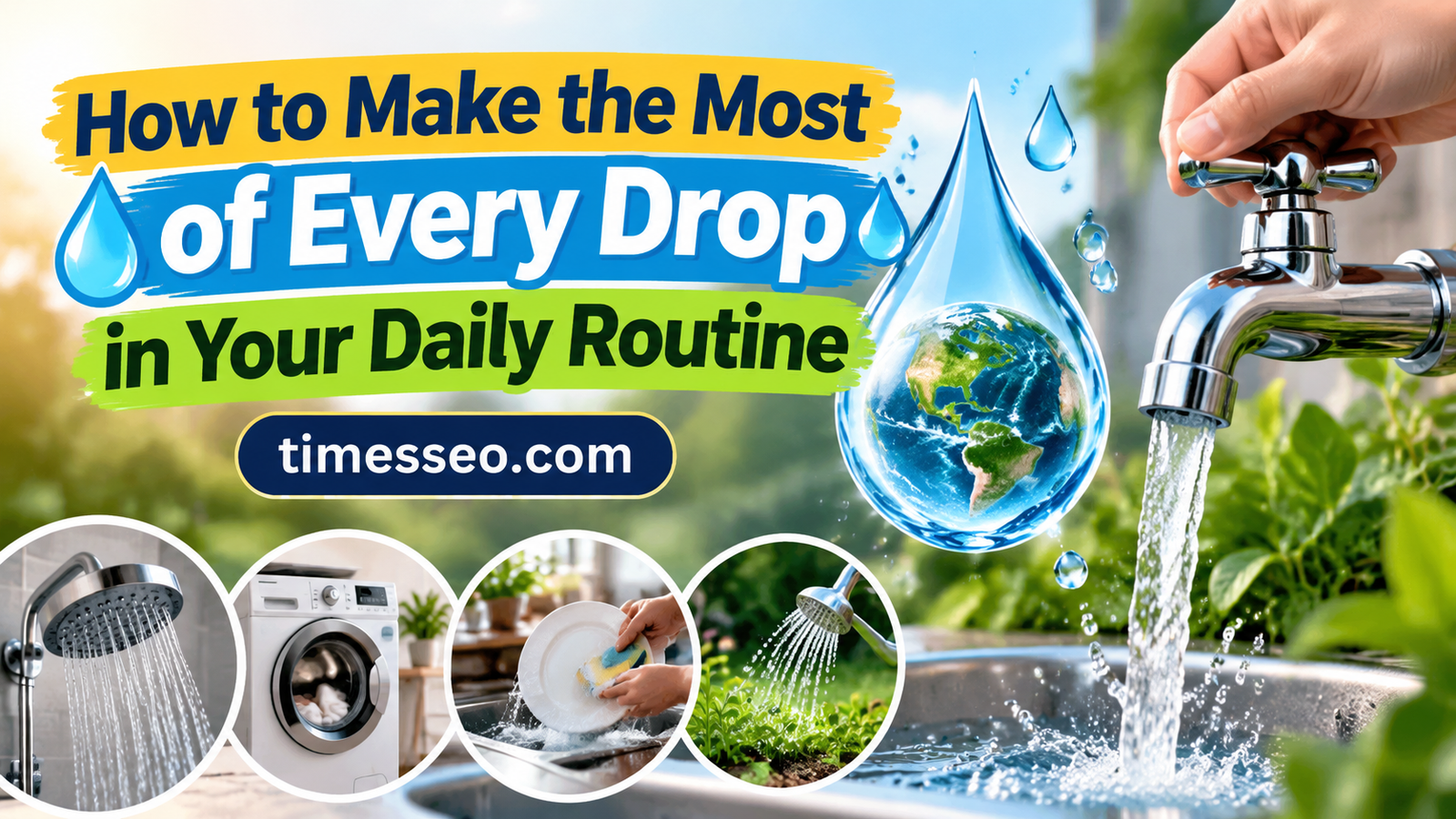
How to Make the Most of Every Drop in Your Daily Routine
Water is one of the most valuable resources on Earth, yet many people use it without thinking about how much they consume every day. From brushing our teeth in the morning to washing dishes, cooking meals, and cleaning our homes, water plays an important role in almost every activity. The challenge is that clean water resources are becoming limited in many parts of the world. Making small changes in our daily routines can help reduce waste and create a more sustainable future.
Saving water does not mean completely changing your lifestyle. It is about becoming more aware of how you use water and finding smarter ways to complete daily tasks. A few simple habits, such as turning off the tap when not needed, fixing leaks, and using water-efficient products, can make a meaningful difference.
Table of Contents
Understanding the Importance of Water Conservation
Water conservation means using water carefully and avoiding unnecessary waste. Although the Earth has a large amount of water, only a small percentage is available as fresh water for human use. Population growth, climate changes, pollution, and increasing demand are creating pressure on water supplies around the world.
Every drop saved at home contributes to reducing the overall demand for water. When millions of people adopt water-saving habits, the combined impact becomes significant. Conserving water also helps reduce energy consumption because treating, heating, and transporting water requires electricity and other resources.
Many people think water conservation requires expensive solutions, but simple daily actions can create excellent results. For example, reducing shower time, using a bucket instead of a running tap, and collecting rainwater are affordable methods that anyone can follow.
Water conservation is not only an environmental responsibility but also a practical way to reduce household expenses. Lower water consumption can decrease utility bills and help families manage resources more efficiently.
Why Every Drop Matters in Modern Life


Modern lifestyles often encourage higher water consumption. People use water for personal hygiene, cleaning, gardening, agriculture, and industrial activities. As cities grow, the demand for clean water continues to increase.
A leaking tap may seem like a small problem, but a continuous leak can waste a large amount of water over time. Similarly, leaving water running while performing daily tasks can result in unnecessary loss.
The idea of making the most of every drop is about developing awareness. When people understand the value of water, they naturally become more careful. Simple questions like “Do I really need this much water?” can help create better habits.
Water is connected with food production, health, and economic development. Protecting water resources means protecting the systems that support human life.
Simple Ways to Save Water at Home
Home is the best place to begin water conservation. Since many daily activities happen at home, small improvements in household routines can create long-term benefits.
One of the easiest steps is checking for leaks regularly. A dripping faucet, leaking pipe, or running toilet can waste hundreds of liters of water over time. Repairing these issues quickly prevents unnecessary loss.
Another useful habit is using water according to need. For example, filling a glass instead of letting the tap run while drinking, or washing vegetables in a bowl instead of under running water, can save significant amounts of water.
Modern homes can also benefit from water-efficient appliances. Washing machines and dishwashers with eco-friendly settings help complete tasks while using less water.
Benefits of Saving Water Every Day
Saving water drop provides many environmental, social, and financial benefits. Reduced water consumption helps protect rivers, lakes, groundwater, and other natural sources.
Families can also save money by lowering water bills and reducing energy costs related to heating and pumping water.
Communities that practice water conservation are better prepared for droughts and water shortages. Responsible water use creates healthier ecosystems and supports future development.
Smart Bathroom Habits for Water Saving
The bathroom is one of the biggest areas where water is consumed daily. Small changes in bathroom habits can greatly reduce water usage.
Taking shorter showers is one effective method. A long shower can use much more water compared to a quick shower. Using a bucket while bathing is another traditional method that helps control water usage.
Turning off the tap while brushing teeth can save several liters of water every day. This simple habit requires no extra effort but creates a noticeable impact over time.
Installing low-flow showerheads and water-efficient toilets can also help reduce consumption. These products are designed to provide the same performance while using less water.
Efficient Kitchen Practices to Reduce Water Waste
The kitchen is another important place where water-saving habits can be developed. Cooking, cleaning, and washing dishes often require water drop, but careful planning can reduce waste.
Instead of washing dishes under continuously running water, filling a sink or container can save water. Using leftover clean water from washing vegetables for plants is another useful practice.
When cooking, measuring the required amount of water prevents unnecessary leftovers. Proper meal planning also reduces food waste, which indirectly saves the water used to produce food.
Keeping a bottle of drinking water in the refrigerator can reduce the habit of running the tap until cold water arrives.
Making Water Usage More Sustainable
Sustainable water use means balancing our needs while protecting natural resources. It focuses on using water responsibly today without creating problems for future generations.
Rainwater harvesting is one sustainable method that allows people to collect and store rainwater for different purposes. This water can be used for gardening, cleaning, and other household activities.
Gardening practices can also become more sustainable. Using drip irrigation systems, watering plants during cooler times of the day, and choosing plants that require less water can reduce outdoor water consumption.
Sustainable water habits are not only beneficial for the environment but also help communities become more prepared during water shortages.
Using Technology for Better Water Management
Technology has made water conservation easier and more effective. Smart water meters, automated irrigation systems, and leak detection tools help people monitor and control water usage.
Smart devices can identify unusual water consumption patterns and alert users about possible leaks. This allows problems to be solved before large amounts of water are wasted.
Modern appliances with energy and water-saving features also support sustainable living. These technologies help households maintain comfort while reducing resource consumption.
Everyday Personal Habits That Help Save Water
Personal habits play an important role in water conservation. The choices people make every day directly influence how much water drop is consumed.
Simple actions such as reusing water, avoiding unnecessary cleaning, and planning household tasks carefully can reduce waste. Developing awareness is the first step toward creating a water-saving lifestyle.
People can also encourage others to follow similar practices. Sharing knowledge with family members, friends, and communities creates a stronger culture of responsibility.
Saving water should become a normal part of daily life rather than an occasional activity.
The Hidden Impact of Daily Water Waste
Many people do not realize how small daily actions can create a large amount of water waste over time. Leaving a tap running while brushing, taking extra-long showers, or washing vehicles with a hose may seem like minor activities, but these habits can waste hundreds of liters of water every month.
Water waste does not only affect household consumption; it also impacts the environment. More water demand means more pressure on rivers, groundwater sources, and treatment facilities. The energy required to clean, transport, and heat water also increases when consumption rises.
By becoming more mindful of everyday water usage, individuals can reduce their environmental impact. Simple changes, such as using only the required amount of water and avoiding unnecessary usage, can help create a more balanced relationship with this essential resource.
Also Read
Exploring Affordable Shopping Options with Kogan Australia
Everything You Need to Know About Miro for Online Collaboration
Why Businesses Are Choosing Ooma Office for Smarter Communication
Understanding How Businesses Use Cede in Modern Financial Strategies
A Complete Guide to Choosing the Perfect Floral Gift With Fleurop
How to Create a Water-Saving Morning Routine
The morning routine is a perfect time to build water-saving habits. Many daily activities happen during this period, including brushing teeth, bathing, washing faces, and preparing breakfast.
A water-efficient morning routine can include turning off the tap while brushing, using a controlled amount of water drop while washing, and avoiding unnecessary running water. These small actions become powerful when repeated every day.
You can also prepare your morning activities in a planned way. For example, collecting water before starting a cleaning task or using leftover drinking water for plants can prevent waste.
Common Water-Wasting Mistakes to Avoid
Many people waste water without realizing it. Common mistakes include leaving taps open, ignoring leaks, overwatering gardens, and using more water than necessary for cleaning.
Avoiding these habits does not require major lifestyle changes. Awareness and consistency are enough to create improvement.
Regularly checking water usage and making small adjustments can prevent unnecessary waste.
Smart Gardening Tips to Reduce Water Consumption
Gardening is a wonderful activity, but traditional watering methods can sometimes waste a large amount of water. Using smarter gardening techniques can help maintain healthy plants while reducing consumption.
One effective method is watering plants early in the morning or during the evening when temperatures are lower. This reduces evaporation and allows plants to absorb water more efficiently.
Using mulch around plants can also help retain soil moisture. Mulch acts like a protective layer that reduces water loss and keeps the soil healthy for longer periods.
Choosing native and drought-resistant plants is another excellent approach. These plants usually require less water because they are naturally adapted to local environmental conditions.
How Communities Can Protect Water Resources
Water drop conservation becomes more powerful when entire communities participate. Schools, workplaces, and neighborhoods can create awareness programs and encourage responsible water use.
Community projects such as rainwater harvesting, lake cleaning, and water recycling can improve local water availability.
When people work together, they can create long-lasting solutions for protecting water resources.
Conclusion
Making the most of every drop in your daily routine starts with simple decisions. Saving water does not require expensive systems or major sacrifices. Small actions like fixing leaks, reducing unnecessary usage, and choosing efficient products can create meaningful results.
Every person has a role in protecting water resources. When individual efforts combine, they create a powerful movement toward sustainability.
Water is a shared resource, and using it wisely today helps ensure that future generations have access to clean and safe water.
Frequently Asked Questions
Saving water helps protect natural resources, reduces energy consumption, lowers expenses, and ensures future generations have access to clean water.
Some easy methods include fixing leaks, turning off taps when not needed, taking shorter showers, and using water-efficient appliances.
Children can save water by learning responsible habits, avoiding unnecessary water use, and encouraging family members to follow conservation practices.
Yes, using less water can reduce water bills and lower energy costs related to heating and pumping water.
Smart meters, efficient appliances, and automated systems help monitor water usage and reduce unnecessary waste.
Table of Contents
Popular Posts

-
 Affordable Technical SEO Audit for Small Business: A Complete Guide26 Jun 2025 Blog
-
 How to Get an Affordable Technical SEO Audit for Small Business27 Jun 2025 Blog
-
 Local SEO Audit Checklist for Startups: A Beginner’s Guide28 Jun 2025 Blog
-
 The Ultimate Local SEO Audit Checklist for Startups28 Jun 2025 Blog
-
 Top On-Page SEO Audit Steps for Service Websites Every Business Should Know29 Jun 2025 Blog
-
 The Impact of On-Page SEO Audit Steps for Service Websites on UX01 Jul 2025 Blog
-
 Technical SEO for WordPress: The Ultimate Beginner’s Guide01 Jul 2025 Blog
-
 Technical Mobile SEO Audit Tips for Developers02 Jul 2025 Blog
Related Post