
How Courant Positioned Itself in the Premium Charging Market

Discover how Courant successfully positioned itself in the premium charging market by combining luxury design, high-quality materials, and advanced wireless charging technology. This article explores Courant’s branding strategy, product innovation, and how the company transformed everyday charging accessories into stylish lifestyle products for modern consumers.
Table of Contents
The Rise of the Wireless Charging Industry
Market Growth and Consumer Demand
Wireless charging has transformed the way people power their devices. Over the past decade, it has moved from a niche convenience to an expected feature in modern electronics. Smartphones, smartwatches, earbuds, and even electric vehicles are increasingly adopting wireless charging technology. The demand comes from a simple human desire: convenience. Nobody enjoys dealing with tangled cables, worn charging ports, or searching for the right adapter. Wireless charging solves these frustrations by allowing users to simply place their device on a pad and watch it power up.
This technology has advanced remarkably. The global wireless charging market was valued at about $37.28 billion in 2025 and is expected to reach $237.03 billion by 2034, reflecting rapid adoption across consumer electronics and other industries. This growth is fueled by rising smartphone usage, advancements in charging efficiency, and integration into smart homes and vehicles. As more devices adopt the Qi wireless charging standard, compatibility has expanded dramatically, making wireless charging a mainstream technology rather than a luxury.
But here’s the interesting twist: as the technology became widely available, most chargers started to look exactly the same. Plain plastic discs, basic designs, and utilitarian aesthetics dominated the market. The industry focused almost entirely on technical performance, leaving design and lifestyle integration largely ignored. That’s where an opportunity emerged. Consumers increasingly wanted products that matched their home décor, personal style, and overall lifestyle. This shift created the perfect environment for a brand like Courant to step in and redefine what a charging device could be.
Why Wireless Charging Became Essential
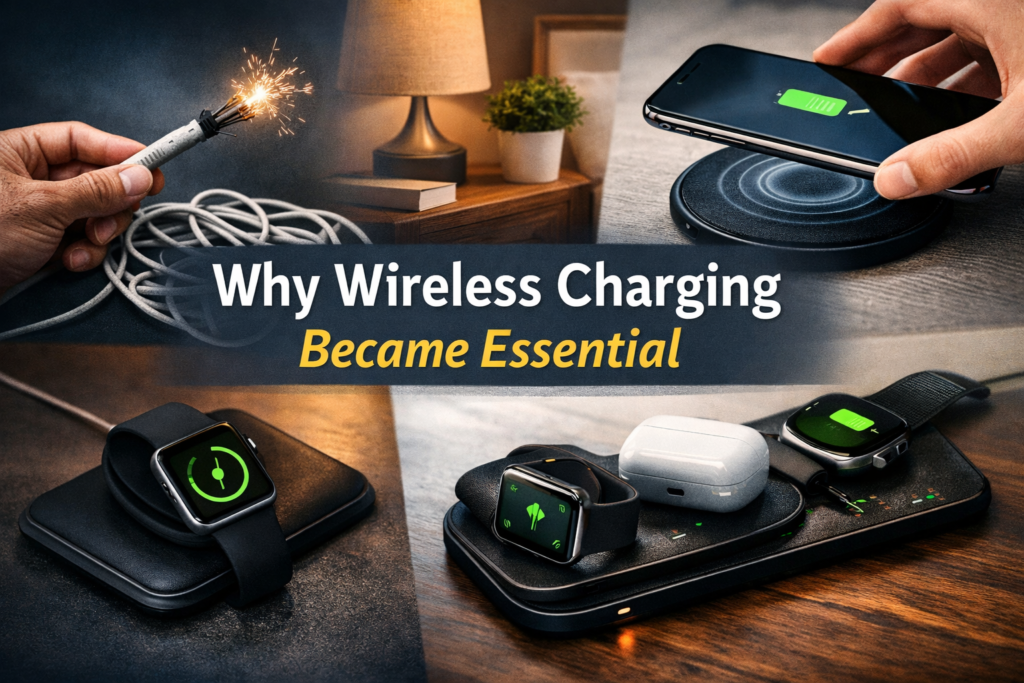

Wireless charging didn’t become popular purely because it looked futuristic. Its success is rooted in practical benefits that make everyday technology easier to use. Traditional charging cables wear out, connectors break, and plugging devices in repeatedly can damage ports over time. Wireless charging eliminates these issues by relying on electromagnetic induction to transfer power between a charging pad and the device. The simplicity of “place and charge” dramatically improves user convenience.
Another key driver is the growing number of devices people carry daily. A modern professional might own a smartphone, smartwatch, wireless earbuds, and other smart accessories. Managing multiple charging cables quickly becomes frustrating. Wireless charging pads that can power multiple devices simultaneously offer a cleaner and more organized solution. This is especially attractive in workplaces, hotels, and homes where clutter reduction matters.
The increasing popularity of smart homes has also contributed to wireless charging adoption. Consumers are designing living spaces where technology blends seamlessly into furniture and décor. Charging devices are no longer hidden behind desks—they sit on bedside tables, coffee tables, and office desks. As a result, appearance matters just as much as functionality. This cultural shift opened the door for companies that could combine advanced charging technology with beautiful design.
Courant recognized this shift early. Instead of treating chargers as purely functional gadgets, the company saw them as design objects that belong in visible spaces. That perspective ultimately shaped its strategy and allowed it to carve out a unique position in the premium charging market.
The Birth of Courant
Founders and the Vision Behind the Brand
Courant was founded by Monish Sabnani and Evan Moskal, entrepreneurs who believed that everyday technology accessories could be redesigned with aesthetics in mind. Their idea emerged from a simple observation: while smartphones and laptops were becoming more elegant, their accessories still looked cheap and generic. Charging pads in particular were often plastic, uninspiring, and hidden away rather than displayed.
The founders launched Courant through a Brooklyn-based incubator called Assembly Brands, with the mission of creating technology products that blended seamlessly with modern interiors. Instead of focusing solely on engineering improvements, the company focused on design, materials, and lifestyle positioning. In many ways, Courant approached wireless charging the same way luxury brands approach handbags or furniture—by elevating everyday objects through craftsmanship and style.
This philosophy set Courant apart immediately. Rather than competing with low-cost electronics brands, the company aimed to create premium charging accessories that people would proudly display in their homes or offices. That meant investing in better materials, better aesthetics, and a stronger brand story. The founders understood that consumers often pay more for products that reflect their personal taste and lifestyle.
This vision proved powerful. Within a relatively short time, Courant’s products appeared in luxury hotels and high-end retailers. The brand’s chargers were adopted by hotels such as The Ritz-Carlton and Four Seasons, further reinforcing its premium positioning. By aligning itself with luxury environments, Courant strengthened the perception that its products belonged in high-end spaces.
Identifying the Gap in the Charging Market
When Courant entered the market, wireless charging devices were already available from many manufacturers. However, most companies treated chargers as commodity electronics. Their design process prioritized technical specifications and cost efficiency rather than aesthetics or brand identity. As a result, the majority of chargers looked nearly identical.
Courant saw a clear opportunity in this environment. Consumers were increasingly investing in beautifully designed homes, stylish workspaces, and curated interiors. From minimalist furniture to smart lighting systems, design-conscious buyers wanted technology that complemented their environment rather than disrupting it. Yet charging accessories lagged behind this trend.
By focusing on design-driven technology, Courant effectively created a new category within the charging market: luxury charging accessories. Instead of selling just a charger, the company sold a combination of functionality, design, and lifestyle appeal. This shift allowed Courant to target a different customer segment—people who value both technology and aesthetics.
Another strategic decision was to integrate chargers into everyday objects. For example, some Courant products combine wireless charging with valet trays used to hold keys, wallets, and other personal items. This integration transforms the charger into a multi-purpose accessory that fits naturally into daily routines.
Through these insights, Courant positioned itself not just as a technology company, but as a design-led lifestyle brand.
Understanding the Premium Charging Market
What Defines a Premium Tech Product
A premium technology product is not defined solely by performance. Instead, it represents a combination of design excellence, material quality, brand reputation, and user experience. In many cases, the emotional appeal of the product matters just as much as its technical specifications. This is why luxury electronics often emphasize craftsmanship, minimalism, and attention to detail.
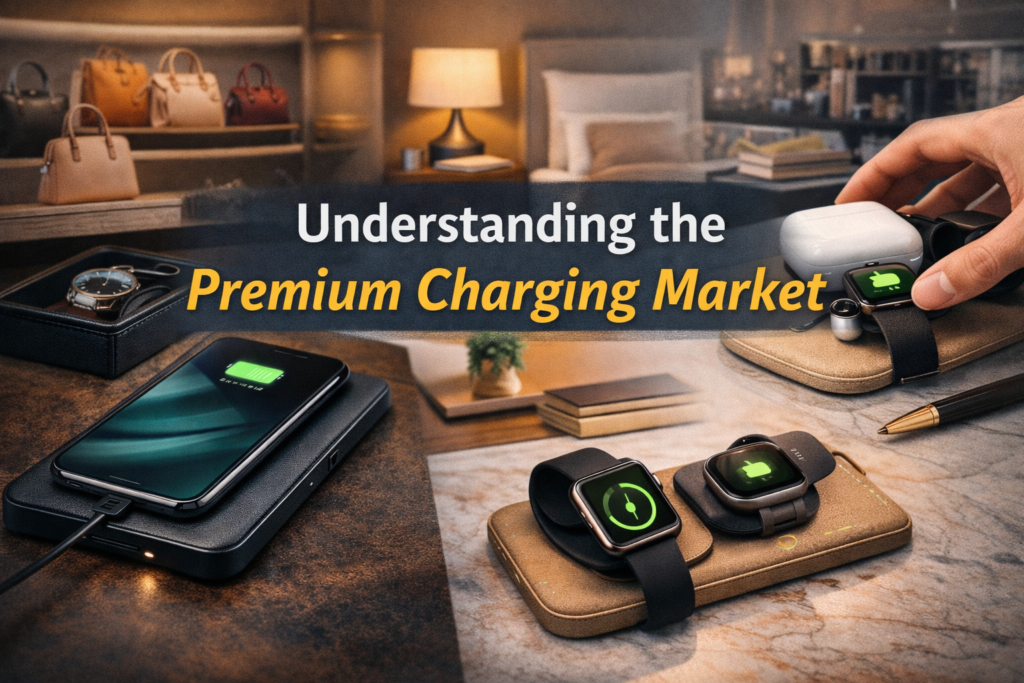
Premium products also tend to prioritize durability and sustainability. Consumers in this segment expect high-quality materials that feel substantial and long-lasting. Cheap plastics are replaced by metals, leather, glass, or other refined materials. These design choices communicate value and reinforce the perception that the product belongs in a higher price category.
Courant embraced these principles fully. Its wireless chargers often feature Italian leather surfaces, aluminum construction, and braided cables, giving them the feel of luxury accessories rather than standard electronics. By combining premium materials with modern technology, the brand created products that look more like décor pieces than gadgets.
Another defining characteristic of premium tech is thoughtful user experience. Every interaction—from unboxing to daily use—should feel seamless and satisfying. Courant designed its chargers with features such as multi-coil charging areas that make device alignment easier, ensuring a smooth charging experience. These subtle improvements enhance convenience while reinforcing the brand’s reputation for quality.
Consumer Psychology in Luxury Tech Purchases
Luxury technology purchases are driven by more than functionality. Buyers in this category often seek products that reflect their identity and taste. Owning beautifully designed technology can signal sophistication, attention to detail, and appreciation for craftsmanship.
Psychologically, premium products trigger emotional responses that cheaper alternatives cannot. The tactile feel of leather, the visual appeal of minimalistic design, and the prestige of a well-known brand all contribute to perceived value. Consumers are often willing to pay significantly more for these intangible benefits.
Courant’s marketing taps directly into this psychology. Instead of emphasizing raw charging speed or wattage, the brand highlights design, lifestyle integration, and elegance. Its messaging focuses on how chargers complement modern interiors rather than simply powering devices.
This strategy allows Courant to attract customers who see technology as part of their living environment. For them, a charger isn’t just a utility—it’s an extension of personal style. By understanding these motivations, Courant successfully positioned itself in a premium segment that many traditional electronics brands overlooked.
Courant’s Design-First Strategy
Blending Technology with Interior Design
Courant’s most distinctive strategy is its commitment to design. While many electronics companies treat design as a secondary consideration, Courant places it at the center of product development. The brand aims to create charging devices that feel like natural parts of a home or office environment rather than obvious pieces of technology.
The company integrates wireless charging technology into sleek, home-inspired shapes designed to complement modern interior styles. Instead of round plastic pads, Courant offers trays, mats, and accessories that resemble furniture pieces or desk organizers. This design approach makes the chargers visually appealing even when not in use.
The idea is simple but powerful: technology should blend into everyday life without disrupting aesthetics. Just as smart thermostats and speakers have evolved into design-focused products, Courant applies the same philosophy to charging accessories. This approach resonates particularly well with consumers who care about interior design and minimalism.
Use of Premium Materials
One of the key factors behind Courant’s premium positioning is its choice of materials. The company frequently uses Italian leather, high-grade aluminum, and linen fabrics in its chargers. These materials not only enhance durability but also elevate the visual and tactile experience.
Premium materials also communicate craftsmanship. Leather surfaces feel warm and luxurious compared to cold plastic, while metal frames add weight and stability. These details create the impression of a high-quality product even before the device is used.
This material strategy also aligns with Courant’s branding. By emphasizing luxury materials, the company reinforces its identity as a lifestyle brand rather than a typical electronics manufacturer. The result is a product that feels equally at home in a designer living room or a high-end hotel suite.
Product Innovation and Technology
Multi-Device Charging and Qi Compatibility
While design plays a major role in Courant’s success, technology remains essential. The company ensures that its chargers meet modern standards by supporting Qi wireless charging, the most widely adopted standard in consumer electronics. This compatibility allows Courant chargers to work with a broad range of smartphones and devices.
Many Courant products also support multi-device charging, allowing users to power several gadgets simultaneously. In households where multiple devices are used daily, this feature significantly improves convenience. Instead of juggling multiple chargers, users can rely on a single elegant device.
Courant also integrates multiple charging coils into its products. This design increases the effective charging area, making it easier for users to place their devices without worrying about perfect alignment. The improvement may seem small, but it dramatically enhances usability in everyday situations.
Improving Charging Efficiency and User Experience
Charging efficiency is another area where Courant focuses its innovation efforts. Wireless charging historically suffered from slower speeds compared to wired charging. Modern designs address this challenge through better coil arrangements, improved heat management, and optimized power delivery.
Courant products support fast charging capabilities while maintaining stable performance. The company also prioritizes safety features such as temperature control and foreign object detection. These measures ensure reliable operation even during extended charging sessions.
Another important element is user experience. Courant chargers often include subtle LED indicators that confirm charging status without creating distracting light. The goal is to maintain a calm, elegant appearance while still providing useful feedback to the user.
Through this combination of design and technology, Courant demonstrates that premium aesthetics and strong performance can coexist.
Branding and Lifestyle Marketing
Positioning Charging as a Lifestyle Product
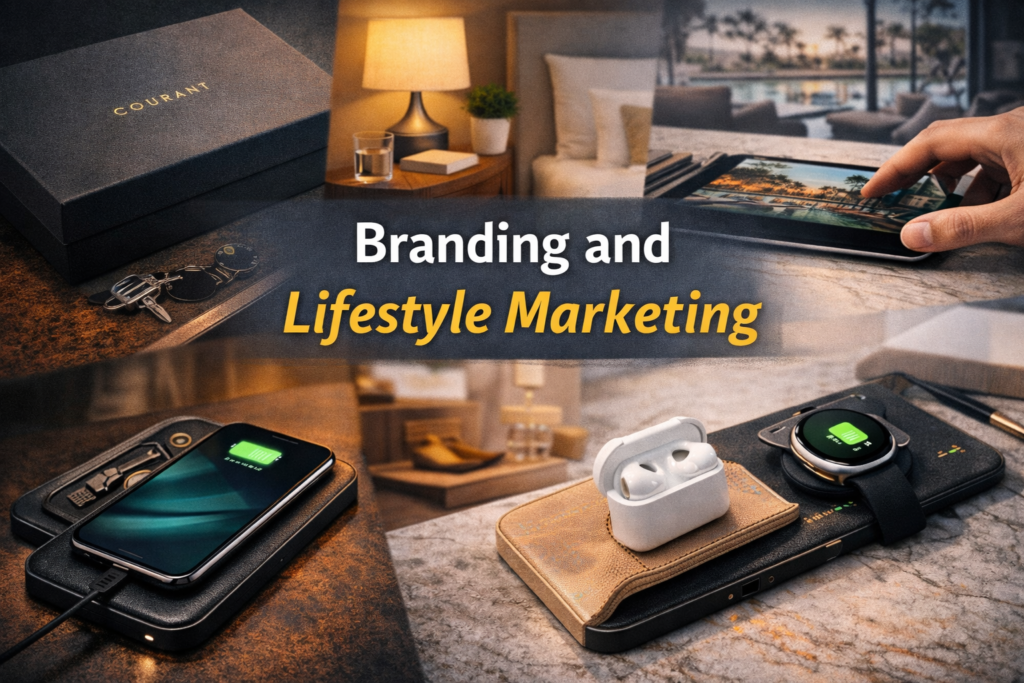
Courant’s branding strategy focuses on lifestyle rather than pure technology. Instead of marketing chargers as technical tools, the company presents them as part of a curated living environment. Product photography often shows chargers placed on bedside tables, office desks, or living room furniture alongside other stylish objects.
This visual storytelling communicates a clear message: Courant products belong in beautifully designed spaces. The approach resonates with consumers who appreciate minimalist aesthetics and organized living environments.
Lifestyle branding also allows Courant to differentiate itself from competitors. Most electronics brands emphasize specifications, but Courant emphasizes experience and atmosphere. This subtle shift transforms a simple charger into an aspirational product.
Strategic Retail and Hospitality Partnerships
Another key element of Courant’s positioning strategy is strategic distribution. Rather than relying solely on mass-market electronics retailers, the brand has partnered with luxury hotels and high-end department stores. This placement reinforces the perception that Courant products are premium accessories.
Hospitality partnerships are particularly effective because they allow customers to experience the products in real-world environments. When guests see Courant chargers in luxury hotel rooms, the products become associated with comfort, convenience, and sophistication.
This strategy functions as a form of experiential marketing. Instead of traditional advertising, Courant allows potential customers to interact with its products during memorable experiences. The emotional association created in these settings can significantly influence purchasing decisions.
Pricing Strategy in the Luxury Segment
Premium Pricing as a Brand Signal
Pricing plays a crucial role in Courant’s positioning. The company intentionally sets prices higher than typical wireless chargers. While budget chargers might cost $15–$30, Courant products often range from $80 to $175 or more.
At first glance, this pricing strategy might seem risky. However, in the luxury market, higher prices can actually increase perceived value. Consumers often associate price with quality, craftsmanship, and exclusivity. By maintaining premium pricing, Courant reinforces its identity as a high-end brand.
This strategy also supports sustainable business growth. Higher margins allow the company to invest more in design, materials, and branding. Instead of competing in a race to the bottom on price, Courant focuses on creating unique products that justify their premium cost.
Competitive Advantage in the Charging Industry
Differentiation from Mass-Market Chargers
Courant’s competitive advantage lies in its ability to combine three elements that rarely coexist in electronics: design, premium materials, and strong branding. Most charger manufacturers focus exclusively on technical performance and cost efficiency. Courant, however, focuses on the overall experience.
Feature | Typical Wireless Chargers | Courant Chargers |
Materials | Plastic | Leather, linen, aluminum |
Design Focus | Functional | Interior design oriented |
Brand Position | Budget / mid-range | Luxury lifestyle |
Retail Channels | Electronics stores | Luxury retailers & hotels |
Price Range | $15–$40 | $80–$175 |
This differentiation allows Courant to operate in a less crowded market segment. Instead of competing with hundreds of similar products, the brand competes with a smaller group of premium lifestyle accessories.
Future Opportunities for Courant
Expanding into Smart Home and Luxury Tech Ecosystems
The future looks promising for companies operating in the wireless charging space. As smart homes become more advanced, the number of connected devices continues to grow. Consumers will need convenient charging solutions for everything from phones to wearables and smart home gadgets.
Courant has the opportunity to expand beyond standalone chargers and integrate its technology into furniture, smart home devices, and luxury interior products. Imagine bedside tables with built-in wireless charging surfaces or office desks that power devices seamlessly. These concepts align perfectly with Courant’s design-focused philosophy.
The rapid expansion of the wireless charging market also creates new opportunities. Industry forecasts suggest strong growth throughout the next decade as technology improves and adoption increases. Companies that combine innovation with strong branding will likely capture a significant share of this expanding market.
If Courant continues to invest in design innovation and strategic partnerships, it could become a leading name in the luxury tech accessory industry.
Conclusion
Courant’s success in the premium charging market demonstrates the power of design-driven innovation. Instead of competing with mass-market electronics manufacturers, the company created a unique niche by blending technology with luxury aesthetics. Through premium materials, thoughtful design, lifestyle branding, and strategic partnerships, Courant transformed a simple charging accessory into a desirable lifestyle product.
The company’s strategy highlights an important lesson for modern technology brands: consumers increasingly value products that combine functionality, design, and emotional appeal. As wireless charging continues to grow in popularity, Courant’s approach may inspire other companies to rethink how everyday technology integrates into our living spaces.
Frequently Asked Questions
Courant chargers stand out because they combine advanced wireless charging technology with premium materials such as Italian leather and aluminum. Their design focuses on aesthetics and interior integration rather than purely technical performance.
Courant was founded by entrepreneurs Monish Sabnani and Evan Moskal, who aimed to redesign everyday technology accessories with a luxury design perspective.
Most Courant chargers support the Qi wireless charging standard, which is compatible with many modern smartphones including iPhones and Android devices.
The higher price reflects premium materials, design-focused manufacturing, and luxury brand positioning. Courant products are intended to function as both technology accessories and design objects.
Courant chargers are available through the company’s website, luxury department stores, and select hospitality environments such as high-end hotels.
Table of Contents
Popular Posts

-
 Affordable Technical SEO Audit for Small Business: A Complete Guide26 Jun 2025 Blog
 -
 How to Get an Affordable Technical SEO Audit for Small Business27 Jun 2025 Blog
 -
 The Ultimate Local SEO Audit Checklist for Startups28 Jun 2025 Blog
 -
 Local SEO Audit Checklist for Startups: A Beginner’s Guide28 Jun 2025 Blog
 -
 Top On-Page SEO Audit Steps for Service Websites Every Business Should Know29 Jun 2025 Blog
 -
 The Impact of On-Page SEO Audit Steps for Service Websites on UX01 Jul 2025 Blog
 -
 Technical SEO for WordPress: The Ultimate Beginner’s Guide01 Jul 2025 Blog
 -
 Technical Mobile SEO Audit Tips for Developers02 Jul 2025 Blog
Related Post