
How ITEAD Built Authority in the Smart Hardware Market

Discover how ITEAD established itself as a trusted name in the smart hardware industry. This blog explores the strategies, innovations, and community-driven approach that helped ITEAD build authority in the competitive IoT and smart home market.
Table of Contents
Introduction to ITEAD and the Smart Hardware Industry
The Rapid Growth of IoT and Smart Home Technology
Over the past decade, the Internet of Things (IoT) has transformed how people interact with everyday devices. Lights, appliances, sensors, and security systems are no longer just simple electrical tools—they’re now connected systems capable of communicating with smartphones, cloud platforms, and voice assistants. This shift has created an enormous global market for smart hardware, especially within the smart home sector. Companies worldwide are racing to build reliable, affordable, and user-friendly devices that can automate homes and businesses.
This rapidly growing ecosystem has opened opportunities for both tech giants and smaller innovators. While large corporations like Amazon and Google dominate the software side of smart homes, hardware-focused companies have carved out their own niches by developing cost-effective devices that integrate seamlessly with existing platforms. Among these innovators is ITEAD Intelligent Systems, a Chinese technology company that has steadily grown its influence in the smart hardware market.
ITEAD’s rise is fascinating because it didn’t start as a massive corporation with endless resources. Instead, it began as a company focused on electronics development boards and DIY hardware solutions. Over time, it evolved into a leading smart hardware provider through strategic product development, strong community engagement, and an emphasis on affordability. Its flagship brand SONOFF has played a crucial role in making home automation accessible to millions of users worldwide.
ITEAD’s Early Vision in Smart Hardware
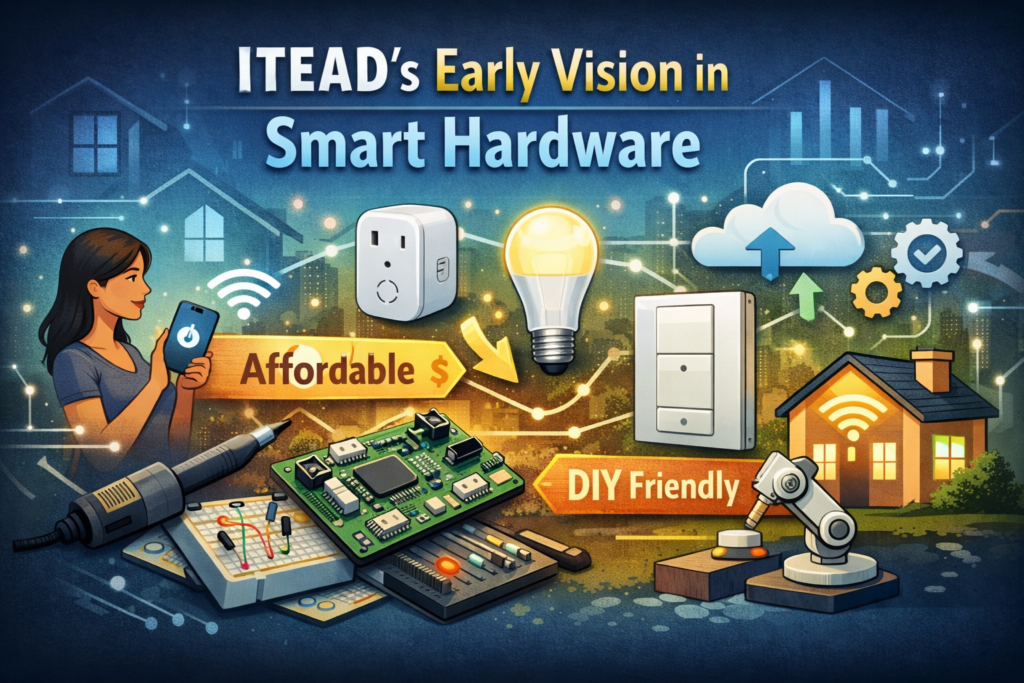

ITEAD recognized early on that smart home technology would eventually become mainstream. Instead of targeting only premium markets, the company focused on a different strategy: democratizing smart hardware. In other words, ITEAD wanted to make automation tools affordable enough for everyday consumers, hobbyists, and small businesses.
This approach shaped the company’s entire business model. Rather than building expensive proprietary ecosystems, ITEAD concentrated on creating simple devices that could easily integrate with widely used technologies such as Wi-Fi networks and mobile applications. The goal was simple—make smart hardware easy to install, easy to control, and affordable for anyone.
That philosophy eventually led to the development of a product line that bridged the gap between professional automation systems and DIY electronics projects. Today, ITEAD provides a wide range of smart home devices, including switches, sensors, hubs, and automation controllers designed to help users control appliances remotely and automate everyday tasks. Through continuous innovation and strategic product design, the company has established itself as a trusted name in the IoT hardware ecosystem.
The Origins of ITEAD
Founding and Early Development
ITEAD Intelligent Systems was founded in 2010 in Shenzhen, China, one of the world’s largest electronics manufacturing hubs. The company initially focused on producing development boards, modules, and electronic components for engineers and hobbyists. These early products were particularly popular among Arduino and embedded system developers, who needed reliable hardware platforms to build prototypes and IoT projects.
Operating from Shenzhen gave ITEAD a significant advantage. The city hosts a dense network of electronics manufacturers, component suppliers, and hardware startups. This environment allowed the company to experiment with new designs, source parts quickly, and bring innovative products to market faster than many competitors.
In its early years, ITEAD built a reputation as a hardware-friendly brand that supported experimentation and prototyping. Instead of targeting only large corporate clients, the company engaged with developers, makers, and technology enthusiasts. By supporting this community, ITEAD created a loyal user base that helped promote its products organically.
The company also launched an online platform where electronics enthusiasts could purchase modules, displays, and development tools. This e-commerce strategy allowed ITEAD to reach international customers directly without relying heavily on traditional distribution networks. Over time, this global reach would become a critical factor in its growth.
Building a DIY Electronics Ecosystem
Before entering the smart home market, ITEAD had already built a thriving ecosystem of DIY electronics products. These included development boards, wireless modules, and human-machine interface displays such as the Nextion series. The company also distributed products for makers and developers through its online store, offering a convenient one-stop shop for electronics enthusiasts.
By building tools for developers, ITEAD gained valuable insight into how people wanted to use connected hardware. Many customers were experimenting with home automation systems, remote sensors, and IoT devices long before smart homes became mainstream.
ITEAD realized that the next logical step was to create consumer-ready hardware that simplified these experiments. Instead of requiring advanced programming knowledge, these devices would allow ordinary users to automate their homes with minimal technical effort.
This shift from developer tools to consumer hardware marked a turning point in the company’s strategy. It set the stage for the launch of one of the most influential product lines in affordable smart home technology—the SONOFF series.
The Creation of the SONOFF Brand
Why SONOFF Became a Game Changer
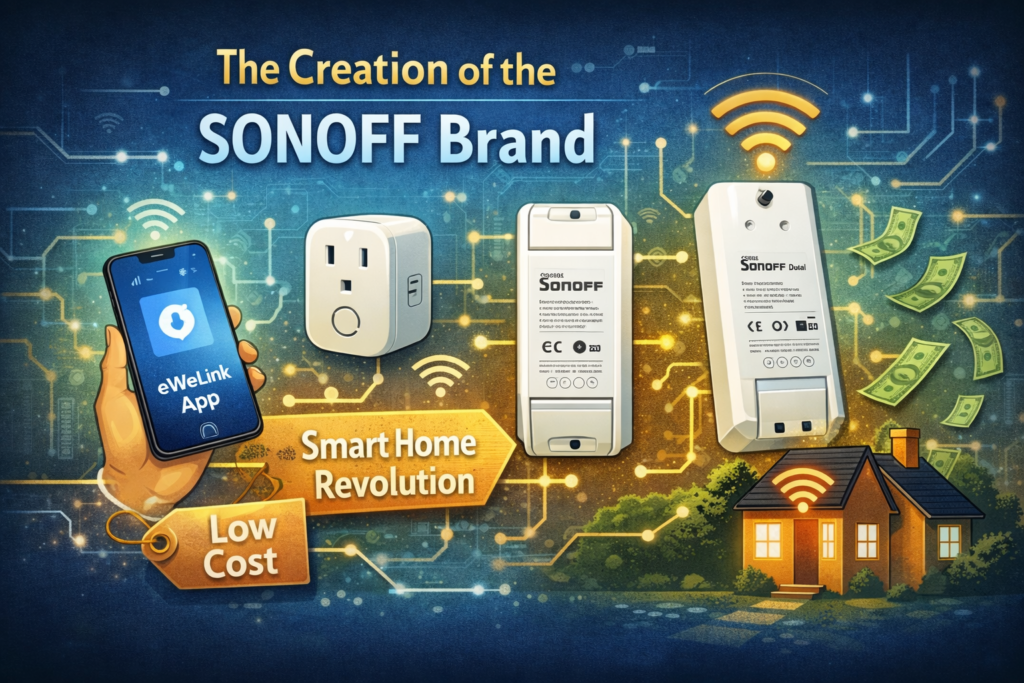
The launch of the SONOFF smart device brand represented a major milestone for ITEAD. Designed specifically for home automation, SONOFF products introduced a simple concept: allow users to control electrical devices remotely using their smartphones.
SONOFF quickly gained popularity because it solved a common problem in the IoT market. Most home automation systems at the time were either extremely expensive or complicated to install. SONOFF devices offered a much simpler alternative—small Wi-Fi-enabled switches that could turn appliances on or off remotely.
These devices connected to a cloud platform through a home Wi-Fi network and could be controlled using the eWeLink mobile application, allowing users to manage connected appliances from anywhere.
The first SONOFF switch was particularly appealing because of its low cost. Early units were priced around $5–$7, making them dramatically cheaper than competing smart switches.
This aggressive pricing strategy helped SONOFF spread rapidly across global markets, especially among DIY enthusiasts and smart home beginners.
Affordable Smart Hardware Strategy
ITEAD’s pricing strategy wasn’t accidental—it was central to the company’s long-term vision. By producing affordable hardware, ITEAD could reach a much larger audience than companies targeting only premium markets.
This tactic produced a number of benefits:
- Lower entry barriers for first-time smart home users
- Rapid adoption among DIY developers
- Strong community promotion through forums and tech blogs
ITEAD also focused heavily on modular product design. Instead of offering only complete automation systems, it produced individual components like switches, sensors, relays, and hubs. Users could gradually build their own smart home ecosystems over time.
This modular approach made SONOFF products highly flexible. A user might start with a single smart switch controlling a light, then add sensors, smart plugs, and automation scenes later.
Over time, this incremental approach helped ITEAD build a massive installed user base around the world.
Product Innovation as a Competitive Advantage
Smart Switches, Sensors, and Automation Devices
One of the biggest reasons ITEAD gained authority in the smart hardware market is its consistent product innovation. Instead of releasing a few devices and stopping there, the company continually expanded its product portfolio.
Today, SONOFF offers a wide range of smart hardware devices, including:
- Smart switches and relays
- Smart plugs and sockets
- Humidity and temperature sensors
- Motion sensors
- Zigbee hubs and gateways
These devices allow users to automate everything from lighting systems to climate control and security monitoring.
ITEAD’s products are designed to support multiple communication protocols such as Wi-Fi and Zigbee, enabling flexible smart home networks and device interoperability.
Integration with Popular Smart Home Platforms
Another important factor in ITEAD’s success is its commitment to compatibility with major smart home platforms.
Modern SONOFF devices can integrate with:
Platform | Function |
Amazon Alexa | Voice control |
Google Assistant | Smart home automation |
Home Assistant | Advanced automation |
Zigbee hubs | Device interoperability |
By supporting these platforms, ITEAD avoided locking users into a single ecosystem. This openness increased trust and allowed the brand to gain widespread adoption among both casual consumers and advanced automation enthusiasts.
Open-Source Community and Developer Support
Collaboration with IoT Developers
ITEAD’s relationship with the developer community is another key factor behind its growth. Many SONOFF devices use microcontrollers that can be modified or reprogrammed, making them extremely popular among IoT hobbyists.
Developers frequently use custom firmware such as Tasmota or ESPHome to extend device capabilities and integrate them with advanced automation systems.
This openness encouraged experimentation and innovation. Instead of trying to control every aspect of its hardware ecosystem, ITEAD allowed developers to modify and customize their devices.
Custom Firmware and DIY Projects
Thousands of tutorials, YouTube videos, and blog posts show how users can modify SONOFF devices to build advanced automation projects.
Examples include:
- Smart irrigation systems
- Automated lighting setups
- Energy monitoring dashboards
- Smart security systems
These community projects helped SONOFF gain massive visibility without relying heavily on traditional advertising.
Technology Stack and Ecosystem Development
Wireless Protocols and Connectivity
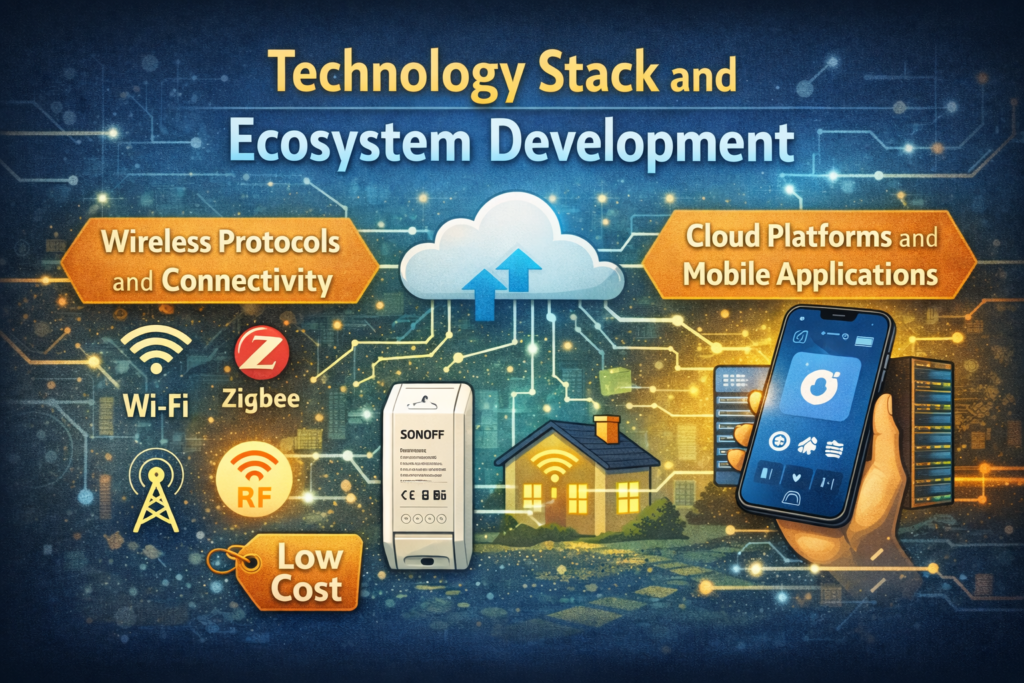
ITEAD’s smart devices rely on a range of communication technologies designed to balance performance, cost, and compatibility.
Common protocols include:
- Wi-Fi for direct access to the internet
- Zigbee for low-power sensor networks
- RF communication for long-range switching
This multi-protocol approach ensures that SONOFF products can adapt to different smart home environments.
Cloud Platforms and Mobile Applications
The eWeLink platform plays a central role in ITEAD’s ecosystem. It connects smart devices to cloud servers and provides a user-friendly mobile interface for controlling appliances, scheduling tasks, and creating automation scenes.
Through this platform, users can monitor devices, trigger automation rules, and receive notifications in real time.
Global Expansion and Distribution Strategy
E-commerce and International Markets
ITEAD expanded internationally by using direct e-commerce channels and global marketplaces. Instead of relying solely on distributors, the company sold products through platforms like Amazon, AliExpress, and its own official store.
This approach allowed ITEAD to reach customers in dozens of countries without establishing physical retail stores.
SONOFF devices are now used in homes and offices across more than 120 countries, demonstrating the global demand for affordable automation solutions.
Partnerships and Supply Chain Strength
Shenzhen’s electronics manufacturing ecosystem has also played a key role in ITEAD’s growth. The region hosts a massive network of suppliers, PCB manufacturers, and assembly facilities.
This supply chain infrastructure enables rapid prototyping, faster product development cycles, and lower manufacturing costs. These advantages allow ITEAD to launch new devices quickly while maintaining competitive prices.
Competitive Position in the Smart Hardware Market
Comparison with Major Competitors
ITEAD competes with several major smart home hardware brands.
Brand | Key Strength | Market Segment |
TP-Link Tapo | Reliability and brand recognition | Mid-range |
Shelly | Advanced automation features | DIY users |
Tuya ecosystem | Massive product variety | OEM devices |
SONOFF (ITEAD) | Affordability and flexibility | Budget to mid-range |
SONOFF’s biggest advantage is its ability to combine low prices with strong functionality, making smart home technology accessible to a broader audience
Challenges and Future Opportunities
Despite its success, ITEAD still faces several challenges. Competition in the smart home industry continues to intensify as more companies enter the market.
Emerging technologies such as Matter, edge computing, and AI-driven automation will shape the next generation of smart homes. Companies that adapt quickly to these technologies will maintain long-term relevance.
ITEAD has already started adopting new standards and expanding its product ecosystem. If the company continues to innovate while maintaining its affordability strategy, it could remain a major player in the global IoT hardware market for years to come.
Conclusion
ITEAD’s journey from a small electronics developer to a globally recognized smart hardware brand demonstrates the power of strategic innovation and community engagement. By focusing on affordability, modular product design, and developer-friendly hardware, the company built a strong reputation in the IoT ecosystem.
The introduction of the SONOFF product line allowed ITEAD to bridge the gap between DIY experimentation and consumer-ready smart home technology. Combined with global e-commerce distribution, open-source compatibility, and continuous product innovation, this strategy helped the company gain authority in the smart hardware market.
As smart homes become more common and IoT devices continue to evolve, companies like ITEAD will play a crucial role in shaping the future of connected living.
Frequently Asked Questions
ITEAD is known for developing smart home hardware and IoT devices, particularly through its SONOFF brand of smart switches, sensors, and automation systems.
SONOFF is a smart home product line created by ITEAD that allows users to control electrical appliances remotely through Wi-Fi and mobile apps.
ITEAD is headquartered in Shenzhen, China, a global hub for electronics manufacturing and hardware innovation.
Yes. Many SONOFF devices integrate with Amazon Alexa, Google Assistant, and other smart home platforms.
SONOFF devices are popular because they offer affordable smart home automation, easy installation, and compatibility with open-source platforms.
Table of Contents
Popular Posts

-
 Affordable Technical SEO Audit for Small Business: A Complete Guide26 Jun 2025 Blog
 -
 How to Get an Affordable Technical SEO Audit for Small Business27 Jun 2025 Blog
 -
 The Ultimate Local SEO Audit Checklist for Startups28 Jun 2025 Blog
 -
 Local SEO Audit Checklist for Startups: A Beginner’s Guide28 Jun 2025 Blog
 -
 Top On-Page SEO Audit Steps for Service Websites Every Business Should Know29 Jun 2025 Blog
 -
 The Impact of On-Page SEO Audit Steps for Service Websites on UX01 Jul 2025 Blog
 -
 Technical SEO for WordPress: The Ultimate Beginner’s Guide01 Jul 2025 Blog
 -
 Technical Mobile SEO Audit Tips for Developers02 Jul 2025 Blog
Related Post