

The Escape Game Entertainment: A Complete Brand & Business Review

The Escape Game Entertainment: A Complete Brand & Business Review examines how engaging storytelling, superior game design, and a scalable business strategy have helped The Escape Game Entertainment establish a premium escape room brand. This blog article is a great read for investors, entrepreneurs, and entertainment aficionados alike because it lays out the company’s history, business strategy, customer experience, price, strengths, and growth potential.
Table of Contents
Introduction to The Escape Game Entertainment
Imagine being locked in a room with a ticking clock, cryptic clues scattered everywhere, and only your teamwork standing between you and freedom. Sounds thrilling, right? That adrenaline-fueled experience is exactly what The Escape Game Entertainment delivers. Over the years, it has transformed escape rooms from a niche activity into a mainstream entertainment business.
In this detailed review, we’ll break down the brand, its business model, customer experience, and future potential—without fluff, just real insights.
What Is The Escape Game? An Overview
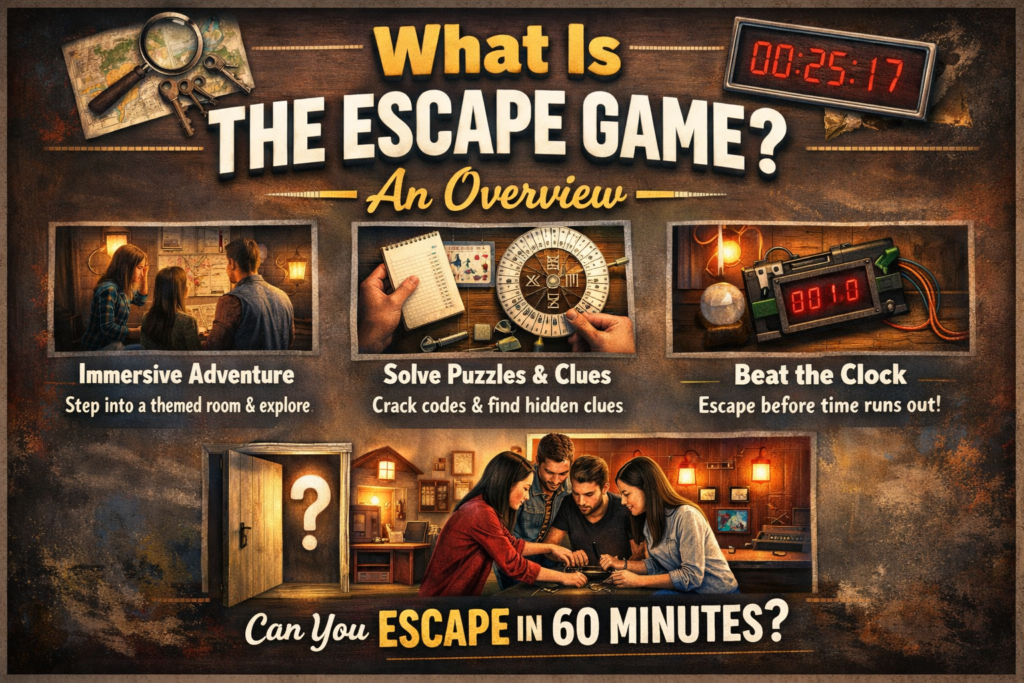

The Escape Game is a premium live-escape-room entertainment brand that offers immersive, story-driven puzzle adventures. Players are placed inside themed rooms and must solve puzzles, find hidden clues, and complete objectives within a fixed time—usually 60 minutes.
What sets this brand apart is its focus on high-quality production, original storylines, and consistent customer experience across locations.
History and Founding Story
The Escape Game was founded in 2014 in Nashville, Tennessee. At a time when escape rooms were still experimental, the founders focused on one clear goal: create cinematic-level escape experiences instead of cheap puzzle rooms.
That early decision shaped the brand’s premium identity and helped it scale faster than many competitors who cut corners on design and storytelling.
Business Model Explained
At its core, The Escape Game runs on a location-based entertainment model. Customers book time slots, arrive in groups, and pay per person for a single game session.
But the brilliance lies in how efficiently the model balances high upfront setup costs with long-term recurring revenue.
How Escape Rooms Work
Each room accommodates a fixed number of players. Once designed and built, the same room can be reused hundreds of times with minimal additional cost. Staff members reset rooms between sessions, keeping operational costs manageable.
Think of it like a movie theater—same movie, different audience every hour.
Target Audience and Customer Segments
The Escape Game attracts:
- Friends and families
- Corporate teams for team-building
- Tourists seeking unique experiences
- Birthday and celebration groups
This wide appeal reduces dependency on a single customer segment.
Revenue Streams
Primary revenue comes from:
- Ticket sales
- Corporate event bookings
- Private group reservations
Some locations also generate revenue through merchandise and branded experiences.
Brand Identity and Market Positioning
The Escape Game positions itself as a premium, polished, and family-friendly brand. Unlike horror-focused or low-budget escape rooms, it emphasizes clean environments, inclusive storytelling, and professional staff.
This positioning allows it to charge slightly higher prices while maintaining strong demand.
Game Design and Experience Quality
This is where the brand truly shines.
Storytelling and Immersion
Each game feels like stepping into a movie set. From prison breaks to heists and secret missions, the narratives are detailed and engaging. Players aren’t just solving puzzles—they’re part of a story.
Difficulty Levels and Game Variety
Games are designed for different skill levels:
- Beginner-friendly rooms
- Moderate challenge experiences
- Advanced puzzle-heavy missions
This keeps both first-timers and escape-room veterans coming back.
Technology and Innovation in Gameplay
The Escape Game uses:
- Automated puzzles
- Sensor-based clues
- Interactive props
Technology enhances immersion without overwhelming players, which is a fine balance many competitors fail to achieve.
Locations and Global Expansion
The brand has expanded rapidly across major cities and tourist hubs. Strategic placement in malls, entertainment districts, and high-footfall areas ensures consistent walk-in traffic.
Expansion has been cautious but calculated—favoring quality control over rapid scaling.
Franchise vs Company-Owned Model
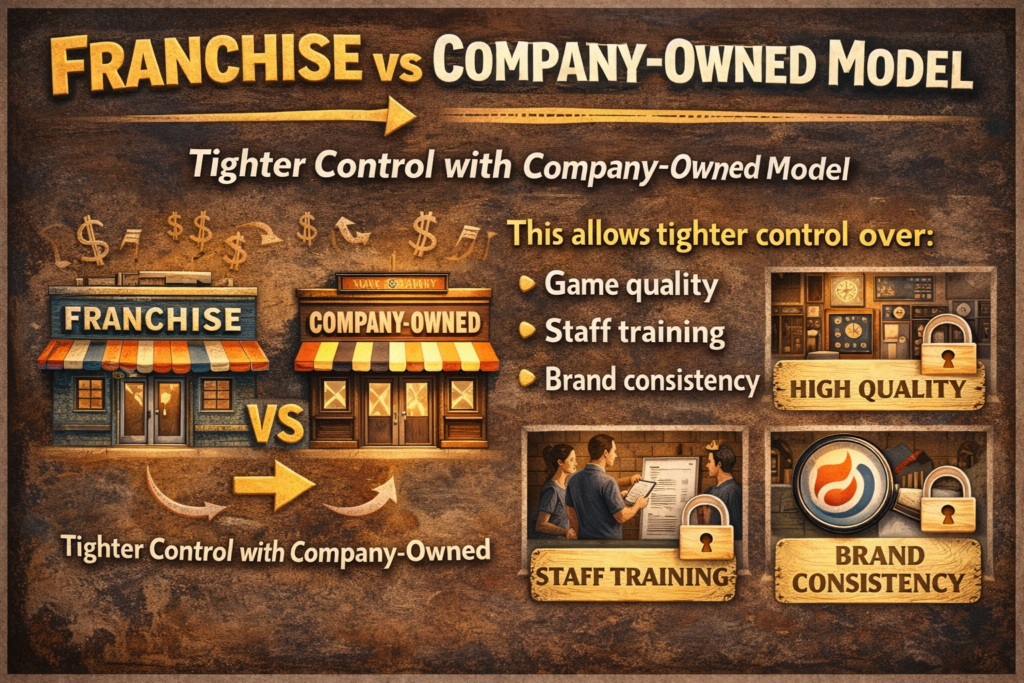
Unlike many competitors, The Escape Game primarily operates company-owned locations. This allows tighter control over:
- Game quality
- Staff training
- Brand consistency
While franchising offers faster growth, the company’s approach protects long-term brand value.
Pricing Strategy and Value for Money
Prices are typically higher than average escape rooms—but customers often feel the experience justifies the cost.
You’re paying for:
- Better design
- Reliable gameplay
- Professional hosting
Group Pricing and Corporate Packages
Corporate packages are a major revenue booster. Businesses are prepared to pay higher prices for:
- Team-building
- Leadership exercises
- Private sessions
Comparison with Competitors
Compared to smaller escape room brands, The Escape Game offers:
- More consistency
- Better replay value
- Higher production standards
This makes it a top choice for customers who value quality over price.
Marketing Strategy and Online Presence
The brand excels in digital marketing:
- Strong SEO presence
- Active social media engagement
- Excellent Google Reviews visibility
User-generated content and word-of-mouth play a huge role in attracting new players.
Also Read
Why xTool Is the Best Laser Engraving Tool for Creative Entrepreneurs
Woox CZ-SK Review: Brand Growth and Market Presence Explained
Why Vidgo Live Streaming TV Is Gaining Popularity in 2026
Why Content Marketing Is Crucial for Society6 Growth
How Social Media Strategy Strengthens Mixhers Brand Awareness
Customer Experience and Reviews
Customer reviews consistently highlight:
- Friendly staff
- Clear instructions
- Engaging puzzles
Repeat customers are common, which is rare in experience-based businesses.
Strengths of The Escape Game Brand
Key strengths include:
- Premium brand image
- High-quality game design
- Strong operational systems
- Broad customer appeal
These strengths create a solid competitive moat.
Challenges and Limitations
No business is perfect. Challenges include:
- High setup costs
- Limited scalability per location
- Experience fatigue if games aren’t refreshed regularly
However, the brand actively updates and rotates experiences to reduce repeat fatigue.
Business Opportunities and Future Growth
Future growth opportunities include:
- International expansion
- Mobile or pop-up escape experiences
- Corporate partnerships
- Educational and training-based games
The experiential entertainment market is still growing, and The Escape Game is well-positioned to lead.
Conclusion
The Escape Game Entertainment isn’t just another escape room company—it’s a benchmark for how experiential entertainment should be built and scaled. By focusing on immersive storytelling, operational excellence, and premium branding, it has carved out a powerful position in a competitive market.
Whether you’re a customer, entrepreneur, or investor, this brand offers valuable lessons in building memorable experiences that people are happy to pay for—and come back to.
Frequently Asked Questions
Its focus on premium design, storytelling, and consistent experience across locations sets it apart.
Yes, many rooms are designed specifically for first-time players.
Most escape room experiences last around 60 minutes.
Absolutely. Corporate events are one of its strongest use cases.
Replaying is possible, but the brand encourages trying different themed rooms for a fresh experience.
Table of Contents
Popular Posts

-
 Affordable Technical SEO Audit for Small Business: A Complete Guide26 Jun 2025 Blog
 -
 How to Get an Affordable Technical SEO Audit for Small Business27 Jun 2025 Blog
 -
 The Ultimate Local SEO Audit Checklist for Startups28 Jun 2025 Blog
 -
 Local SEO Audit Checklist for Startups: A Beginner’s Guide28 Jun 2025 Blog
 -
 Top On-Page SEO Audit Steps for Service Websites Every Business Should Know29 Jun 2025 Blog
 -
 The Impact of On-Page SEO Audit Steps for Service Websites on UX01 Jul 2025 Blog
 -
 Technical SEO for WordPress: The Ultimate Beginner’s Guide01 Jul 2025 Blog
 -
 Technical Mobile SEO Audit Tips for Developers02 Jul 2025 Blog
Related Post