
What Is Semantix? Everything You Need to Know Before Getting Started

Discover everything about Semantix in this beginner-friendly guide titled “What Is Semantix? Everything You Need to Know Before Getting Started.” This blog post explains what Semantix is, how it works, its key features, real-world use cases, and why it is becoming an important platform in the world of AI and big data. Whether you are a beginner or an enterprise user, this article will help you clearly understand how Semantix is shaping the future of intelligent data-driven businesses.
Table of Contents
Introduction to Semantix
In today’s rapidly evolving digital world, companies are constantly searching for smarter ways to manage data and automate decision-making. That’s exactly where Semantix enters the picture. It is not just another tech company; it represents a full-scale shift toward AI-driven intelligent enterprises. If you’ve been hearing the name Semantix more often lately, it’s because the company has been expanding aggressively in the fields of big data, artificial intelligence, and enterprise automation.
What makes Semantix interesting is its focus on combining data engineering with real-world business intelligence. Instead of treating AI as an add-on, Semantix builds it as a core foundation of enterprise systems. This means businesses can operate with smarter workflows, better predictions, and more automation. In simple terms, Semantix tries to turn traditional companies into self-optimizing intelligent systems.
What Exactly Is Semantix?
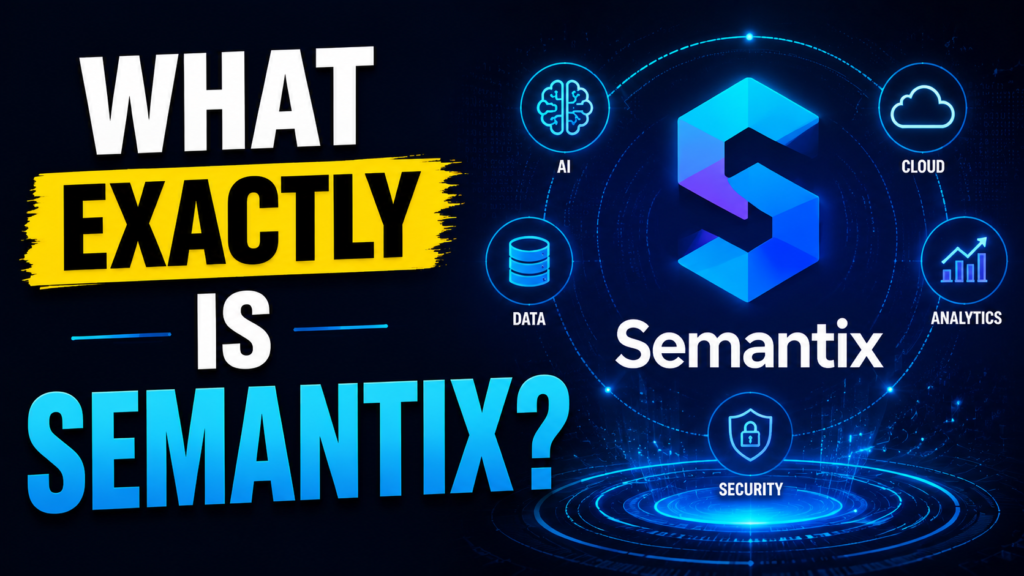

Semantix is a Brazil-based technology company that focuses on data infrastructure, AI solutions, and enterprise orchestration platforms. It provides tools and systems that help organizations manage large-scale data, deploy AI models, and automate complex business operations.
At its core, Semantix is built around the idea of the “Intelligent Enterprise”, where data flows seamlessly across systems and AI agents help make decisions in real time. It is widely known for combining deep data engineering, AI orchestration, and secure enterprise operations into a single platform.
However, many people confuse Semantix with “semantic technology” or language-related tools. That’s a different concept entirely. Semantix (the company) is focused on enterprise AI and big data infrastructure, not linguistics or semantic translation systems.
The History and Evolution of Semantix
The story of Semantix is closely tied to the rise of big data in Latin America. The company was founded in Brazil with the vision of helping enterprises handle massive datasets and modernize their infrastructure.
Founding in Brazil and early vision
Semantix started with a strong focus on big data management and enterprise analytics. The goal was simple: help companies turn raw data into actionable insights.
Growth into AI and big data enterprise platform
Over time, the company expanded into AI-driven solutions, building platforms that could not only analyze data but also automate decisions.
Nasdaq listing and global expansion
One of the biggest milestones came when Semantix became the first Latin American deep tech company to list on Nasdaq, marking its entry into global markets and increasing investor visibility.
Recent acquisitions and strategic growth
Semantix has also expanded through acquisitions, strengthening its capabilities in machine learning, MLOps, and enterprise integrations, making its platform more powerful and scalable.
Key Features of Semantix
Semantix stands out because of its integrated feature set designed for enterprise-scale operations.
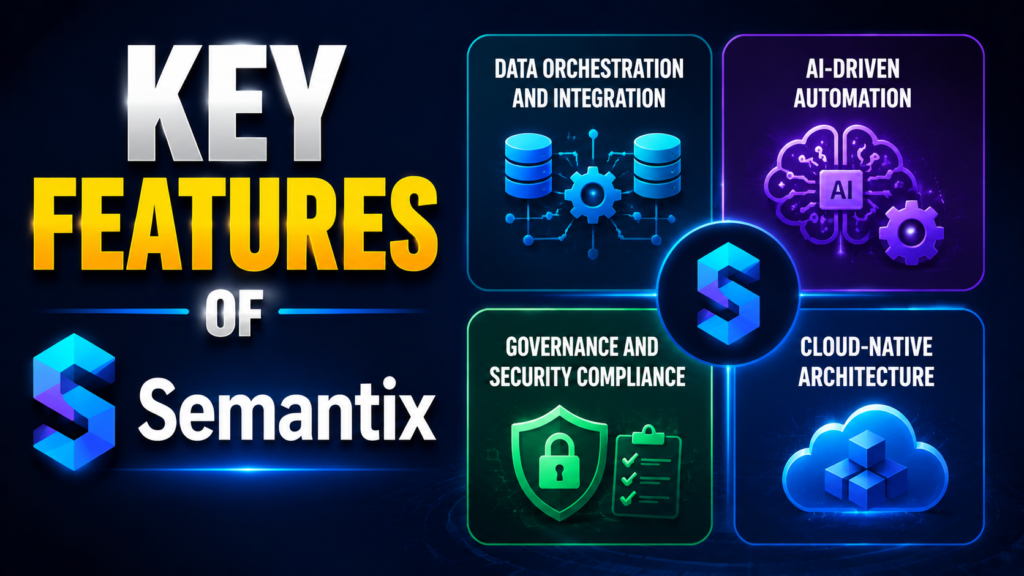
Data orchestration and integration
It connects multiple systems like CRM, ERP, and cloud databases into one unified flow.
AI-driven automation
The platform uses AI agents to automate repetitive tasks and improve operational efficiency.
Governance and security compliance
Semantix follows strict security standards including ISO 27001 and SOC 2 compliance, ensuring enterprise-level data protection.
Cloud-native architecture
It is built for modern cloud environments, making it scalable and flexible for global enterprises.
Core Semantix Platform Explained
Semantix operates through a unified system known as the Semantix Intelligent Platform. This platform is designed to integrate data, AI, and operations into a single ecosystem.
Semantix Intelligent Platform overview
This platform acts as an orchestration engine that connects all enterprise systems and ensures smooth data flow and automation.
AI Enterprise Suite
The AI Enterprise Suite focuses on transforming business operations using AI agents and automation tools that enhance decision-making.
Deep Data & Engineering layer
This layer handles data pipelines, storage systems, and structured data engineering, ensuring that AI models have clean and reliable data.
Secure and Intelligent Operations
This part of the platform ensures that enterprise operations remain secure, compliant, and optimized using AI-driven monitoring systems.
How Semantix Works
To understand Semantix, think of it like a central brain for business operations.
Data ingestion process
It collects data from multiple sources such as applications, APIs, and databases, then organizes it into structured pipelines.
AI model deployment
Businesses can deploy machine learning models directly into the platform to analyze data in real time.
Intelligent decision-making layer
This is where AI steps in to generate insights, predictions, and recommendations for business operations.
Benefits of Using Semantix
The biggest advantage of Semantix is its ability to simplify complex systems.
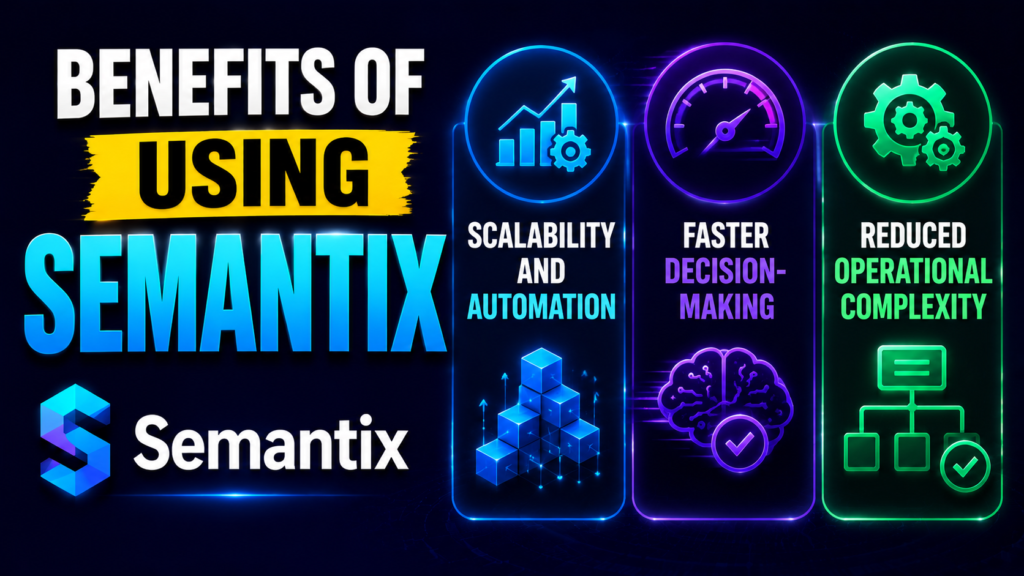
Scalability and automation
Businesses can scale operations without increasing manual workload.
Faster decision-making
AI-powered insights allow companies to make decisions in real time.
Reduced operational complexity
Instead of using multiple tools, Semantix provides a unified system.
Semantix vs Competitors
Feature | Semantix | Databricks | Snowflake |
AI Integration | Strong AI orchestration | Strong ML tools | Moderate |
Data Engineering | Advanced | Advanced | Strong |
Enterprise Automation | High | Medium | Low |
Cloud Flexibility | High | High | High |
Pricing and Availability
Semantix does not follow a simple public pricing model. Instead, it operates on an enterprise licensing structure, where pricing depends on company size, usage, and required infrastructure.
Also Read
Superdry (UK) Sale Guide: How to Save More on Every Purchase
Vevor Kitchen Setup Ideas: Build a Smart Cooking Space in 2026
Top Reasons Tea Enthusiasts Prefer TEALEAVES for Gourmet Tea Blends
Ivacy VPN vs Competitors: Which VPN Service Offers Better Value?
Interfocus Inc: Company Overview, Services, and Industry Impact
Pros and Cons of Semantix
Pros:
- Strong AI and data integration
- Enterprise-grade security
- Scalable architecture
- End-to-end data orchestration
Cons:
- Not beginner-friendly
- Expensive for small businesses
- Requires technical expertise
Challenges and Limitations
Despite its powerful features, Semantix faces challenges such as high implementation complexity and competition from major cloud providers like AWS, Google Cloud, and Databricks. Additionally, smaller businesses may find it difficult to adopt due to cost and infrastructure requirements.
Expert Insights and Industry Perspective
Industry experts often describe Semantix as part of the new wave of AI-native enterprise platforms, where AI is not just a feature but the foundation of the entire system. According to enterprise technology analysts, platforms like Semantix represent the future of autonomous business operations, where systems can self-optimize with minimal human intervention.
Future of Semantix in AI Industry
The future of Semantix looks closely tied to the expansion of agentic AI systems and intelligent automation. As enterprises move toward autonomous decision-making systems, platforms like Semantix are expected to play a major role. With continued acquisitions and global expansion, Semantix is positioning itself as a serious competitor in the AI enterprise space.
Conclusion
Semantix is more than just a data platform—it is a complete ecosystem designed to transform businesses into intelligent, AI-driven enterprises. From data engineering to AI orchestration and secure operations, it provides a unified system for modern organizations. While it may not be the easiest platform for beginners, its power lies in scalability, automation, and enterprise-level intelligence. As AI continues to evolve, Semantix is likely to become even more influential in shaping how businesses operate globally.
Frequently Asked Questions
Semantix is used for enterprise data management, AI automation, and intelligent business operations.
Yes, it is a cloud-native enterprise AI and data orchestration platform.
Large enterprises in finance, healthcare, logistics, and technology industries use it.
Yes, but Semantix focuses more on AI orchestration and intelligent enterprise systems.
Not usually, as it is designed mainly for large-scale enterprise environments.
Table of Contents
Popular Posts

-
 Affordable Technical SEO Audit for Small Business: A Complete Guide26 Jun 2025 Blog
 -
 How to Get an Affordable Technical SEO Audit for Small Business27 Jun 2025 Blog
 -
 The Ultimate Local SEO Audit Checklist for Startups28 Jun 2025 Blog
 -
 Local SEO Audit Checklist for Startups: A Beginner’s Guide28 Jun 2025 Blog
 -
 Top On-Page SEO Audit Steps for Service Websites Every Business Should Know29 Jun 2025 Blog
 -
 The Impact of On-Page SEO Audit Steps for Service Websites on UX01 Jul 2025 Blog
 -
 Technical SEO for WordPress: The Ultimate Beginner’s Guide01 Jul 2025 Blog
 -
 Technical Mobile SEO Audit Tips for Developers02 Jul 2025 Blog
Related Post