Musement: How SEO Helps Experience-Based Brands Grow
Explore how Musement leverages SEO to help experience-based brands gain visibility, attract high-intent travelers, and increase bookings. This blog post explains how keyword strategy, content marketing, and technical SEO work together to drive sustainable growth in the experience and activities industry.
Table of Contents
Introduction to Experience-Based Digital Marketing
Travel has changed. People no longer search only for flights and hotels—they search for moments. Rome cooking courses, Santorini sunset cruises, and Paris museum skip-the-line passes. This shift has given rise to experience-based brands, and SEO has become their most powerful growth channel.
That’s where platforms like Musement come into play, connecting curious travelers with unforgettable activities through search.
The Rise of Experience-Driven Travel Brands
Modern travelers value memories over materials. Experiences are emotional purchases, and search engines are often the first stop in that decision-making journey.
Why SEO Is Crucial for Discovery
If your experience doesn’t show up when travelers search, it might as well not exist. SEO ensures experiences are discovered at the exact moment of intent.
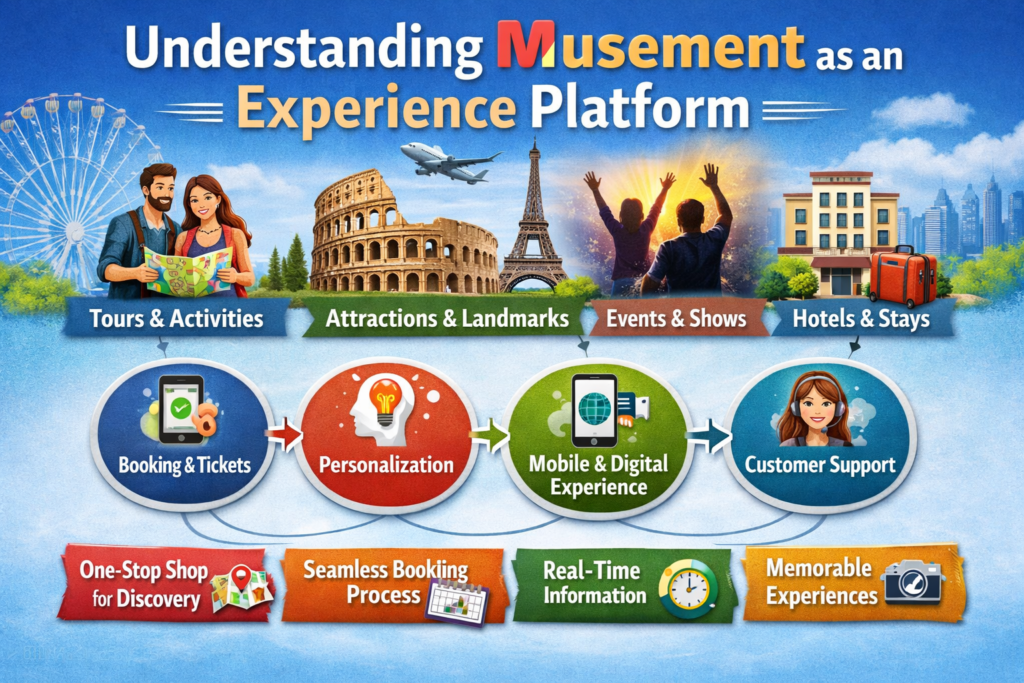
Understanding Musement as an Experience Platform
What Is Musement
Musement is a digital platform that allows users to discover and book tours, attractions, and activities across global destinations—all from one place.
Types of Experiences Offered
From cultural tours and museum tickets to food experiences and outdoor adventures, the platform caters to diverse traveler interests.
How Travelers Search for Experiences Online
Inspiration vs Intent-Based Searches
Some users search broadly like “things to do in Barcelona.” Others search with intent like “Sagrada Familia skip-the-line tickets.” SEO must capture both.
Mobile Search and On-the-Go Planning
Many travelers search while already at the destination. Mobile-optimized SEO is essential for capturing last-minute bookings.
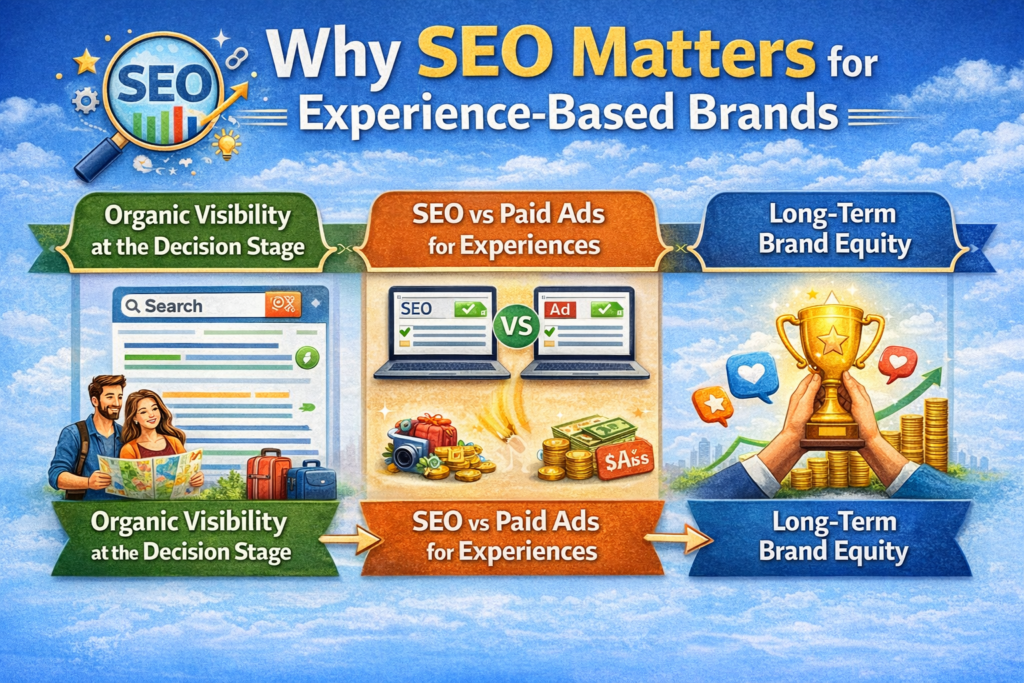
Why SEO Matters for Experience-Based Brands
Organic Visibility at the Decision Stage
SEO places your brand directly in front of travelers when they’re ready to act—not just browse.
SEO vs Paid Ads for Experiences
Ads disappear when budgets stop. SEO compounds over time, delivering consistent visibility.
Long-Term Brand Equity
Ranking consistently builds trust. Travelers assume top results are reliable.
Editorial links from travel sites boost authority.
Partnerships with Tourism Boards
Strategic partnerships strengthen domain trust.
Avoiding Spammy Link Tactics
Quality always beats quantity.
Measuring SEO Performance for Experience Brands
Traffic, Rankings, and Engagement Metrics
Visibility is only step one—engagement reveals effectiveness.
From Visibility to Bookings
Track how SEO supports conversions across touchpoints.
Attribution in Multi-Touch Journeys
SEO often assists conversions rather than closing them directly.
Common SEO Challenges for Experience Platforms
Duplicate and Similar Experience Pages
Thin or repetitive content weakens rankings.
Managing Large-Scale Content
Scalability requires structure, templates, and quality control.
Future SEO Trends for Experience-Based Brands
AI Search and Personalized Results
Search results will become more contextual and personalized.
Voice and Visual Search
“Things to do near me” voice queries are rising fast.
Sustainable and Responsible Travel Searches
Eco-friendly experiences are gaining search momentum.
Conclusion
SEO is the backbone of growth for experience-based brands. For platforms like Musement, it’s not just about rankings—it’s about meeting travelers at the exact moment curiosity turns into action. When SEO, content, and user experience align, experience brands don’t just grow—they become unforgettable.