

JOBY: Complete Guide to JOBY Aviation and the Future of Air Mobility

Discover how JOBY Aviation is revolutionizing transportation with electric air taxis and eVTOL technology. This guide explores JOBY’s features, latest updates, business model, and its impact on the future of urban air mobility.
Table of Contents
What is JOBY Aviation?
Company Overview
Imagine skipping traffic entirely—not by taking a faster car, but by flying over the chaos. That’s exactly what JOBY Aviation is trying to make real. Founded in California, JOBY is a cutting-edge aerospace company developing electric air taxis designed for everyday commuting. Unlike traditional helicopters, these aircraft are quiet, emission-free, and built for urban environments.
At its core, JOBY isn’t just building aircraft—it’s building a new transportation ecosystem. Think of it like how ride-sharing apps transformed taxis. JOBY wants to do the same, but in the sky. Their aircraft are designed to take off vertically like a helicopter and then cruise like an airplane, combining efficiency with flexibility.
What makes JOBY especially interesting is its long-term vision. The company aims to make air travel as simple as booking a cab. In fact, their system is being designed so users can book flights directly through apps, making the experience seamless and accessible. With billions invested and years of testing behind them, JOBY is now closer than ever to turning science fiction into everyday reality.
Mission and Vision
JOBY’s mission is surprisingly simple yet ambitious: to save a billion people an hour a day. That’s not just a catchy phrase—it reflects a deep understanding of how much time we lose in traffic. Whether you’re stuck in a city like New York, London, or even Mumbai, the problem is universal.
Their vision extends beyond convenience. JOBY is also focused on sustainability, aiming to reduce carbon emissions by replacing gas-powered vehicles with electric aircraft. Their planes produce zero operating emissions, which is a huge deal in today’s climate-conscious world.
Think of JOBY as blending three worlds: aviation, clean energy, and tech-driven mobility. It’s not just about flying—it’s about rethinking how we move.
Understanding eVTOL Technology
What is eVTOL?
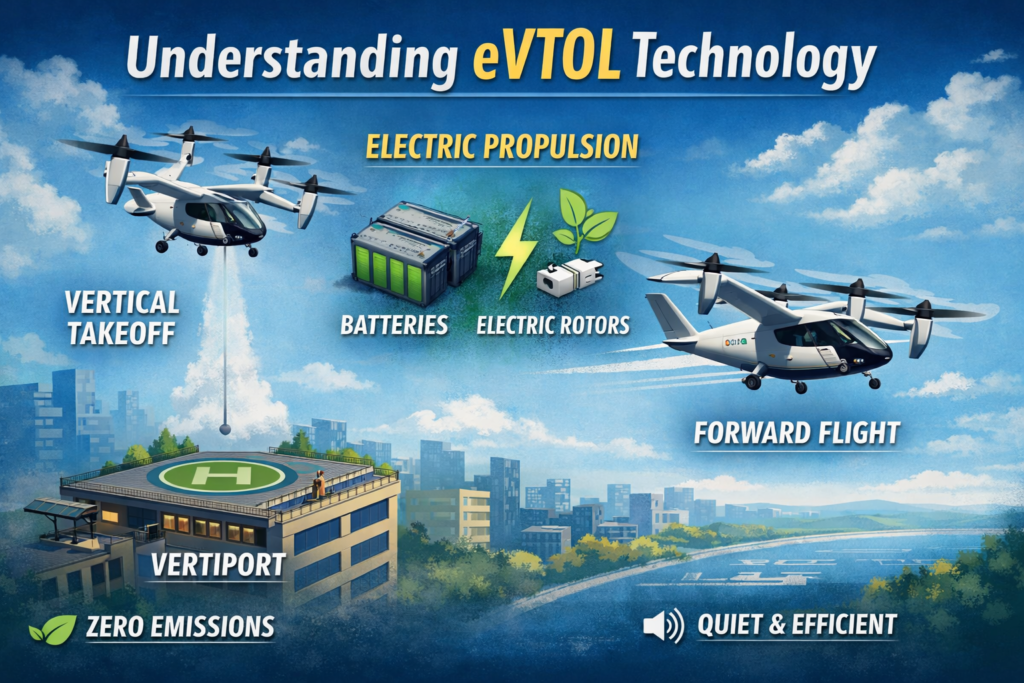

eVTOL stands for Electric Vertical Takeoff and Landing, and it’s the backbone of JOBY’s innovation. These aircraft can take off and land vertically like a helicopter but fly horizontally like a plane. It’s like having the best of both worlds.
Why does this matter? Because traditional airports aren’t needed. eVTOLs can operate from compact landing zones called vertiports, which can be placed on rooftops, parking lots, or even small urban hubs. This makes them ideal for cities where space is limited.
The real magic lies in the electric propulsion system. Instead of burning fuel, eVTOLs use batteries to power multiple rotors. This not only reduces emissions but also significantly lowers noise levels. Compared to helicopters, JOBY’s aircraft are much quieter, making them more suitable for urban use.
How JOBY’s Aircraft Works
JOBY’s aircraft features a six-rotor design that allows it to lift off vertically and then transition smoothly into forward flight. It can carry a pilot and four passengers, making it ideal for short urban trips.
Here’s how a typical flight works:
- Vertical takeoff from a vertiport
- Transition to forward flight
- Cruise at high speed
- Vertical landing at destination
This hybrid flight mode ensures efficiency and speed. With top speeds reaching around 200 mph, these aircraft can dramatically cut travel times.
Key Features of JOBY Air Taxi
Speed, Range, and Capacity
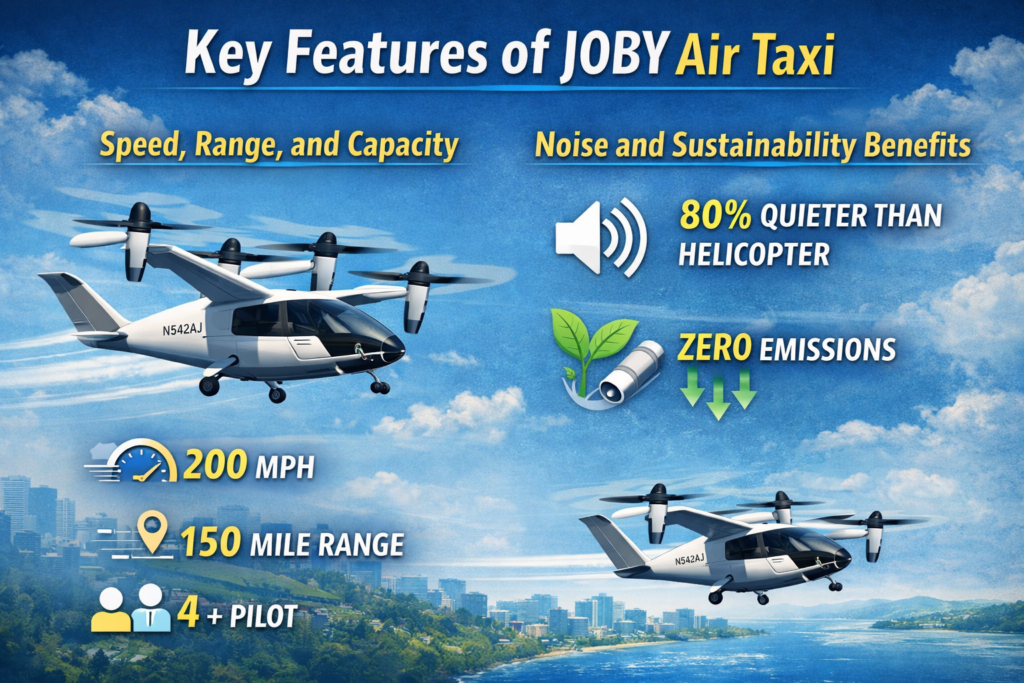
Let’s talk performance. JOBY’s air taxi isn’t just futuristic—it’s fast. With speeds of up to 200 mph and a range of approximately 150 miles, it’s built for both city and regional travel.
Here’s a quick comparison:
Feature | JOBY Air Taxi | Traditional Car |
Speed | ~200 mph | ~40–60 mph |
Range | 150 miles | Unlimited (fuel-based) |
Passengers | 4 + pilot | 4–5 |
Traffic Impact | None | High |
This means a trip that normally takes an hour could be reduced to just 10–15 minutes.
Noise and Sustainability Benefits
One of the biggest criticisms of helicopters is noise. JOBY addresses this by designing ultra-quiet rotors. During flight, the sound is closer to a soft hum rather than a loud chop.
On the sustainability side, the aircraft produces zero emissions during operation, making it a cleaner alternative to cars and helicopters. This aligns perfectly with global climate goals and urban sustainability initiatives.
JOBY Aviation in 2026 (Latest Updates)
FAA Certification Progress
As of 2026, JOBY has reached a major milestone: it has begun testing its first FAA-conforming aircraft, a critical step toward full certification.
Certification is one of the biggest hurdles in aviation. Without it, commercial flights can’t begin. JOBY is currently in the Type Inspection Authorization (TIA) phase, where regulators evaluate the aircraft’s safety and performance.
This progress signals that JOBY is not just experimenting—it’s preparing for real-world deployment.
Commercial Launch Plans
Here’s where things get exciting. JOBY is planning to start commercial operations in 2026, both in the U.S. and internationally.
- Selected for operations in 10 U.S. states
- Participating in FAA-backed pilot programs
- Preparing for passenger flights
This isn’t a distant future—it’s happening now.
Partnerships and Collaborations
Uber Partnership
One of JOBY’s smartest moves is partnering with Uber. Together, they’ve introduced the concept of “Uber Air”, allowing users to book air taxis directly through the app.
Think about it: you open Uber, choose your destination, and instead of a car, you get an air taxi. That’s not just innovation—it’s a complete shift in how we think about commuting.
Government and FAA Programs
JOBY is also working closely with the U.S. government. It has been selected for a White House-backed eVTOL pilot program, allowing early operations even before full certification.
This kind of support is huge. It shows that governments are serious about integrating air taxis into public transportation systems.
How JOBY Will Change Urban Transportation
Solving Traffic Congestion
Let’s be honest—traffic is one of the biggest headaches of modern life. JOBY’s solution is simple: go above it. By using airspace instead of roads, these aircraft can bypass congestion entirely.
Imagine living in a busy city and cutting your commute from an hour to just 10 minutes. That’s not just convenience—it’s life-changing.
Reducing Travel Time
In cities like Dubai, JOBY aims to reduce a 45-minute car journey to just 12 minutes by air.
That’s a massive improvement. Over time, this could redefine how cities are structured and how people choose where to live and work.
Global Expansion of JOBY
Dubai Launch Plans
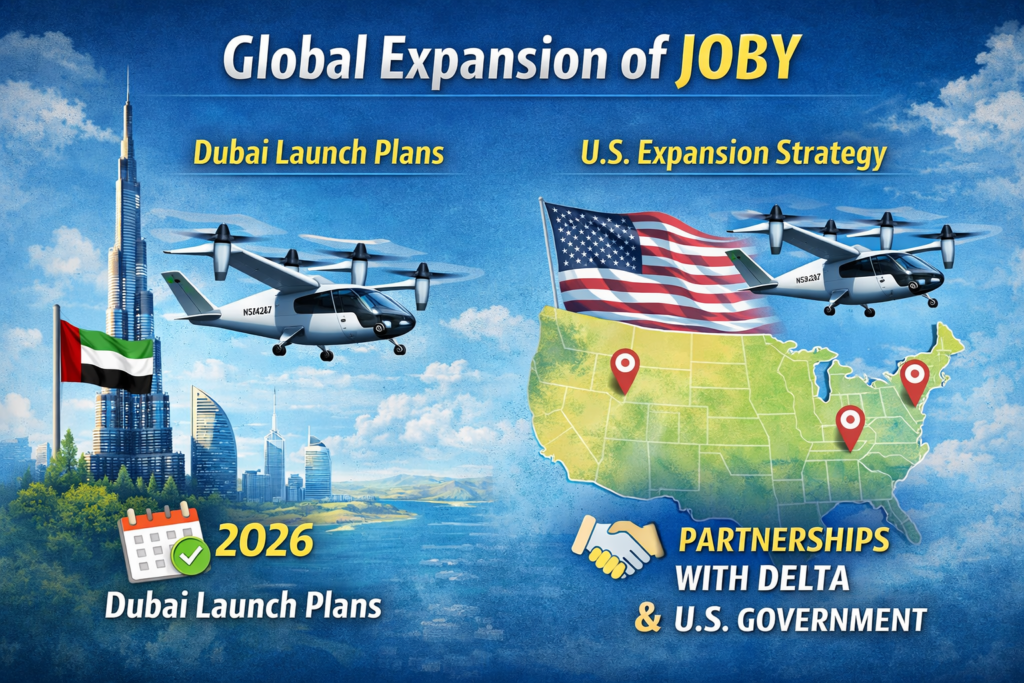
Dubai is set to become one of the first cities to launch JOBY’s air taxi service. The company plans to begin passenger flights in 2026, supported by dedicated vertiports and infrastructure.
Dubai’s forward-thinking approach makes it the perfect testing ground for futuristic transportation.
U.S. Expansion Strategy
In the U.S., JOBY is preparing to operate across multiple states through pilot programs. These early operations will help refine the technology and build public trust.
Business Model of JOBY Aviation
Air Taxi Service Model
JOBY plans to operate as a ride-sharing platform in the sky. Instead of selling aircraft, it will provide transportation as a service.
Revenue Streams
- Passenger flights
- Partnerships with platforms like Uber
- Government contracts
- Infrastructure development
This diversified model ensures long-term scalability.
Competitors in the Air Mobility Market
Major Players
The air mobility space is heating up, with companies like:
- Archer Aviation
- Lilium
- Volocopter
- EHang
JOBY’s Competitive Advantage
JOBY stands out due to:
- Advanced certification progress
- Strong partnerships
- Proven flight testing
Challenges Facing JOBY Aviation
Regulatory Hurdles
Aviation regulations are strict, and for good reason. Ensuring safety is critical, and certification takes years.
Infrastructure Needs
Vertiports, charging stations, and air traffic systems must be built from scratch. This requires massive investment.
Future of Air Mobility
Industry Growth Predictions
Experts believe the eVTOL market could become a multi-billion-dollar industry within the next decade.
Role of AI and Automation
AI will play a key role in:
- Flight optimization
- Air traffic management
- Autonomous operations
Conclusion
JOBY Aviation isn’t just building aircraft—it’s building the future of transportation. With real-world testing underway, partnerships in place, and commercial launches planned for 2026, the company is closer than ever to transforming how we move.
The idea of flying taxis may sound futuristic, but it’s quickly becoming reality. And when it does, commuting may never be the same again.
Frequently Asked Questions
JOBY Aviation is known for developing electric air taxis using eVTOL technology for urban transportation.
JOBY plans to begin commercial operations in 2026, starting in locations like Dubai and the U.S.
It can reach speeds of up to 200 mph, significantly reducing travel time.
Yes, its aircraft produce zero operating emissions, making it eco-friendly.
Yes, JOBY is partnering with Uber to enable booking through its app.
Table of Contents
Popular Posts

-
 Affordable Technical SEO Audit for Small Business: A Complete Guide26 Jun 2025 Blog
 -
 How to Get an Affordable Technical SEO Audit for Small Business27 Jun 2025 Blog
 -
 The Ultimate Local SEO Audit Checklist for Startups28 Jun 2025 Blog
 -
 Local SEO Audit Checklist for Startups: A Beginner’s Guide28 Jun 2025 Blog
 -
 Top On-Page SEO Audit Steps for Service Websites Every Business Should Know29 Jun 2025 Blog
 -
 The Impact of On-Page SEO Audit Steps for Service Websites on UX01 Jul 2025 Blog
 -
 Technical SEO for WordPress: The Ultimate Beginner’s Guide01 Jul 2025 Blog
 -
 Technical Mobile SEO Audit Tips for Developers02 Jul 2025 Blog
Related Post