
Drop: The Ultimate Platform for Exclusive Tech & Gear Deals
Discover how Drop revolutionized online shopping by offering exclusive tech and gear deals through a community-driven model. This blog explores the platform’s unique approach, premium collaborations, and how Drop became a favorite among enthusiasts looking for high-quality products at affordable prices.
Table of Contents
What is Drop?
Drop is not just another online shopping platform—it’s more like a community-powered marketplace where tech enthusiasts shape the products they buy. Originally launched in 2012 as Massdrop, the platform brought together people with niche interests—think mechanical keyboards, audiophile headphones, and gaming gear—and gave them a voice in what gets produced and sold.
What makes Drop stand out is its ability to blend e-commerce with community interaction. Instead of brands guessing what customers want, Drop flips the model. Users discuss ideas, vote on products, and even influence design features. That’s like crowdsourcing innovation in real time—something traditional platforms rarely offer.
Over time, Drop evolved from simply organizing group buys to creating its own exclusive products and collaborations. These collaborations often involved well-known brands, resulting in high-quality products at surprisingly affordable prices. For example, partnerships with audio brands produced headphones that rivaled premium models but cost significantly less.
So, if you’ve ever wished for a platform where your opinion actually matters in product design, Drop was exactly that—a marketplace built “by enthusiasts, for enthusiasts.”
Origin and Evolution from Massdrop
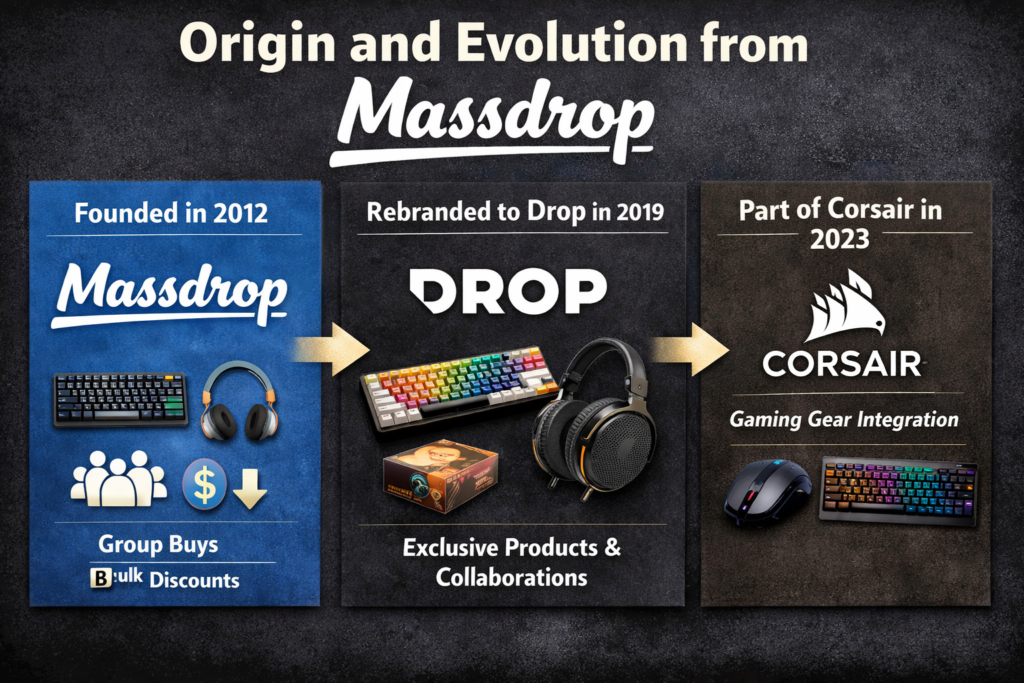

Drop’s story begins with a simple idea: combine online communities with bulk purchasing power. Back in 2012, its founders noticed that online forums were full of passionate users discussing products—but those discussions rarely translated into better deals or improved products.
Massdrop changed that. It allowed users to pool their buying power, unlocking discounts that wouldn’t be possible individually. Imagine 1,000 people wanting the same keyboard—brands suddenly become willing to offer lower prices and even tweak designs.
In 2019, the company rebranded to “Drop,” reflecting a broader vision beyond group buying. It started focusing on exclusive product lines and collaborations, giving rise to what we now recognize as Drop Studio products.
Acquisition and Recent Changes
In 2023, Drop was acquired by Corsair, a major player in gaming hardware. This marked a significant shift in the platform’s direction. While the brand remained intact, its independence started to change.
By March 2026, Drop officially shut down its standalone e-commerce store, ending the traditional Massdrop-style experience. The platform transitioned into a collaboration hub within the Corsair ecosystem, focusing more on branded partnerships rather than community-driven group buys.
For longtime users, this was a bittersweet moment. The products didn’t disappear—but the unique community-driven shopping experience largely did
Why Drop Became Popular
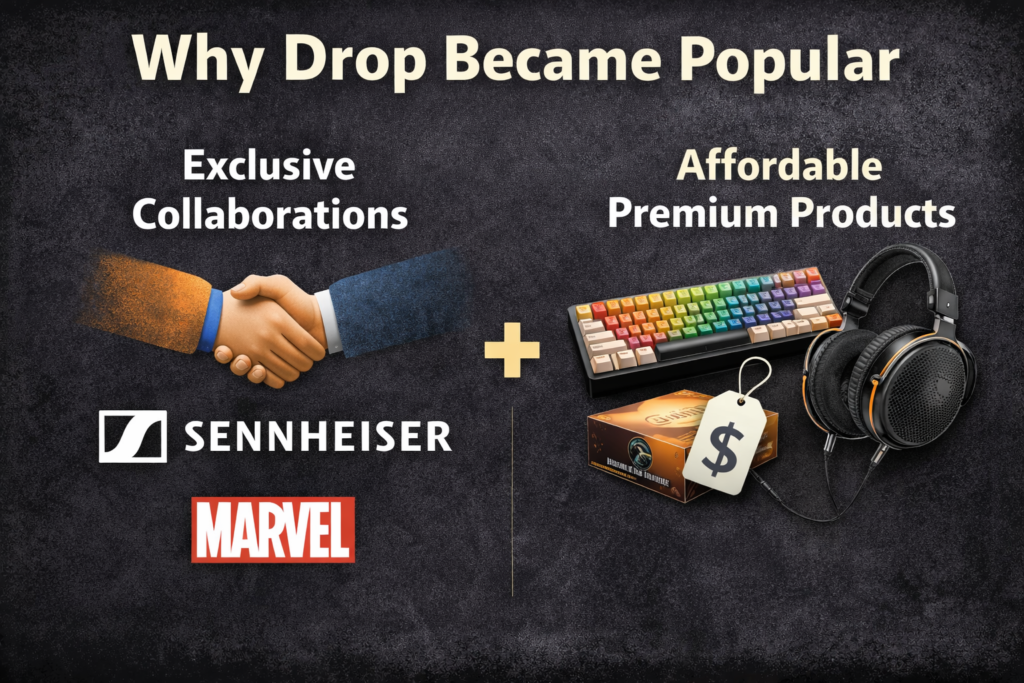
Exclusive Collaborations
One of Drop’s biggest strengths was its collaboration model. It worked with well-known brands to create custom versions of popular products, often improved based on user feedback.
For example, headphone collaborations delivered audiophile-grade sound at mid-range prices, making high-end audio more accessible.
Affordable Premium Products
Because Drop eliminated traditional retail layers, it could offer:
- Lower prices
- Better quality
- Unique designs
This combination made it a favorite among tech enthusiasts who wanted maximum value without compromise.
How Drop Works
Community-Driven Commerce Model
At its core, Drop operated on a community-first approach. Users weren’t just customers—they were contributors. They discussed products, voted on ideas, and provided feedback during development.
This model allowed Drop to:
- Identify niche demands quickly
- Reduce risk in product launches
- Deliver exactly what enthusiasts wanted
It’s like having thousands of product testers before a product even exists.
Group Buying Concept Explained
The original backbone of Drop was the group buy model. Here’s how it worked:
- A product idea was introduced
- Users joined the “drop” (purchase event)
- Once enough people joined, the deal was activated
- Bulk pricing kicked in
This approach cut out middlemen, allowing Drop to offer premium products at lower prices.
Think of it like a wholesale deal—but organized online and driven by demand.
Key Product Categories on Drop
Mechanical Keyboards
Mechanical keyboards were one of Drop’s most popular categories. These weren’t your typical keyboards—they were customizable, durable, and designed for enthusiasts.
Users could choose:
- Switch types
- Keycaps
- Lighting effects
It’s like building your own dream keyboard from scratch.
Audiophile Gear
Drop gained massive recognition in the audiophile community. Its collaborations produced headphones and audio gear that rivaled premium brands.
Many users considered Drop products to be “hidden gems” in audio quality.
Gaming Accessories
With its integration into Corsair, Drop expanded into gaming gear, including:
- Gaming keyboards
- Desk setups
- Themed accessories
These products often featured unique designs inspired by popular franchises.
Unique Features of Drop Platform
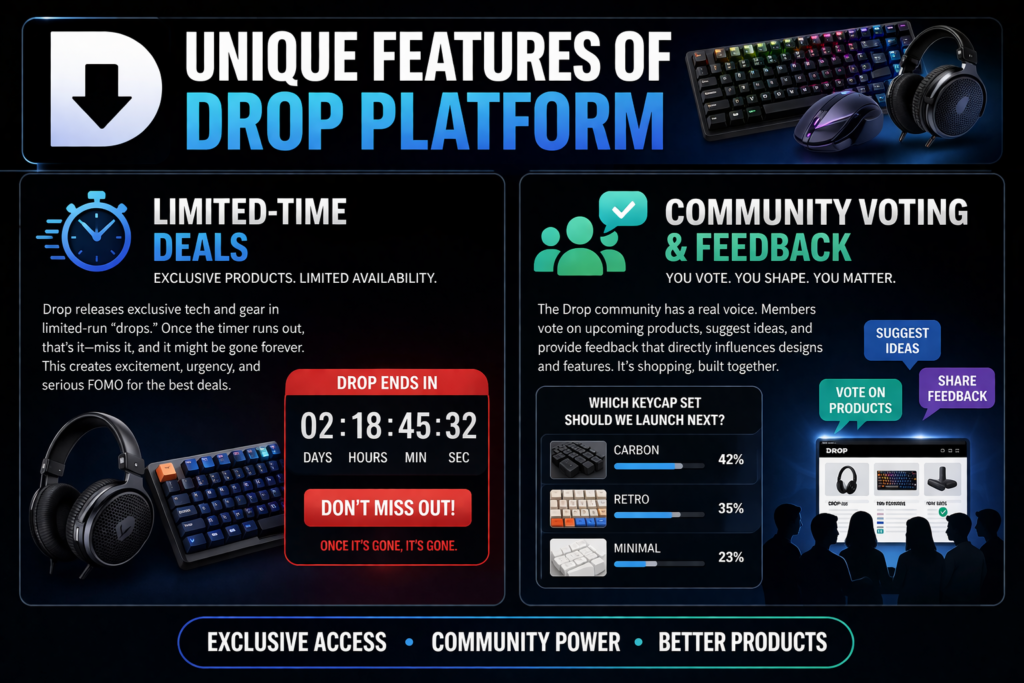
Limited-Time Deals
Drop specialized in limited-run products, creating a sense of urgency. If you missed a drop, it might never come back.
This scarcity made the platform exciting—like catching a flash sale before it disappears.
Community Voting & Feedback
Users could:
- Vote on upcoming products
- Suggest improvements
- Discuss prototypes
This level of involvement is rare in e-commerce, making Drop feel more like a collaborative innovation hub.
Benefits of Using Drop
Cost Savings
Because of bulk buying and direct-to-consumer sales, Drop offered significant discounts compared to traditional retailers.
High-Quality Products
Every product was shaped by enthusiast feedback, ensuring quality and performance.
Drawbacks of Drop
Limited Availability
Products were often:
- Limited edition
- Available for a short time
Miss it once, and it might be gone forever.
Waiting Time for Orders
Since many products were made after orders were placed, shipping could take weeks or months.
Also Read
World Of Warships: The Ultimate Naval Battle Experience
Kogan Australia Review: Deals, Quality & Customer Experience
GeekBuying: The Best Online Store for Affordable Gadgets
NordVPN: The Ultimate Guide to Online Privacy and Security
Square Off: Complete Guide to Smart Chess Boards and AI Gameplay
Drop vs Traditional E-commerce Platforms
Feature | Drop | Traditional E-commerce |
Pricing | Lower (bulk-based) | Standard retail |
Product Input | Community-driven | Brand-driven |
Availability | Limited runs | Always available |
Innovation | High | Moderate |
Delivery Speed | Slower | Faster |
Drop wasn’t just competing—it was redefining how products are created and sold
What Happened to Drop in 2026
In 2026, Drop underwent a major transformation. The standalone store shut down, ending its original model.
This shift meant:
- No more group buys
- No more community-driven product launches
- Focus on branded collaborations
For many users, this marked the end of an era.
Future of Drop and Its Products
Although the platform changed, Drop products are still available through:
- Corsair’s ecosystem
- Major retailers
The focus now is on licensed collaborations and themed products, rather than community innovation.
Tips to Get the Best Deals on Drop
If you’re exploring Drop products today, here’s how to maximize value:
- Follow product releases closely
- Join enthusiast communities
- Act fast on limited drops
- Compare prices across platforms
Timing is everything—hesitate, and you might miss out.
Conclusion
Drop was never just a shopping platform—it was a revolution in how products are designed and sold. By giving power to the community, it created a unique ecosystem where enthusiasts shaped the market.
Even though its original model has evolved, the impact of Drop is undeniable. It proved that when customers are involved in creation, the result is better products, better prices, and a stronger connection between brands and users.
The legacy of Drop lives on—not just in its products, but in the way it changed e-commerce forever.
Frequently Asked Questions
Drop is known for its community-driven model and exclusive tech collaborations, especially in keyboards and audio gear.
Yes, but it no longer operates as a standalone store. It now functions within the Corsair ecosystem.
Because it offered high-quality products at lower prices and allowed users to influence product design.
Yes, especially for their quality and unique designs, though availability may vary.
The platform shifted to branded collaborations and retail distribution through Corsair and partners.
Table of Contents
Popular Posts

-
 Affordable Technical SEO Audit for Small Business: A Complete Guide26 Jun 2025 Blog
 -
 How to Get an Affordable Technical SEO Audit for Small Business27 Jun 2025 Blog
 -
 The Ultimate Local SEO Audit Checklist for Startups28 Jun 2025 Blog
 -
 Local SEO Audit Checklist for Startups: A Beginner’s Guide28 Jun 2025 Blog
 -
 Top On-Page SEO Audit Steps for Service Websites Every Business Should Know29 Jun 2025 Blog
 -
 The Impact of On-Page SEO Audit Steps for Service Websites on UX01 Jul 2025 Blog
 -
 Technical SEO for WordPress: The Ultimate Beginner’s Guide01 Jul 2025 Blog
 -
 Technical Mobile SEO Audit Tips for Developers02 Jul 2025 Blog
Related Post