

Bonus Loyalty Program Explained: Features and Benefits

Discover how a Bonus loyalty program works, including its key features, benefits, and real-world examples. Learn how businesses use Bonus rewards to boost customer retention, increase sales, and create personalized experiences that keep customers engaged and coming back.
Table of Contents
What Is a Bonus Loyalty Program?
Definition and Core Concept
A bonus loyalty program is essentially a strategic marketing tool designed to reward customers for repeated engagement with a brand. Think of it like a digital version of a “thank you” note—but instead of words, you get points, discounts, cashback, or exclusive perks. Businesses use these programs to encourage customers to keep coming back, spend more, and build a long-term relationship with the brand.
At its core, a bonus loyalty program revolves around one simple idea: reward behavior you want to repeat. When customers feel appreciated, they’re far more likely to stay loyal instead of jumping to competitors. According to recent research, about 41% of consumers stay loyal to brands that offer a loyalty program . That’s a massive chunk of your audience influenced by rewards alone.
What makes “bonus” loyalty programs slightly different from traditional ones is the emphasis on extra incentives—like bonus points for certain actions, double rewards during special campaigns, or surprise perks. These added layers create excitement and make the experience feel dynamic rather than predictable.
How Bonus Loyalty Programs Work
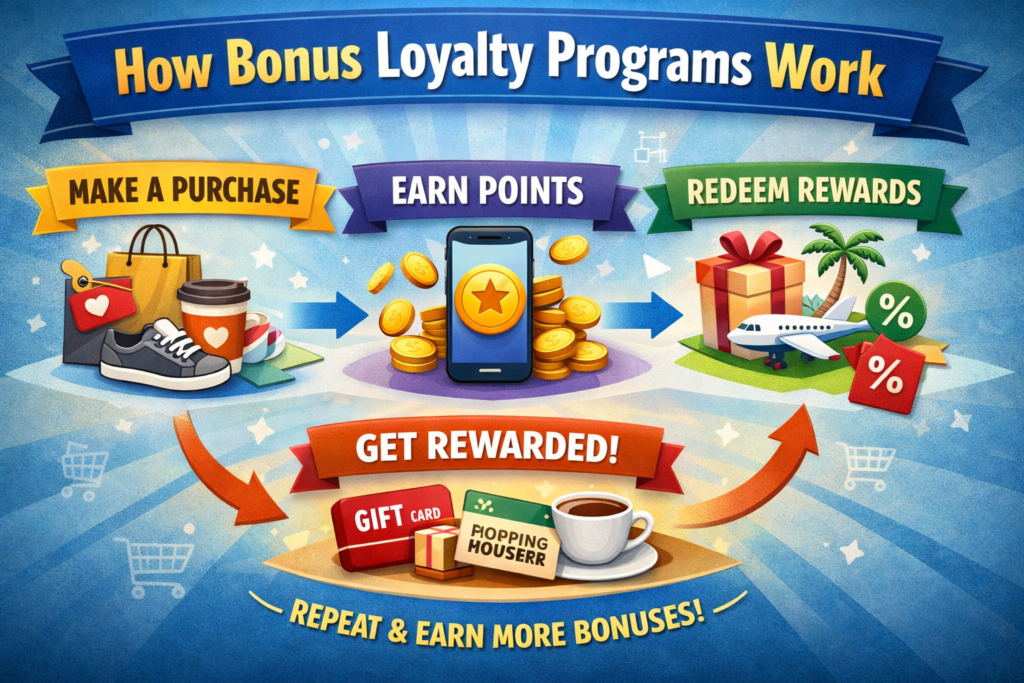

Let’s simplify it. Imagine you buy coffee regularly from the same shop. With a bonus loyalty program, every purchase earns you points. Once you hit a certain threshold, you can redeem those points for rewards—like a free drink or discount. But here’s where the “bonus” kicks in: maybe you get double points on weekends or extra rewards for trying a new product.
This system creates a loop: purchase → reward → motivation → repeat purchase. Over time, this loop becomes habit-forming, almost like a game. In fact, gamification in loyalty programs can increase engagement by up to 47% .
These days, loyalty programs are more than just punch cards. They’re integrated into apps, emails, and even social media platforms, allowing brands to track customer behavior and tailor rewards accordingly. It’s not just about giving away freebies—it’s about building a personalized experience that keeps customers hooked.
Why Bonus Loyalty Programs Are Important in 2026
Changing Consumer Behavior
Let’s be real—customers today are not loyal by default. With endless options available online and offline, switching brands has never been easier. This is exactly why bonus loyalty programs have become a necessity rather than a luxury.
Consumers now expect more than just a good product. They want value, personalization, and recognition. A loyalty program checks all these boxes. It tells customers, “Hey, we see you—and we appreciate you.” That emotional connection plays a huge role in keeping them engaged.
Interestingly, about 63% of consumers are willing to share personal data in exchange for rewards and personalized experiences . That means customers are actively participating in these programs because they see real benefits.
Key Industry Statistics
The numbers behind loyalty programs are honestly pretty eye-opening. The average consumer is now part of 7.5 loyalty programs . That means if your business doesn’t have one, you’re already behind the curve.
Even more telling—74% of customers say they are more loyal to brands with a positive loyalty experience . This shows that it’s not just about having a program; it’s about designing it well.
Another big insight: acquiring a new customer can cost 5 to 25 times more than retaining an existing one . Loyalty programs directly address this by focusing on retention, which is far more cost-effective and sustainable.
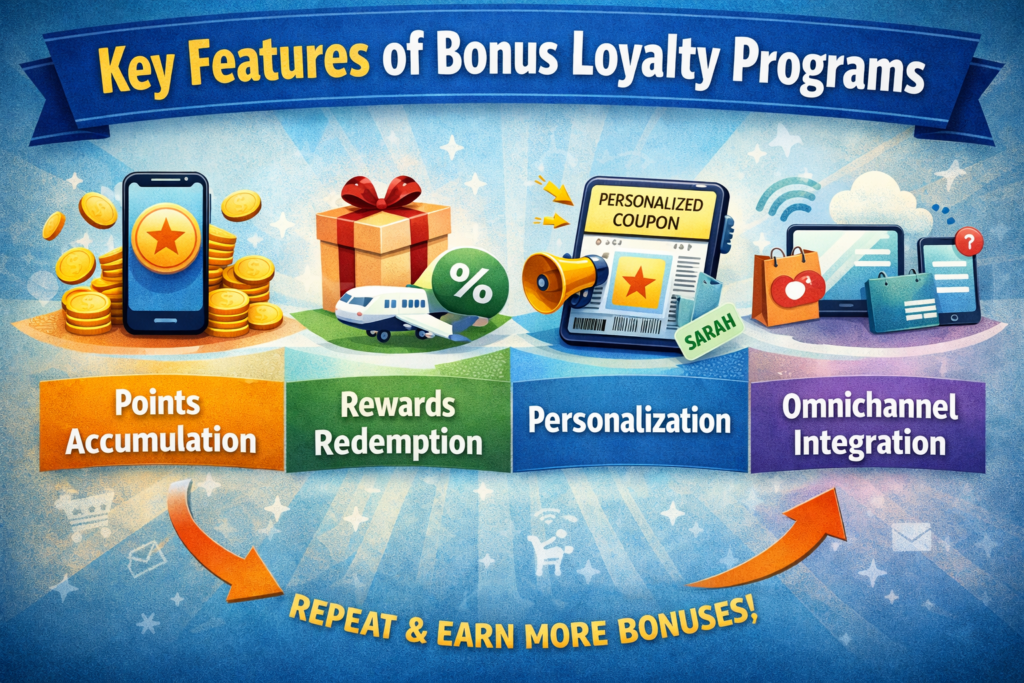
Key Features of Bonus Loyalty Programs
Points Accumulation
The foundation of any loyalty program is the collection of points. Every purchase or action contributes to a growing pool of rewards. Customers make more money the more they interact.
What makes this feature powerful is its psychological impact. Watching points grow creates a sense of progress, encouraging customers to keep going.
Rewards Redemption
Redemption is where the magic happens. If earning points is the journey, redemption is the reward at the end. The easier and more valuable the redemption process, the more successful the program.
If rewards are hard to access or not appealing, customers lose interest quickly. In fact, 65% of users leave programs when rewards aren’t valuable or easy to use.
Personalization
Personalization is what separates modern loyalty programs from old-school ones. Instead of generic rewards, customers receive offers tailored to their preferences and behavior.
This could mean personalized discounts, birthday rewards, or product recommendations. It makes the experience feel unique rather than transactional.
Omnichannel Integration
Today’s loyalty programs are everywhere—mobile apps, websites, emails, and even physical stores. This omnichannel approach ensures a seamless experience across all touchpoints.
Top retailers are now prioritizing personalization across both digital and physical platforms , making loyalty programs more integrated than ever before.
Types of Bonus Loyalty Programs
Points-Based Systems
Points-based systems are the most common and easiest to understand. Customers earn points for every purchase, and those points can be redeemed later. It’s simple, effective, and widely used across industries—from retail to airlines.
This system’s adaptability is what makes it so beautiful. Brands can offer bonus points during promotions, seasonal sales, or for specific actions like referrals. This maintains the program’s vitality and interest.
Tiered Reward Programs
Tiered programs add a sense of progression. Customers move through different levels—like Silver, Gold, or Platinum—based on their activity. Each level unlocks better rewards, which motivates customers to spend more.
A great real-world example is the evolution of tiered programs in major brands, where customers earn more benefits as they climb higher levels. These systems create a feeling of exclusivity and achievement, almost like leveling up in a game.
Cashback and Bonus Credit Programs
Cashback programs are straightforward—customers get a percentage of their spending back as rewards. Bonus credit systems work similarly but offer store-specific credits instead of cash.
These programs are especially effective because they provide instant value, which customers can clearly understand and appreciate.
Benefits for Customers
Savings and Discounts
Let’s be honest—everyone loves saving money. Loyalty programs offer discounts, cashback, and free products, making customers feel like they’re getting more value for their money.
Exclusive Perks
Beyond savings, customers get access to exclusive perks like early product launches, special events, and personalized offers. These perks create a sense of belonging and exclusivity.
Real-World Examples of Bonus Loyalty Programs
Retail and E-commerce
Retail brands use loyalty programs to drive repeat purchases and increase basket size. From bonus points during sales to exclusive member discounts, these programs are everywhere.
Travel and Hospitality
Airlines and hotels use loyalty programs to reward frequent travelers with points, upgrades, and exclusive experiences. Some programs even allow points to be redeemed across multiple partners, adding extra flexibility.
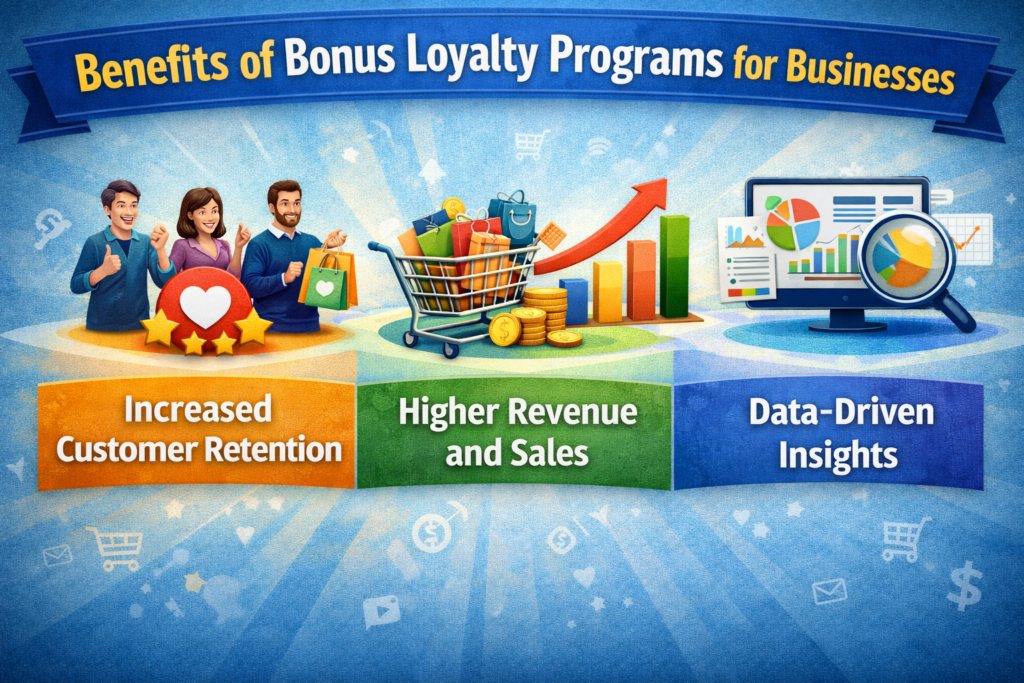
Benefits of Bonus Loyalty Programs for Businesses
Increased Customer Retention
Retention is where loyalty programs truly shine. When customers know they’ll be rewarded for their loyalty, they’re far less likely to switch to competitors.
This creates a stable customer base that generates consistent revenue over time.
Higher Revenue and Sales
Loyal customers tend to spend more. Whether it’s to reach the next reward tier or earn extra points, loyalty programs naturally encourage higher spending.
Data-Driven Insights
Every interaction within a loyalty program generates valuable data. Businesses can analyze this data to understand customer preferences, buying patterns, and trends.
This allows for smarter marketing decisions and more targeted campaigns.
Challenges of Bonus Loyalty Programs
Despite their benefits, loyalty programs aren’t without challenges. Poor design, lack of valuable rewards, or complicated systems can drive customers away instead of attracting them.
The key is to keep things simple, transparent, and rewarding.
Also Read
Olympus Digital Camera Review: Features and Performance
Erasmusu Housing and Travel Services Explained for International Students
Direct Ferries: Travel Aggregator Marketing Strategy Breakdown
How Courant Positioned Itself in the Premium Charging Market
T&S Clothing, LLC: A Complete Brand Analysis & Digital Growth Strategy Guide
Best Practices for Implementing a Bonus Loyalty Program
A successful loyalty program isn’t just about offering rewards—it’s about creating an experience. Businesses should focus on:
- Clear and simple reward structures
- Valuable and relevant incentives
- Seamless user experience
- Regular updates and engagement
Future Trends in Loyalty Programs
The future of loyalty programs is all about AI, personalization, and experience-based rewards. Instead of just discounts, brands are offering memorable experiences that create emotional connections.
Integration with mobile apps, real-time rewards, and gamification will continue to shape the evolution of these programs.
Conclusion
Bonus loyalty programs have evolved into powerful tools that go far beyond simple rewards. They create meaningful relationships between brands and customers, driving engagement, retention, and revenue. In today’s competitive market, having a well-designed loyalty program isn’t just an advantage—it’s a necessity.
Frequently Asked Questions
A bonus loyalty program rewards customers with extra incentives like points, cashback, or exclusive perks for repeat purchases and engagement.
They increase customer retention, boost revenue, and provide valuable data insights for better decision-making.
Yes, studies show that a majority of consumers are more loyal to brands with effective loyalty programs.
Common rewards include discounts, free products, cashback, and exclusive experiences.
By offering valuable rewards, keeping the system simple, and personalizing the experience for customers.
Table of Contents
Popular Posts

-
 Affordable Technical SEO Audit for Small Business: A Complete Guide26 Jun 2025 Blog
 -
 How to Get an Affordable Technical SEO Audit for Small Business27 Jun 2025 Blog
 -
 The Ultimate Local SEO Audit Checklist for Startups28 Jun 2025 Blog
 -
 Local SEO Audit Checklist for Startups: A Beginner’s Guide28 Jun 2025 Blog
 -
 Top On-Page SEO Audit Steps for Service Websites Every Business Should Know29 Jun 2025 Blog
 -
 The Impact of On-Page SEO Audit Steps for Service Websites on UX01 Jul 2025 Blog
 -
 Technical SEO for WordPress: The Ultimate Beginner’s Guide01 Jul 2025 Blog
 -
 Technical Mobile SEO Audit Tips for Developers02 Jul 2025 Blog
Related Post