

Discover Your Ancestral Roots and Family Connections Using MyHeritage

Discover your family history with MyHeritage and explore your ancestral roots, ethnic origins, and family connections. Learn how to build a family tree, find historical records, connect with relatives, and uncover the stories that link generations together.
Table of Contents
IntroductionIntroduction to MyHeritage
Have you ever wondered where your ancestors came from or whether you have relatives living in another country? Exploring your family history can help you discover stories, traditions, and connections that may have been forgotten over time. MyHeritage is an online genealogy platform that helps people investigate their ancestry, build family trees, search historical documents, and discover potential relatives.
Whether you want to learn more about your grandparents or trace your family line back several generations, MyHeritage provides tools to make the process easier. You can begin by adding information you already know and gradually expand your research with historical records and DNA matches. The platform combines family history research with technology to help you connect the pieces of your family story.
What Is MyHeritage and How Does It Work?
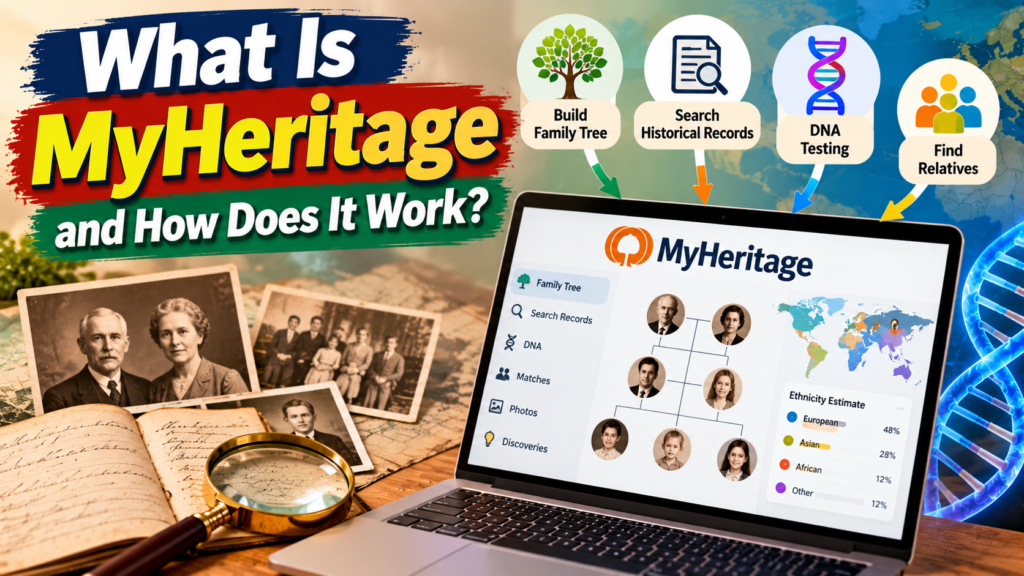

MyHeritage is a family history service that brings together genealogy research, historical records, family trees, and DNA-based relative matching. It helps users organize family information and look for connections with people who may share common ancestors. You can create an account, enter details about your relatives, and explore records that might provide additional clues about their lives.
One useful feature is Smart Matching, which identifies possible matches between people in different family trees. Record Matching can also help locate historical documents related to individuals in your tree. These suggestions can save research time, although you should verify important details before accepting a match as correct.
Building Your Online Family Tree
Creating a family tree is a practical first step toward understanding your ancestry. Start with yourself, then add your parents, grandparents, siblings, and other relatives. Include names, birth dates, marriage details, places of residence, and any other information you can confirm. If you have an existing digital family tree, you may also be able to import it into MyHeritage.
As your tree grows, the platform may suggest connections to other trees or historical records. These clues can help you investigate missing branches and identify people you might not have known about. Ask older family members about family names, migration stories, and old photographs because even small details can lead to important discoveries.
Key Features of MyHeritage
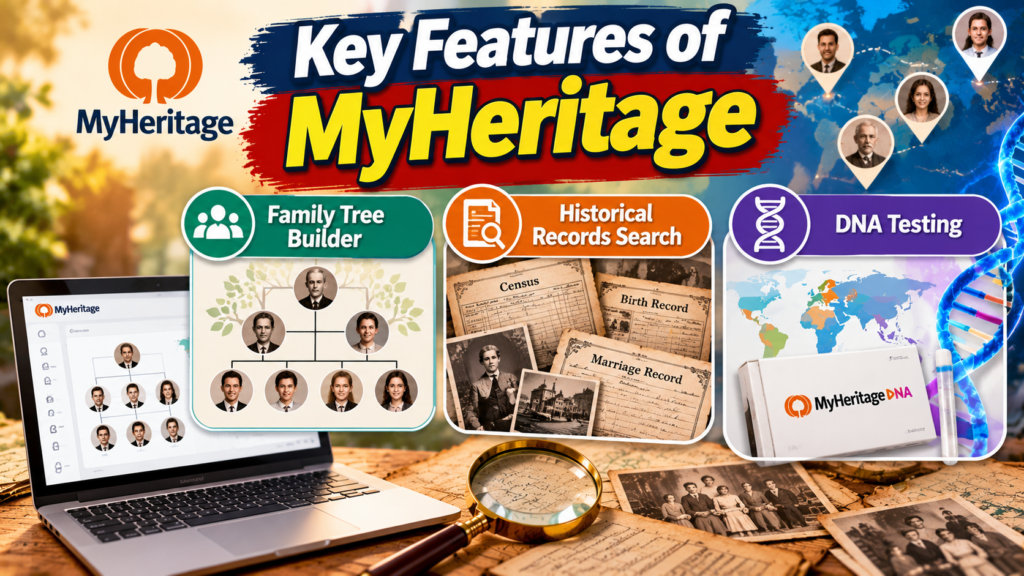
1. Family Tree Builder: Create and organize a family tree by adding relatives, names, dates, and family relationships.
2. Historical Records Search: Explore historical documents, including birth, marriage, death, immigration, and census records.
3. DNA Testing: Discover estimated ethnic origins and identify potential biological relatives through DNA matching.
Finding Historical Records and Family Documents
Historical records can reveal information that family memories alone cannot provide. Depending on the available collections, you may find birth, marriage, and death records, census documents, newspaper articles, immigration records, and other historical materials. These sources can help you confirm dates, identify relatives, and understand where your ancestors lived.
MyHeritage states that its historical search engine includes more than 30 billion historical records, although the documents available to you will depend on the collection, location, and subscription access.
Try searching for alternative spellings of surnames, different locations, and approximate dates when an exact match does not appear. Comparing several independent records is a good way to avoid confusing two people with similar names.
Discovering Your Ethnic Origins With DNA Testing
For people interested in their genetic ancestry, MyHeritage offers a DNA test designed to estimate ethnic origins and identify potential genetic relatives. According to its published information, its Ethnicity Estimate covers 79 ethnicities, alongside Genetic Groups associated with more than 2,100 geographic regions.
DNA results can offer clues about your family’s distant origins and help you investigate relationships that are difficult to establish through documents alone. However, ethnicity estimates are not exact measurements of identity, nationality, or cultural background. Results can change as reference databases and analysis methods improve. For the most useful picture, combine DNA findings with family records, historical evidence, and information shared by relatives.
Connecting With Relatives Around the World
One exciting part of genealogy is discovering people who may share your family history. MyHeritage DNA Matching compares your DNA results with those of other participating users to identify potential biological relatives. Depending on your privacy settings and available information, you may be able to contact matches and compare family trees.
These connections can help you identify shared ancestors, confirm family relationships, or learn about branches of your family that moved to other regions. A DNA match is a starting point rather than complete proof of a specific relationship, so compare shared DNA information with names, dates, and family documents. Respect other people’s privacy when contacting newly discovered relatives, especially when the results reveal unexpected family connections.
Benefits of Using MyHeritage
MyHeritage brings several family research activities together in one place. Instead of keeping all your discoveries in separate notebooks, you can organize names, dates, photographs, and relationships within a digital family tree. Record suggestions and family tree matches can also help you find new leads without starting every search from scratch.
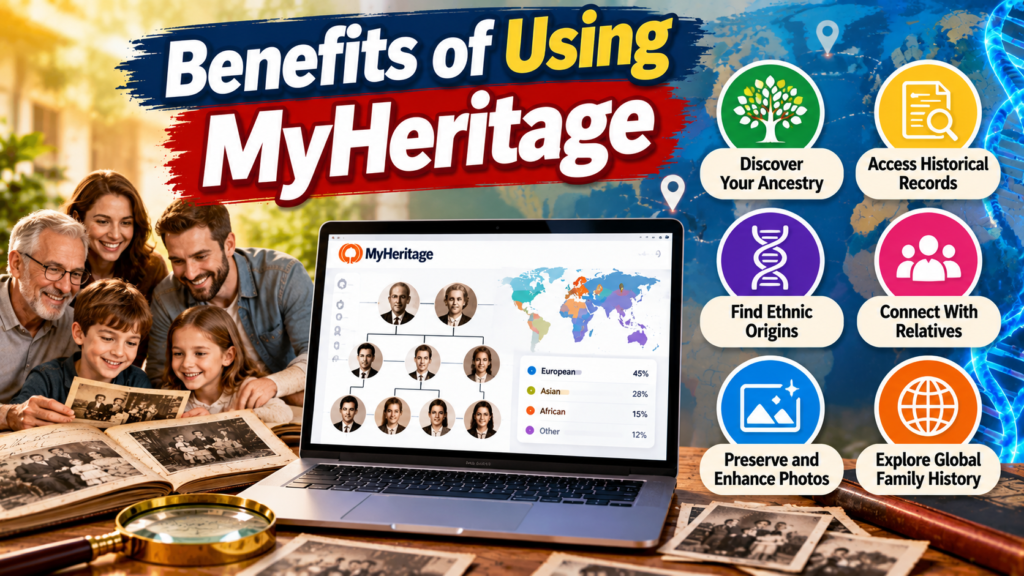
Another advantage is the opportunity to collaborate with relatives. Family members can contribute stories, identify people in photographs, and correct missing details. Combining their knowledge with documentary evidence can produce a richer account of your family history. For beginners, the ability to start with a small family tree and expand gradually makes ancestry research more approachable.
Using MyHeritage Photo Tools
Old family photographs often contain memories that deserve to be preserved. MyHeritage provides photo tools designed to improve, restore, colorize, and animate certain photographs. These features can help make damaged or faded images easier to view and share with family members.
For example, you might restore an old portrait of a great-grandparent or colorize a photograph that has been passed down through generations. The results can make family history more engaging, particularly for younger relatives. However, enhanced or colorized images are digital interpretations, not necessarily accurate representations of the original appearance. Keep the original photographs and label edited versions clearly.
MyHeritage Free and Paid Features
MyHeritage offers some free family history tools, while access to certain records and advanced features may require a paid subscription. DNA testing is a separate purchase where available, and the features accessible after testing may also depend on your account plan.
Feature | What to know |
Family tree | You can start building a family tree for free. |
Historical records | Access depends on the collection and subscription. |
DNA testing | Requires purchasing a test kit where available. |
DNA matches | Helps identify potential biological relatives. |
Photo tools | Availability may depend on the specific tool or plan. |
Before paying, check the current subscription terms, renewal conditions, and features included in each plan on the official MyHeritage website. Your best choice depends on whether you mainly want to organize family information, search historical records, or investigate DNA connections.
Also Read
How Bellway Combines Modern Home Designs With Community Living
Why Consumers Are Exploring Modern Product Solutions From Dip Devices
Discover the Best Benefits of Bubble Skincare for Healthy, Glowing Skin
Is Sesame Care Worth It? A Complete Guide to Online Healthcare Services
How Envelopes.Com Can Help Improve Your Business Mailing Experience
Tips for Getting Better Family History Results
Good genealogy research begins with reliable information. Start with details you know, then work backward through the generations rather than guessing about distant ancestors. Speak with relatives, review family documents, and record where each piece of information came from. Even a simple note explaining the source of a birth date can help you evaluate your findings later.
When MyHeritage suggests a record or family tree match, compare the person’s name, location, age, and family relationships before adding the information. Be careful with common surnames and spelling variations. If two sources disagree, keep track of both possibilities until you find stronger evidence. This method helps prevent mistakes from spreading throughout your family tree.
Privacy and DNA Data Considerations
Family trees and DNA results contain sensitive personal information, so privacy deserves careful attention. Before using DNA matching, review who can see your profile, whether matching is enabled, and what information other users may access. MyHeritage provides privacy controls that allow users to manage DNA matching and related sharing preferences.
You should also consider the possibility of discovering unexpected biological relationships or family information. Think carefully before testing children or uploading another person’s genetic information, and obtain appropriate permission. Read the current privacy policy and research consent options so you understand how your data may be used. Taking these steps allows you to explore your ancestry while making informed decisions about your family’s privacy.
Common Challenges in Genealogy Research
Tracing ancestors is not always straightforward. Historical records may be incomplete, names may have changed after migration, and documents from certain regions or periods may be difficult to access. In some families, information was passed down orally rather than recorded in official documents, which can make verification more challenging.
The best approach is to treat each discovery as a research clue. Search using different spellings, approximate dates, and nearby locations, and compare multiple records whenever possible. If you reach a dead end, ask relatives for additional information or investigate the historical context of the place where your ancestors lived. Patience and careful checking are often more valuable than making quick assumptions.
Is MyHeritage Worth Using?
MyHeritage can be a useful option for anyone who wants to organize family information, explore historical records, or investigate possible relatives through DNA matching. Its combination of family trees and research tools makes it suitable for beginners as well as people who already have some genealogy experience.
However, the value you receive depends on your goals, the records available for your family, and your willingness to verify the results. Some features require payment, and not every ancestor will have a discoverable record or DNA match. Starting with a free family tree is a sensible way to explore the platform before deciding whether additional services are worthwhile.
Conclusion
Discovering your ancestral roots can help you understand your family’s history, preserve important memories, and build connections across generations. MyHeritage offers tools for creating family trees, finding historical documents, exploring DNA ancestry, and identifying potential relatives. By combining these resources with conversations, reliable records, and careful research, you can gradually develop a clearer picture of where your family came from.
Start with what you already know, add information step by step, and verify new discoveries before accepting them as facts. Your family history may contain stories you have never heard, and even one small clue could open the door to a meaningful discovery.
Frequently Asked Questions
Yes, you can create a family tree for free and begin organizing family information. However, some historical records, advanced research features, and subscription services require payment.
Yes. Its DNA matching and family tree tools can identify potential relatives and shared ancestors. The suggested relationships should be checked against other evidence whenever possible.
No. You can build a family tree, enter family details, and explore available historical records without taking a DNA test. DNA testing is optional.
Ethnicity estimates provide clues about genetic ancestry, but they are not exact descriptions of nationality or cultural identity. Results may change as scientific methods and reference populations improve.
MyHeritage provides privacy controls for family trees and DNA matching. However, you should review its current privacy policy and account settings before uploading personal information or genetic data.
Table of Contents
Popular Posts

-
 Affordable Technical SEO Audit for Small Business: A Complete Guide26 Jun 2025 Blog
-
 How to Get an Affordable Technical SEO Audit for Small Business27 Jun 2025 Blog
-
 Local SEO Audit Checklist for Startups: A Beginner’s Guide28 Jun 2025 Blog
-
 The Ultimate Local SEO Audit Checklist for Startups28 Jun 2025 Blog
-
 Top On-Page SEO Audit Steps for Service Websites Every Business Should Know29 Jun 2025 Blog
-
 The Impact of On-Page SEO Audit Steps for Service Websites on UX01 Jul 2025 Blog
-
 Technical SEO for WordPress: The Ultimate Beginner’s Guide01 Jul 2025 Blog
-
 Technical Mobile SEO Audit Tips for Developers02 Jul 2025 Blog
Related Post