

Olympus Digital Camera Review: Features and Performance

Discover the power and performance of Olympus digital cameras in this detailed review. Explore key Olympus features, image quality, stabilization technology, lens options, and real-world performance to help photographers choose the right Olympus camera for travel, wildlife, and everyday photography.
Table of Contents
Introduction to Olympus Digital Cameras
Olympus digital cameras have long been respected among photographers for delivering a unique combination of portability, durability, and impressive image quality. While some brands chase massive sensors and bulky camera bodies, Olympus chose a different path. The company focused on creating cameras that are compact yet powerful—tools that photographers can comfortably carry anywhere without sacrificing creative control. Whether you’re shooting wildlife in a forest, street photography in a busy city, or travel moments across the world, Olympus cameras are designed to be reliable companions.
What makes Olympus particularly interesting is how it blends tradition with innovation. For decades, Olympus built a reputation for high-quality optics and sturdy camera bodies. Even in the digital era, that philosophy remains unchanged. Modern Olympus mirrorless cameras still emphasize portability, rugged build quality, and innovative photography tools such as computational shooting modes and powerful stabilization systems. This approach appeals to both beginners who want an easy-to-use camera and professionals who need dependable performance.
Another major attraction of Olympus cameras is their ecosystem. The company has built a strong system around the Micro Four Thirds platform, which offers interchangeable lenses and compatibility with a wide range of accessories. This means photographers can customize their gear according to their shooting style—whether it’s landscape photography, macro shots, wildlife tracking, or cinematic video recording.
The camera market has changed dramatically in recent years, yet Olympus continues to stand out. Photographers who prioritize portability and ruggedness often find Olympus cameras particularly appealing. This review explores the features, performance, and real-world usability of Olympus digital cameras so you can decide whether they are the right choice for your photography journey.
The Legacy of Olympus in Photography
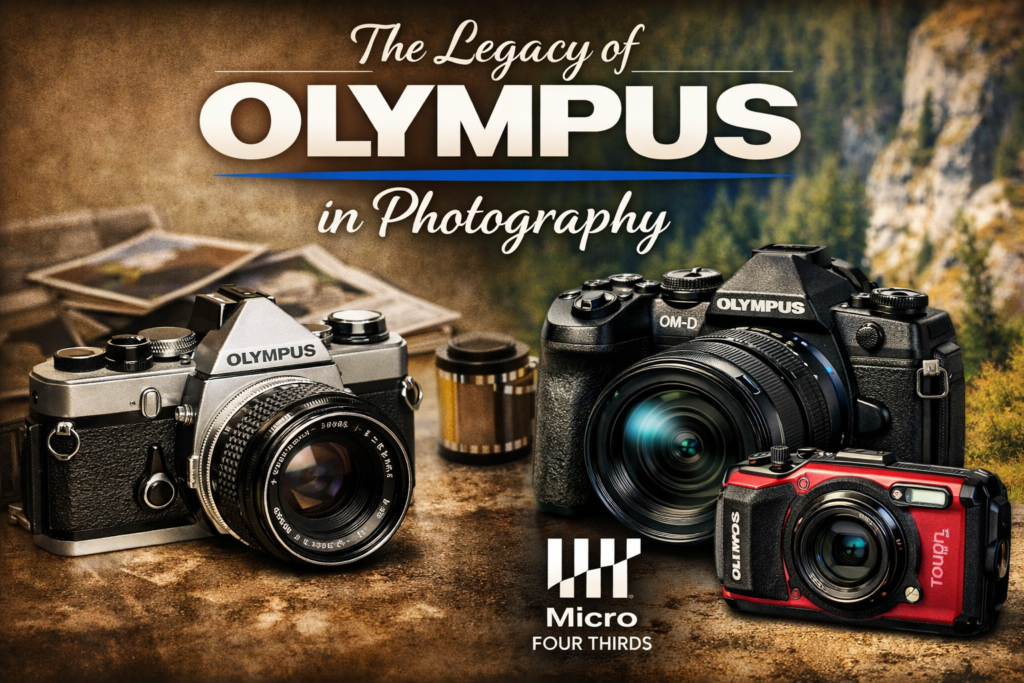

Olympus has one of the longest and most fascinating histories in the camera industry. The brand became widely recognized in the 1970s with its OM series of 35mm cameras, which were known for being compact yet professional-grade. Those cameras set the foundation for Olympus’s design philosophy—smaller cameras that still deliver high performance.
In the digital era, Olympus continued that legacy by focusing on mirrorless technology early on. While many brands stuck with bulky DSLR cameras, Olympus invested heavily in mirrorless systems. The result was a range of cameras that were significantly lighter and smaller but still capable of producing professional-level images.
Another key milestone was the introduction of the Micro Four Thirds system, developed jointly by Olympus and Panasonic in 2008. This system created a standard for mirrorless cameras and interchangeable lenses that allowed manufacturers to design compact yet powerful photography equipment.
Olympus also earned praise for its innovative features. The company pioneered technologies such as in-body image stabilization (IBIS), Live Composite shooting for long exposures, and weather-sealed camera bodies that can survive extreme environments. These innovations helped Olympus build a loyal following among travel photographers, adventure shooters, and wildlife enthusiasts.
Over the years, Olympus cameras have become known for reliability and creative tools rather than sheer sensor size. Many photographers appreciate the brand because it focuses on practical features that improve real-world shooting rather than just chasing higher megapixel numbers.
Transition to OM System and What It Means
If you’ve been following camera news recently, you might have noticed something interesting: new Olympus cameras are now branded as OM System. This change happened after Olympus sold its imaging division to a company called OM Digital Solutions.
Following the acquisition, the new company gradually replaced the Olympus name with the OM System brand across cameras, lenses, and accessories. This rebranding marked a new chapter for the camera lineup while maintaining the same technology and design philosophy that Olympus users loved.
So what does this mean for photographers? In practical terms, not much has changed in terms of product quality or features. The same engineers and technologies continue to power the cameras, and the Micro Four Thirds ecosystem remains intact. Existing Olympus lenses work perfectly with newer OM System cameras, ensuring long-term compatibility for photographers who have already invested in the system.
The transition also signals the company’s intention to innovate further in mirrorless photography. New models like the OM-1 Mark II and OM-3 continue to introduce advanced features such as AI-based subject detection, computational photography modes, and extremely fast burst shooting.
In short, Olympus hasn’t disappeared—it has simply evolved into a new brand identity. For users, this means continued development and support for the beloved Olympus camera ecosystem.
Key Features of Olympus Digital Cameras
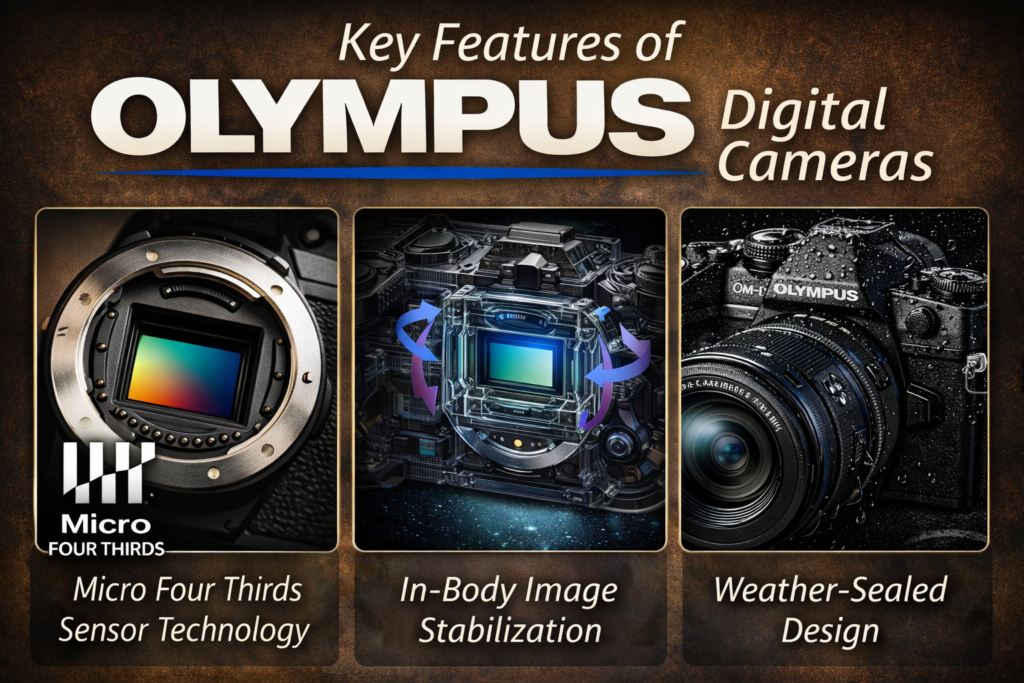
Micro Four Thirds Sensor Technology
At the heart of Olympus digital cameras lies the Micro Four Thirds sensor system. Unlike full-frame sensors found in larger professional cameras, Micro Four Thirds sensors are slightly smaller. However, this design choice allows Olympus cameras to remain compact and lightweight.
Many photographers initially worry about sensor size, assuming bigger sensors always produce better images. While larger sensors can offer advantages in certain situations, Micro Four Thirds sensors deliver excellent image quality while enabling smaller camera bodies and lenses.
The biggest advantage of this system is portability. Because the sensor and lenses are smaller, photographers can carry multiple lenses without adding significant weight to their gear bag. For travel and wildlife photography, this can make a huge difference.
Another benefit is the 2× crop factor, which effectively doubles the focal length of lenses. For example, a 300mm lens behaves like a 600mm lens on a full-frame camera. Wildlife photographers love this feature because it allows them to capture distant subjects without carrying massive telephoto lenses.
The Micro Four Thirds system also has a mature ecosystem. Photographers can choose from dozens of lenses produced by Olympus, Panasonic, and third-party manufacturers, giving them flexibility for different shooting styles.
In-Body Image Stabilization
One feature where Olympus truly shines is in-body image stabilization (IBIS). This technology physically moves the camera sensor to compensate for small hand movements, allowing photographers to shoot at slower shutter speeds without getting blurry images.
Olympus cameras are widely considered among the best in the industry when it comes to stabilization. Some models offer up to 8.5 stops of stabilization, which means you can shoot handheld even in low light without needing a tripod.
For example, imagine taking a night photo while traveling. With most cameras, you would need a tripod or very high ISO settings. With Olympus stabilization, you can often capture sharp images handheld, making nighttime photography much easier.
IBIS also benefits video creators. Smooth handheld footage becomes possible without bulky gimbals or stabilization rigs. This makes Olympus cameras attractive to vloggers and documentary filmmakers who need portable equipment.
In many ways, image stabilization is one of Olympus’s biggest strengths. It allows photographers to shoot in situations that would normally require additional equipment.
Weather-Sealed Design
Another defining feature of Olympus cameras is their rugged construction. Many models are built with extensive weather sealing, protecting them from dust, rain, and freezing temperatures.
For outdoor photographers, this durability is incredibly valuable. Imagine photographing wildlife in a rainforest or capturing landscapes during a snowstorm. Most cameras would struggle in these conditions, but Olympus cameras are designed specifically to handle such environments.
Many professional models are rated IP53 for weather resistance, which means they can survive harsh weather without damage. This rating places Olympus among the most rugged camera systems available.
Weather sealing also extends to lenses. Olympus PRO lenses are designed to match the camera body’s durability, creating a complete system that can withstand challenging conditions.
This focus on durability reflects Olympus’s philosophy: cameras should be tools that photographers can rely on anywhere. Whether you’re hiking through mountains or photographing waves at the beach, Olympus gear is built to keep working.
Types of Olympus Digital Cameras
Mirrorless Cameras
Mirrorless cameras are the heart of Olympus’s digital lineup. These cameras remove the traditional mirror mechanism found in DSLRs, making them lighter, quieter, and more compact. Olympus mirrorless models such as the OM-D series are widely praised for their portability and powerful features.
One of the biggest advantages of Olympus mirrorless cameras is their balance between size and capability. You can carry a professional-level camera in a relatively small bag, which is particularly valuable for travel photographers and vloggers. Even flagship models remain noticeably smaller than full-frame DSLR systems.
Many Olympus mirrorless cameras also include advanced shooting capabilities. For example, some models can shoot extremely fast bursts—up to 120 frames per second in certain high-end cameras—making them excellent tools for wildlife or sports photography.
The OM-D series also stands out because of its rugged construction. Many models feature IP53 weather sealing, which protects the camera from dust, rain, and cold environments. This durability makes Olympus cameras popular among outdoor photographers who often shoot in challenging conditions.
Overall, Olympus mirrorless cameras combine professional performance with travel-friendly design, making them one of the most distinctive options in the mirrorless camera market.
Compact and Tough Cameras
While Olympus is best known for mirrorless cameras, the company also produces compact cameras designed for everyday use and extreme environments. These cameras are smaller, simpler, and often more affordable than interchangeable-lens models.
One of the most famous lines is the Olympus Tough series, which is designed for outdoor adventures. These cameras are waterproof, shockproof, freezeproof, and dustproof. That means you can take them snorkeling, hiking, or skiing without worrying about damaging your gear.
Compact Olympus cameras typically include features like built-in zoom lenses, straightforward controls, and lightweight designs. They are perfect for beginners or casual photographers who want good image quality without dealing with multiple lenses or complex settings.
Despite their small size, many Olympus compact cameras still offer impressive capabilities. Some models include high-resolution sensors, fast autofocus, and Full HD or 4K video recording. This makes them a practical option for travel blogging or everyday photography.
These cameras may not replace professional mirrorless systems, but they serve an important role. For users who want something simple, durable, and portable, Olympus compact cameras provide a reliable and user-friendly solution.
Performance and Image Quality
Autofocus Speed and Burst Shooting
When it comes to performance, Olympus cameras are surprisingly fast. Many modern models feature sophisticated autofocus systems capable of tracking moving subjects such as birds, animals, and athletes.
Flagship cameras include hybrid autofocus systems with hundreds of focus points across the frame. This allows the camera to quickly lock onto subjects and maintain focus even when they move unpredictably.
Burst shooting is another area where Olympus excels. Some cameras can capture extremely high frame rates, making them ideal for action photography. Wildlife photographers particularly appreciate this capability because animals rarely stay still.
High-speed shooting also pairs well with Olympus’s computational photography features. Cameras can combine multiple images to create high-resolution photos or reduce noise in low-light conditions.
Despite their compact size, Olympus cameras deliver performance that rivals much larger systems. This combination of speed and portability is one reason why many photographers consider them underrated.
Low-Light and Dynamic Range Performance
Low-light performance is one area where Micro Four Thirds cameras face some limitations compared to full-frame systems. Because the sensor is smaller, it may produce more noise at extremely high ISO settings.
However, Olympus compensates for this limitation through clever technology. Features like powerful image stabilization, noise reduction algorithms, and high-resolution composite modes help improve image quality in difficult lighting conditions.
Dynamic range—the ability to capture detail in both shadows and highlights—is also respectable for the sensor size. Many Olympus cameras produce vibrant colors and detailed images, especially in good lighting conditions.
For most everyday photography scenarios such as travel, street photography, and landscapes, Olympus cameras perform extremely well. The difference compared to larger sensors often becomes noticeable only in very demanding situations.
Overall, the performance of Olympus cameras strikes a practical balance. Instead of chasing maximum sensor size, they focus on delivering reliable results in a compact package.
Pros and Cons of Olympus Cameras
Pros
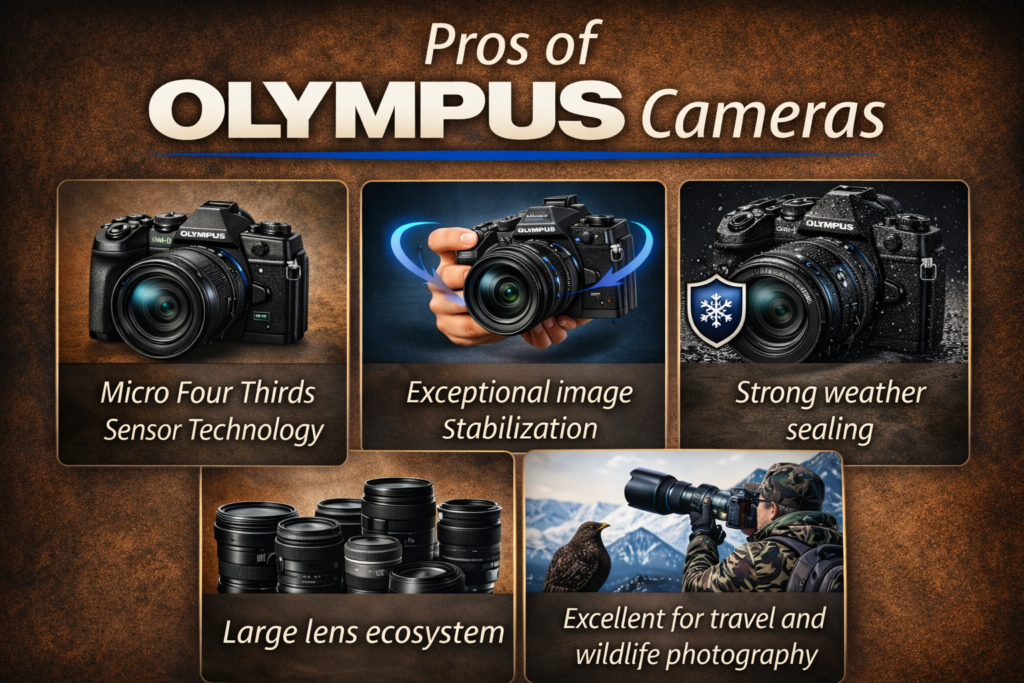
- Compact and lightweight design
- Exceptional image stabilization
- Strong weather sealing
- Large lens ecosystem
- Excellent for travel and wildlife photography
Cons
- Smaller sensor than full-frame cameras
- Slightly weaker low-light performance
- Brand transition may confuse new buyers
Performance and Image Quality
Autofocus Speed and Burst Shooting
When it comes to performance, Olympus cameras are surprisingly fast. Many modern models feature sophisticated autofocus systems capable of tracking moving subjects such as birds, animals, and athletes.
Flagship cameras include hybrid autofocus systems with hundreds of focus points across the frame. This allows the camera to quickly lock onto subjects and maintain focus even when they move unpredictably.
Burst shooting is another area where Olympus excels. Some cameras can capture extremely high frame rates, making them ideal for action photography. Wildlife photographers particularly appreciate this capability because animals rarely stay still.
High-speed shooting also pairs well with Olympus’s computational photography features. Cameras can combine multiple images to create high-resolution photos or reduce noise in low-light conditions.
Despite their compact size, Olympus cameras deliver performance that rivals much larger systems. This combination of speed and portability is one reason why many photographers consider them underrated.
Low-Light and Dynamic Range Performance
Low-light performance is one area where Micro Four Thirds cameras face some limitations compared to full-frame systems. Because the sensor is smaller, it may produce more noise at extremely high ISO settings.
However, Olympus compensates for this limitation through clever technology. Features like powerful image stabilization, noise reduction algorithms, and high-resolution composite modes help improve image quality in difficult lighting conditions.
Dynamic range—the ability to capture detail in both shadows and highlights—is also respectable for the sensor size. Many Olympus cameras produce vibrant colors and detailed images, especially in good lighting conditions.
For most everyday photography scenarios such as travel, street photography, and landscapes, Olympus cameras perform extremely well. The difference compared to larger sensors often becomes noticeable only in very demanding situations.
Overall, the performance of Olympus cameras strikes a practical balance. Instead of chasing maximum sensor size, they focus on delivering reliable results in a compact package.
Video Capabilities
Olympus cameras are not just for photographers—they also offer impressive features for video creators. Many models support 4K video recording, providing crisp footage suitable for YouTube, documentaries, and short films.
The strong in-body stabilization system also benefits video production. Handheld footage appears smoother and more cinematic, which reduces the need for expensive stabilization equipment.
Some Olympus cameras also include advanced computational features for video. These include live filters, time-lapse recording, and high-resolution modes that allow creators to experiment with different visual styles.
Video creators also appreciate the camera’s portability. Smaller camera bodies mean lighter rigs, making it easier to shoot for long periods without fatigue.
While Olympus may not dominate the professional filmmaking market like some other brands, its cameras remain excellent tools for hybrid creators who want both strong photography and capable video performance.
Olympus vs Competitors
Feature | Olympus / OM System | Canon | Sony |
Camera Size | Compact | Medium | Medium |
Sensor Type | Micro Four Thirds | APS-C / Full Frame | APS-C / Full Frame |
Image Stabilization | Industry-leading IBIS | Good | Good |
Weather Sealing | Excellent | Moderate | Moderate |
Lens Size | Small & Lightweight | Larger | Larger |
Price Range | Mid-range | Wide range | Wide range |
Olympus stands out primarily because of its portability and stabilization technology. While Canon and Sony offer larger sensors, Olympus delivers a balanced system that prioritizes mobility and durability.
Who Should Buy an Olympus Camera
Olympus cameras are perfect for photographers who value mobility and durability. Travel photographers, wildlife shooters, and adventure enthusiasts often find Olympus cameras ideal because they offer powerful performance without heavy equipment.
Beginners also benefit from Olympus cameras because many models include user-friendly interfaces and automatic shooting modes. At the same time, professionals can take advantage of advanced controls and customizable settings.
Content creators and vloggers may also find Olympus appealing thanks to its stabilization and video features. A small camera that produces stable footage can be incredibly useful for creators who film while traveling or moving around.
If portability and reliability matter more to you than having the biggest sensor possible, Olympus cameras can be a fantastic choice.
Conclusion
Olympus digital cameras occupy a unique space in the photography world. Instead of competing purely on sensor size, they focus on creating cameras that are portable, durable, and packed with practical features. From powerful image stabilization to weather-sealed bodies, Olympus cameras are designed to help photographers capture great images in real-world conditions.
The transition to the OM System brand marks a new chapter for the technology, but the core philosophy remains the same. Photographers still get compact mirrorless cameras with advanced capabilities and a strong lens ecosystem.
Whether you’re a beginner looking for your first mirrorless camera or an experienced photographer who wants a lightweight travel setup, Olympus cameras continue to offer an appealing balance of performance and portability.
Frequently Asked Questions
Yes. The Olympus camera division was sold to OM Digital Solutions, and new cameras are now released under the OM System brand.
Absolutely. Many Olympus models offer simple controls, helpful shooting modes, and compact designs that make them beginner-friendly.
It is a mirrorless camera system developed by Olympus and Panasonic that uses smaller sensors and interchangeable lenses to create compact yet powerful cameras.
Yes. The crop factor of Micro Four Thirds lenses and fast burst shooting make Olympus cameras excellent for wildlife and bird photography.
Many modern Olympus cameras support 4K video recording, making them suitable for content creators and vloggers.
Table of Contents
Popular Posts

-
 Affordable Technical SEO Audit for Small Business: A Complete Guide26 Jun 2025 Blog
 -
 How to Get an Affordable Technical SEO Audit for Small Business27 Jun 2025 Blog
 -
 The Ultimate Local SEO Audit Checklist for Startups28 Jun 2025 Blog
 -
 Local SEO Audit Checklist for Startups: A Beginner’s Guide28 Jun 2025 Blog
 -
 Top On-Page SEO Audit Steps for Service Websites Every Business Should Know29 Jun 2025 Blog
 -
 The Impact of On-Page SEO Audit Steps for Service Websites on UX01 Jul 2025 Blog
 -
 Technical SEO for WordPress: The Ultimate Beginner’s Guide01 Jul 2025 Blog
 -
 Technical Mobile SEO Audit Tips for Developers02 Jul 2025 Blog
Related Post