
Turing Marketing Strategy: Scaling Remote Tech Talent

Turing’s marketing strategy showcases how the company scales elite remote tech talent by combining AI-driven hiring, trust-based branding, and global reach. This post explores how Turing attracts top engineers, builds credibility with enterprises, and leads the future of remote software hiring.
Table of Contents
Introduction to Turing and the Remote Talent Revolution
Remote work didn’t just knock on the tech industry’s door—it kicked it open. And right at the center of this transformation stands Turing, a company that didn’t just adapt to the remote trend but built its entire business around it.
What Is Turing?
Turing is an international talent marketplace that links businesses with the best remote software engineers worldwide. But calling it “just a hiring platform” would be an understatement. Turing positions itself as a talent intelligence company, powered by AI, focused on long-term engineering success rather than quick hires.
Why Remote Tech Talent Is the Future
Think about it—why limit yourself to hiring within a 50-mile radius when the best developer for your product might be sitting halfway across the globe? Remote talent removes geographical barriers, reduces costs, and dramatically expands access to skills. Turing’s marketing taps directly into this future-forward mindset.
Understanding Turing’s Core Marketing Philosophy
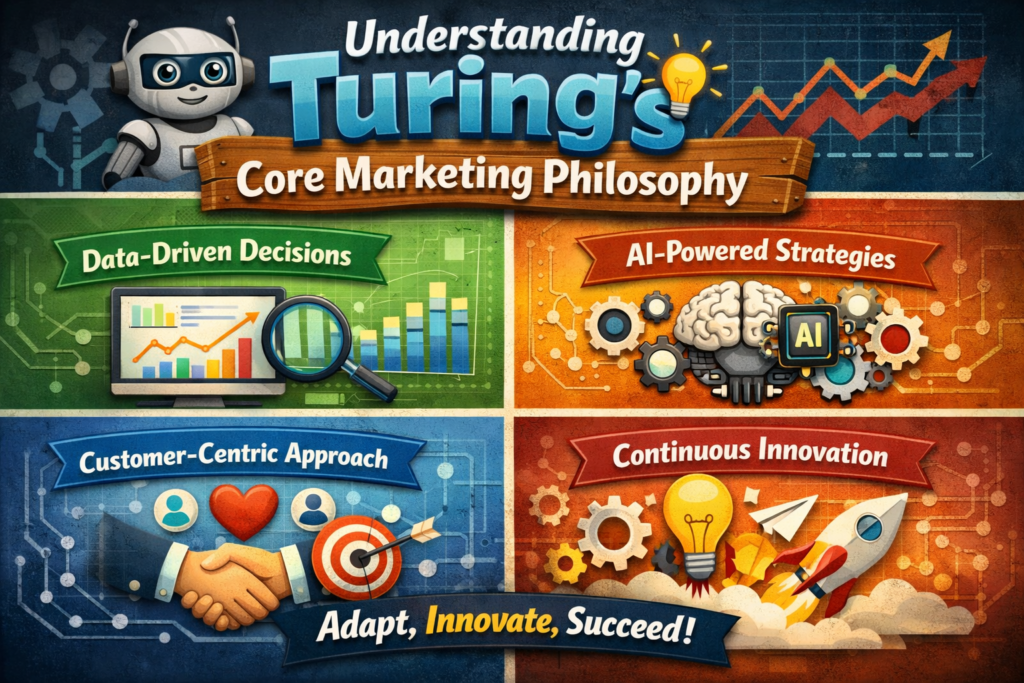

At the heart of Turing’s marketing strategy lies a simple yet powerful belief: great teams build great products.
Talent-First, Not Platform-First
Unlike marketplaces that shout about features, dashboards, and pricing, Turing flips the script. Their marketing speaks first about talent quality, not tools. The platform exists to serve the talent and the companies—not the other way around.
Trust, Quality, and Long-Term Value
Turing doesn’t chase volume. It markets stability, reliability, and long-term partnerships. This approach instantly attracts serious companies looking for dependable engineering talent rather than short-term freelancers.
The Problem Turing Solves in the Global Tech Market
Every great marketing strategy starts with a painful problem—and Turing addresses a big one.
Talent Shortage in Tech Companies
There are more open engineering roles than qualified engineers. This gap slows innovation and increases costs. Turing’s marketing clearly communicates this pain and positions remote hiring as the smartest solution.
Challenges of Traditional Hiring Models
Local hiring is slow, expensive, and often biased by geography. Turing’s narrative reframes hiring as a global optimization problem, not a local HR task.
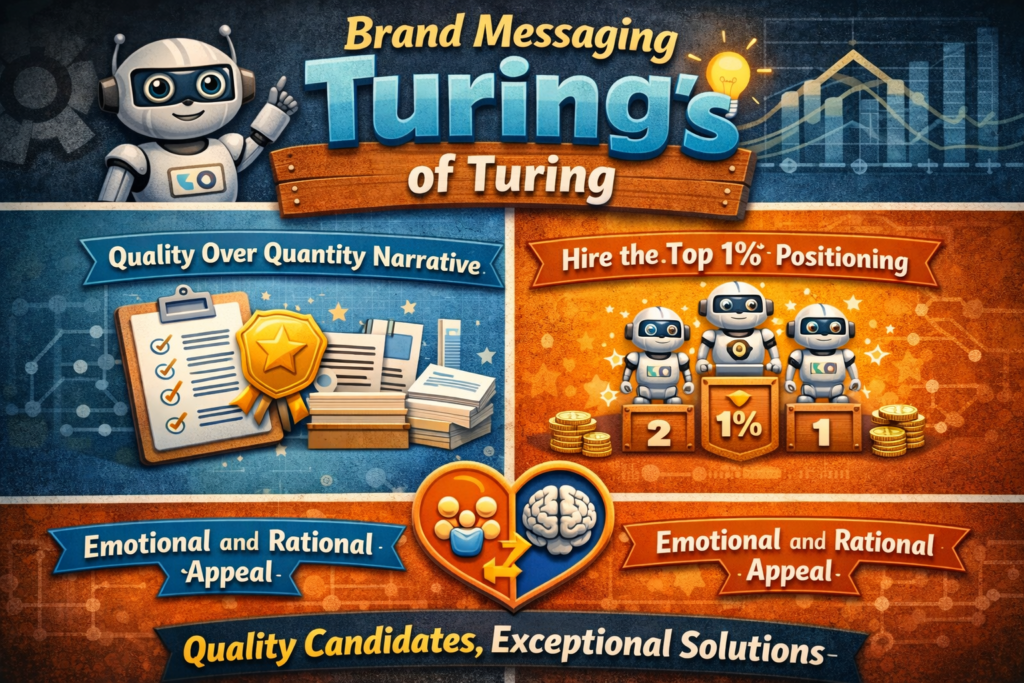
Brand Messaging Strategy of Turing
Turing’s brand voice is confident but not flashy. It’s like a senior engineer speaking—calm, logical, and credible.
Quality Over Quantity Narrative
Instead of “thousands of developers,” Turing emphasizes the top 1%. Scarcity creates value, and their marketing uses it brilliantly.
“Hire the Top 1%” Positioning
This phrase appears consistently across their website, ads, and content. It’s short, memorable, and instantly differentiating.
Emotional and Rational Appeal
Emotion: “Build a world-class team.”
Logic: “AI-matched, rigorously vetted engineers.”
That combination is marketing gold.
Turing’s Target Audience and Market Positioning
Turing doesn’t try to be everything for everyone—and that focus is a marketing strength.
High-Growth Startups
Startups need speed, flexibility, and top talent without burning cash. Turing’s messaging resonates deeply with founders who want to scale fast without compromising quality.
Enterprise-Level Tech Companies
For enterprises, the pitch is different: reliability, compliance, and scalability. Turing adapts its messaging without changing its core value proposition.
Why CTOs and Engineering Managers Trust Turing
Marketing speaks directly to technical leaders using the language they understand—performance, code quality, system reliability, and team velocity.
Content Marketing Strategy That Drives Authority
Turing doesn’t just sell—it teaches.
Educational Blogs and Engineering Content
Their blog covers remote hiring, engineering best practices, and tech leadership topics. This positions Turing as an authority, not a vendor.
SEO-Driven Long-Form Content
Long, in-depth articles target high-intent keywords like “hire remote developers” and “remote engineering teams.”
Thought Leadership in Remote Work
By owning the conversation around remote engineering, Turing stays top-of-mind when companies are ready to hire.
Performance Marketing and Paid Acquisition
Organic growth is powerful, but Turing complements it with smart paid strategies.
Google Search and Display Ads
Search ads capture intent, while display ads reinforce brand recall.
LinkedIn B2B Targeting
LinkedIn allows precise targeting of CTOs, founders, and HR leaders—perfect for Turing’s audience.
Retargeting for Decision-Makers
Long sales cycles demand multiple touchpoints, and retargeting keeps Turing visible throughout the journey.
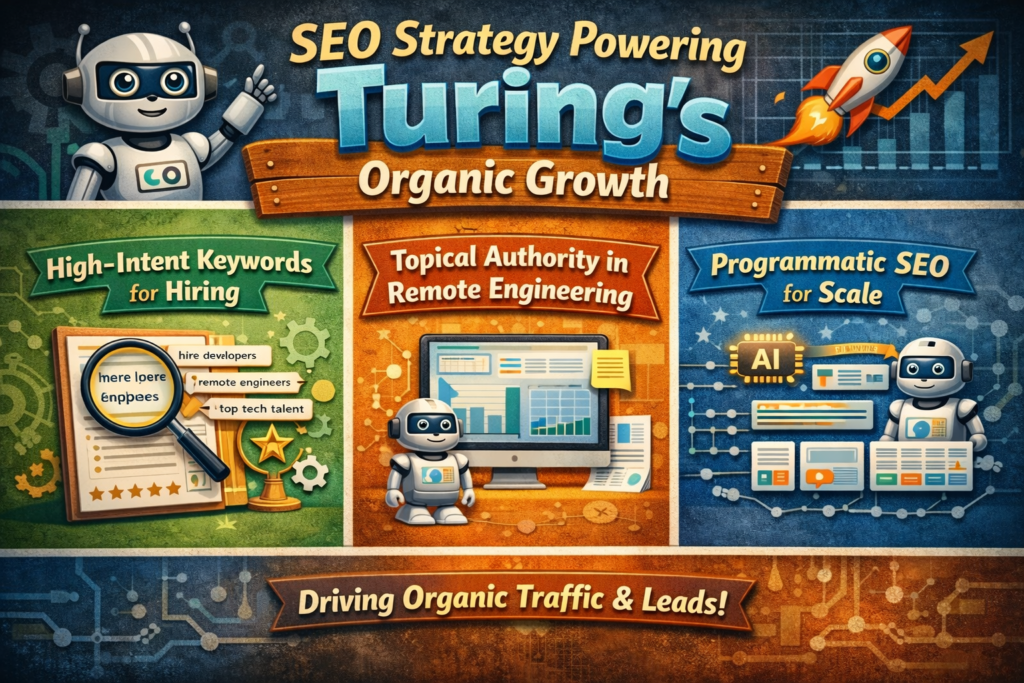
SEO Strategy Powering Turing’s Organic Growth
SEO is one of Turing’s strongest growth engines.
High-Intent Keywords for Hiring
They focus on keywords that signal buying intent—not just traffic.
Topical Authority in Remote Engineering
Turing builds clusters of content around remote work, AI hiring, and global talent, strengthening domain authority.
Programmatic SEO for Scale
Location-based and role-specific pages help Turing scale organic traffic efficiently.
Developer-Focused Marketing Funnel
Turing markets not just to companies—but equally to developers.
Attracting Global Developers
Messaging focuses on career growth, global exposure, and stability—not just money.
Screening as a Marketing Asset
The rigorous vetting process isn’t hidden—it’s showcased as a badge of honor.
Turning Developers into Brand Advocates
Happy developers become organic marketers through referrals and word-of-mouth.
Community and Ecosystem Building
Strong brands build communities, not just pipelines.
Developer Communities and Forums
Turing nurtures engagement through events, content, and knowledge-sharing.
Partnerships with Tech Platforms
Strategic partnerships expand reach and credibility.
Long-Term Relationship Marketing
The goal isn’t one hire—it’s an ongoing collaboration.
Also Read
PureVPN Marketing Strategy in the Cybersecurity Market
RoboKiller Marketing Strategy: Fighting Spam with Branding
PrivateVPN Marketing Strategy: How VPN Brands Grow Globally
Fidelcrest Investment Review: Funding Model, Risks, and Opportunities
Proton Partners Program Review: Features, Benefits, and Earnings
Trust Signals and Social Proof Strategy
Trust reduces friction—and Turing uses it masterfully.
Case Studies and Success Stories
Real-world outcomes speak louder than promises.
Enterprise Client Logos
Big names build instant credibility.
Reviews and Testimonials
Social proof reinforces every marketing message.
Product-Led Growth Meets Marketing
Turing’s product is part of its marketing.
AI Matching as a Core Differentiator
The AI engine isn’t just functional—it’s a headline feature.
Marketing the Algorithm, Not Just the Outcome
By explaining how matches are made, Turing builds transparency and trust.
Global Expansion and Localization Strategy
Global brand, local relevance.
Country-Specific Talent Messaging
Developers in India, Latin America, and Eastern Europe see tailored messaging.
Cultural Sensitivity in Marketing
Tone, benefits, and communication adapt by region.
Scaling Without Losing Brand Consistency
Core values stay the same—even as messaging localizes.
Metrics and KPIs Behind Turing’s Growth
Marketing decisions are data-driven.
Customer Acquisition Cost (CAC)
Efficiency matters when scaling globally.
Lifetime Value (LTV)
Long-term contracts justify premium acquisition costs.
Talent Retention Metrics
Retention isn’t just HR—it’s a marketing success indicator.
Future of Turing’s Marketing Strategy
AI-Driven Personalization
Expect hyper-personalized hiring journeys.
Deeper Enterprise Penetration
More Fortune-level companies will adopt remote-first engineering.
Conclusion
Turing’s marketing strategy is a masterclass in clarity, focus, and execution. By centering everything around talent quality, trust, and long-term value, Turing doesn’t just attract customers—it builds believers. In a world where remote work is the norm, Turing shows how smart marketing can turn a complex global challenge into a scalable competitive advantage.
Frequently Asked Questions
Turing focuses on talent quality and trust rather than platform features, which differentiates it strongly.
Through career-focused messaging, global opportunities, and a respected vetting process.
Yes, SEO-driven content and programmatic pages play a crucial role in organic growth.
High-growth startups, enterprises, CTOs, and engineering leaders.
Yes, by prioritizing trust, authority, and outcome-driven messaging.
Table of Contents
Popular Posts

-
 Affordable Technical SEO Audit for Small Business: A Complete Guide26 Jun 2025 Blog
 -
 How to Get an Affordable Technical SEO Audit for Small Business27 Jun 2025 Blog
 -
 The Ultimate Local SEO Audit Checklist for Startups28 Jun 2025 Blog
 -
 Local SEO Audit Checklist for Startups: A Beginner’s Guide28 Jun 2025 Blog
 -
 Top On-Page SEO Audit Steps for Service Websites Every Business Should Know29 Jun 2025 Blog
 -
 The Impact of On-Page SEO Audit Steps for Service Websites on UX01 Jul 2025 Blog
 -
 Technical SEO for WordPress: The Ultimate Beginner’s Guide01 Jul 2025 Blog
 -
 Technical Mobile SEO Audit Tips for Developers02 Jul 2025 Blog
Related Post