


PrivateVPN Marketing Strategy: How VPN Brands Grow Globally

PrivateVPN Marketing Strategy: How VPN Brands Grow Globally explores how leading VPN companies scale worldwide by combining trust-driven branding, SEO, content marketing, affiliate partnerships, and performance advertising. This post highlights how PrivateVPN leverages privacy-focused messaging, global localization, and data-driven strategies to attract, convert, and retain users in an increasingly competitive digital security market.
Table of Contents
Introduction to VPN Marketing in a Global Digital World
Let’s be honest—privacy is no longer a “nice-to-have.” It’s a necessity. From streaming geo-restricted content to protecting personal data on public Wi-Fi, VPNs have become digital seatbelts. This surge in awareness has pushed VPN companies into a fiercely competitive global market. So how does a brand like PrivateVPN stand out and scale worldwide?
The answer lies in a smart, multi-channel marketing strategy that blends trust, education, performance marketing, and global localization. In this article, we’ll break down how VPN brands grow globally and what makes PrivateVPN-style strategies effective in today’s privacy-first world.
Understanding the VPN Market Landscape
Why VPN Demand Is Growing Worldwide


VPN demand didn’t explode overnight—it grew alongside digital threats. Cybercrime, data leaks, government surveillance, and content censorship have pushed users to seek protection. Add remote work and streaming habits into the mix, and you’ve got a global audience actively searching for VPN solutions.
From students to digital nomads, from gamers to journalists—VPN users come from every corner of the internet.
Key User Segments for VPN Brands
Successful VPN marketing starts with understanding the audience:
- Privacy-focused users who fear tracking and surveillance
- Streamers who want access to global content
- Travelers using public Wi-Fi
- Businesses and freelancers working remotely
Each group has different pain points, and strong VPN brands tailor messages accordingly.
Building a Strong Brand Positioning
Trust, Privacy, and Security as Core Messages
VPN marketing lives or dies on trust. Users are literally handing over their internet traffic. That’s why PrivateVPN-style branding focuses heavily on:
- No-log policies
- Strong encryption
- Transparency
Instead of flashy promises, the messaging reassures users with clarity and honesty.
Differentiating PrivateVPN from Competitors
Let’s face it—most VPNs sound the same. The winners highlight what actually matters: simplicity, reliability, speed, and real-world use cases. Clear comparisons, honest limitations, and straightforward pricing help cut through the noise.
Content Marketing as a Growth Engine
Educational Content for Privacy Awareness
People don’t wake up wanting a VPN—they wake up worried about a problem. Smart VPN brands educate before they sell.
Blogs, Guides, and Tutorials
High-performing VPN blogs answer questions like:
- Is public Wi-Fi safe?
- How to unblock streaming platforms?
- How VPNs protect your data?
This approach positions the brand as a helpful guide, not a pushy seller.
SEO Strategy for Global Reach
Keyword Localization and Multilingual SEO
Global growth demands local relevance. Successful VPN brands optimize content for country-specific keywords like “best VPN for India” or “VPN for Netflix UK.” Translating content isn’t enough—local intent matters.
Ranking for High-Intent VPN Keywords
VPN SEO focuses on buyer-intent terms such as:
- Best VPN for streaming
- Secure VPN for public Wi-Fi
- No-log VPN service
Ranking for these terms brings users who are ready to convert.
Affiliate and Partner Marketing
Leveraging Review Sites and Influencers
Affiliate marketing is a powerhouse in the VPN industry. Tech bloggers, YouTubers, and comparison sites play a huge role in buying decisions. A well-structured affiliate program turns creators into long-term growth partners.
High-Converting Affiliate Programs
Competitive commissions, long cookie durations, and transparent tracking make VPN affiliate programs irresistible to marketers.
Paid Advertising and Performance Marketing
Google Ads and Native Advertising
Despite ad restrictions, VPN brands still thrive using search ads and native platforms. The trick? Compliance-friendly messaging that focuses on security benefits rather than fear.
Retargeting and Funnel Optimization
Not everyone buys on the first visit. Retargeting ads and email funnels gently nudge users back, turning interest into subscriptions.
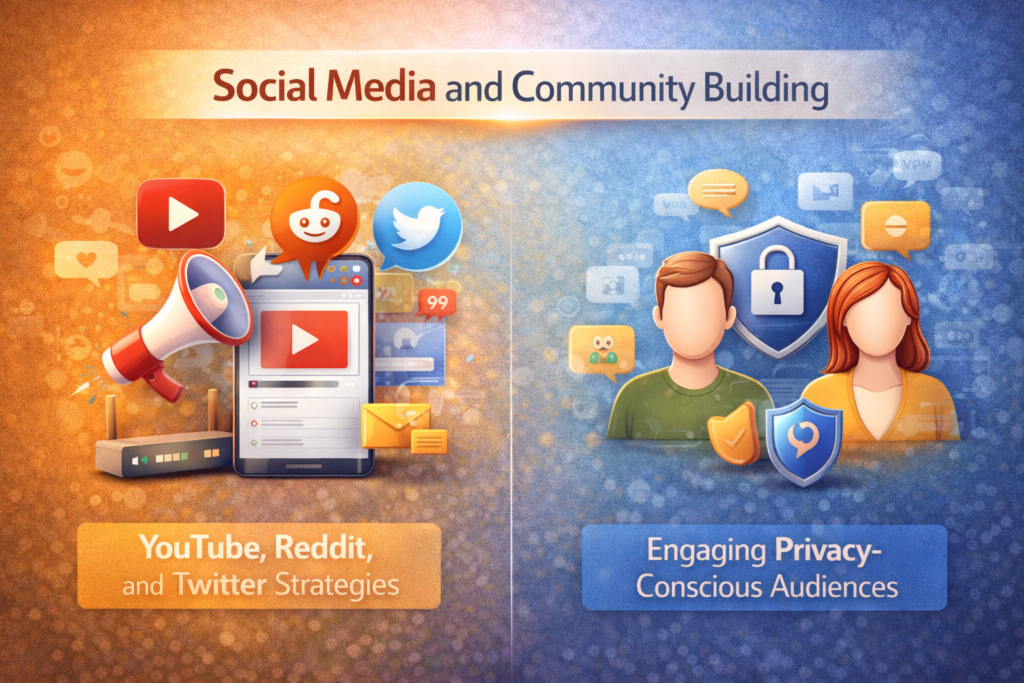
Social Media and Community Building
YouTube, Reddit, and Twitter Strategies
YouTube explainers, Reddit AMAs, and Twitter threads help VPN brands connect with privacy-conscious users. These platforms reward authenticity over aggressive promotion.
Engaging Privacy-Conscious Audiences
Memes about data leaks, quick security tips, and real-world examples make complex topics digestible and shareable.
Leveraging Trust Signals and Social Proof
Reviews, Testimonials, and Transparency
User reviews, third-party audits, and transparent policies reduce skepticism. VPN buyers often compare extensively—strong social proof seals the deal.
Pricing, Promotions, and Offers
Free Trials vs Money-Back Guarantees
VPN brands grow faster when they reduce risk. Free trials and 30-day money-back guarantees remove hesitation and encourage first-time users to try the service.
Also Read
Swanwick: How the Brand Built Authority in the Wellness Market
How BathMate Uses Content Marketing to Educate Consumers
The Escape Game Entertainment: A Complete Brand & Business Review
Uncrate Review: Why Uncrate Is a Premium Lifestyle Platform
Online Check Writer Review: Simplifying Business Payments
Global Expansion Strategies
Country-Specific Campaigns
What works in Europe may not work in Asia. Successful VPN brands customize landing pages, pricing, and messaging for each region.
Handling Regulations and Compliance
Privacy laws, data regulations, and censorship rules vary globally. Smart VPN marketing aligns compliance with trust-building communication.
Retention Marketing and Customer Loyalty
Email Marketing and In-App Engagement
Acquiring users is expensive—keeping them is profitable. VPN brands use onboarding emails, feature tips, and renewal reminders to reduce churn.
Data-Driven Marketing Decisions
Tracking KPIs and User Behavior
Top VPN marketers obsess over metrics like:
- Conversion rates
- Lifetime value
- Churn rate
Data-driven optimization fuels sustainable growth.
Challenges in VPN Marketing
Ad Restrictions and Platform Policies
Many platforms restrict VPN ads. Brands that succeed adapt creatively, focusing on content, SEO, and partnerships rather than relying on a single channel.
Future Trends in VPN Marketing
AI, Privacy Laws, and New Opportunities
AI-driven personalization, stricter privacy laws, and growing digital awareness will shape the future of VPN marketing. Brands that stay transparent and user-focused will win.
Conclusion
PrivateVPN-style global growth isn’t about aggressive selling—it’s about trust, education, and smart distribution. By combining SEO, content, affiliates, paid ads, and localization, VPN brands can scale sustainably across borders. In a world where privacy matters more than ever, the VPN brands that communicate clearly and act transparently will continue to dominate the global market.
Frequently Asked Questions
Because users need education before purchase. Content builds trust and drives organic traffic.
Through localized SEO, multilingual content, and country-specific campaigns.
It’s one of the highest-converting channels, especially through reviews and YouTube.
Yes, when combined with compliant messaging and retargeting strategies.
Building trust in a crowded market while navigating ad restrictions.
Table of Contents
Popular Posts

-
 Affordable Technical SEO Audit for Small Business: A Complete Guide26 Jun 2025 Blog
 -
 How to Get an Affordable Technical SEO Audit for Small Business27 Jun 2025 Blog
 -
 The Ultimate Local SEO Audit Checklist for Startups28 Jun 2025 Blog
 -
 Local SEO Audit Checklist for Startups: A Beginner’s Guide28 Jun 2025 Blog
 -
 Top On-Page SEO Audit Steps for Service Websites Every Business Should Know29 Jun 2025 Blog
 -
 The Impact of On-Page SEO Audit Steps for Service Websites on UX01 Jul 2025 Blog
 -
 Technical SEO for WordPress: The Ultimate Beginner’s Guide01 Jul 2025 Blog
 -
 Technical Mobile SEO Audit Tips for Developers02 Jul 2025 Blog
Related Post